India's Supreme Court Warns Fishermen to Stay Out of Sri Lankan Waters Amid Katchatheevu Dispute
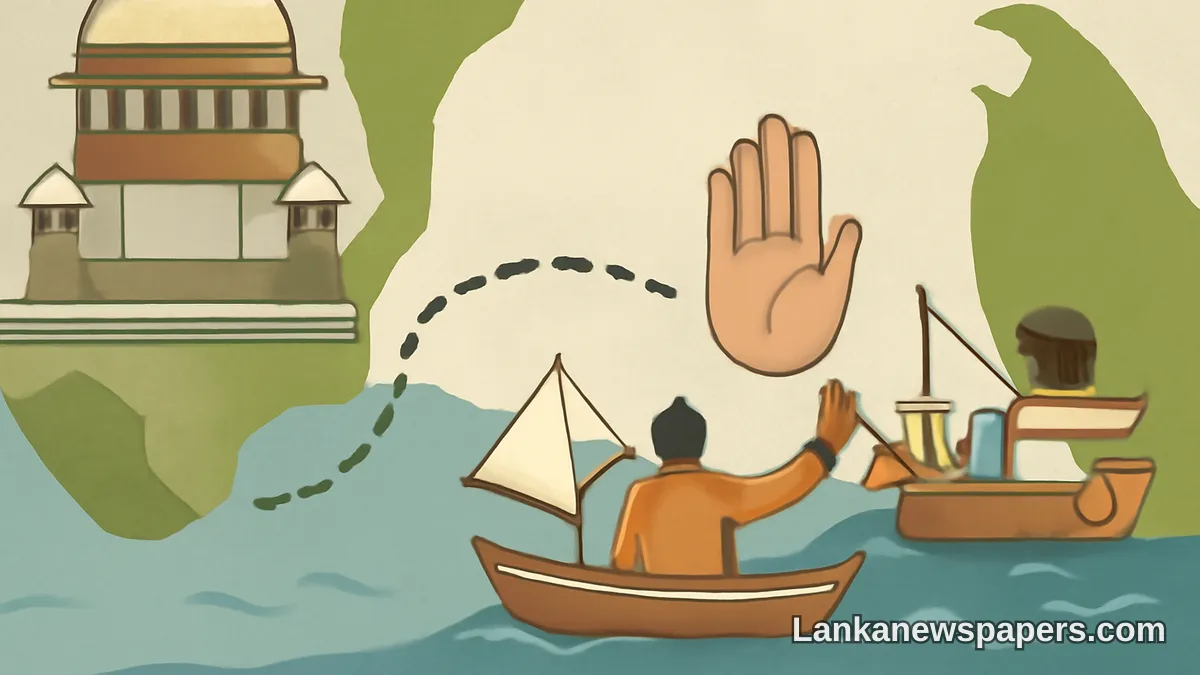
India's Supreme Court has stepped into the long-running Katchatheevu island dispute, urging Indian fishermen to exercise caution and refrain from venturing into Sri Lankan territorial waters, as tensions over fishing rights in the Palk Strait continue to simmer.
Court Intervenes Amid Ongoing Tensions
The apex court's advisory comes as the Katchatheevu issue remains a deeply sensitive matter between the two neighbouring nations. The small island, ceded to Sri Lanka by India in 1974, has been a flashpoint for decades, with Indian fishermen — particularly those from Tamil Nadu — frequently crossing into Sri Lankan-controlled waters in search of fish, often resulting in arrests and seizures by the Sri Lankan Navy.
The Supreme Court made its position clear, cautioning fishermen against taking risks that could place them in legal jeopardy under Sri Lankan maritime jurisdiction. The court's intervention signals a growing concern at the highest judicial levels in India over the safety and legal exposure of fishing communities operating near the disputed maritime boundary.
A Long-Standing Dispute
The Katchatheevu controversy has been a recurring point of political and diplomatic friction between India and Sri Lanka. Indian fishing communities have historically relied on waters surrounding the island for their livelihoods, and the 1974 agreement that transferred sovereignty of the island to Sri Lanka has never been fully accepted by many in Tamil Nadu's coastal communities.
- Hundreds of Indian fishermen have been arrested by Sri Lankan authorities over the years for illegal fishing in restricted waters.
- Tamil Nadu politicians across party lines have consistently demanded the return of Katchatheevu to India.
- The issue has periodically flared up as a major electoral and diplomatic talking point in bilateral relations.
Implications for Fishermen and Diplomacy
For Sri Lanka, the matter touches on questions of sovereignty and the enforcement of its maritime boundaries, while for India — and especially for Tamil Nadu — it remains an issue of both cultural identity and economic survival for thousands of fishing families who depend on these waters.
The Supreme Court's advisory underscores the very real legal risks faced by Indian fishermen who cross into Sri Lankan waters, regardless of historical fishing traditions in the region.
Diplomatic observers note that a lasting resolution will require sustained engagement between Colombo and New Delhi, balancing Sri Lanka's sovereign rights with the humanitarian and livelihood concerns of Indian fishing communities. Until such a resolution is reached, the court's warning serves as a stark reminder of the dangers that persist in one of South Asia's most protracted maritime disputes.



💬 Join the Discussion 4
See what readers are saying — and add your view.
how many times this same issue coming up, nothing ever gets solved
goverment should protect our waters more strictly, enough is enough
finally india doing something right, our fishermen always suffering
but katchatheevu still theirs no? so what changed really