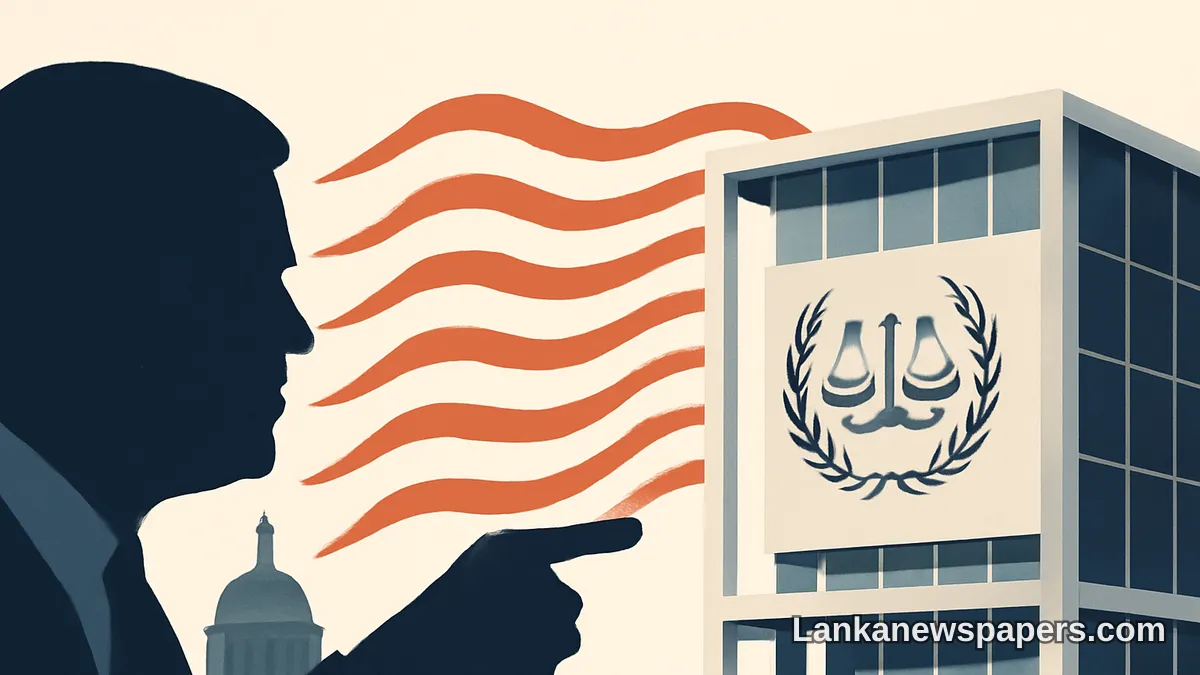
The United States has taken its most aggressive step yet against the International Criminal Court, with Secretary of State Marco Rubio announcing sweeping sanctions targeting the ICC as an institution — a significant escalation from previous measures that had focused solely on individual officials and supporting organisations.
A Direct Strike at the Institution
The announcement, made on Friday, marks a dramatic shift in Washington's approach to the Hague-based tribunal. Until now, American pressure on the ICC had been channelled through targeted sanctions against specific court personnel and entities deemed to be backing its operations. By moving to sanction the court itself, the Trump administration has signalled it is prepared to confront the institution head-on.
Secretary Rubio framed the decision as a firm assertion of American sovereignty and a rejection of what the administration characterises as overreach by an international body that the United States has never formally joined.
Background to the Standoff
Tensions between Washington and the ICC have been building for years, intensifying sharply after the court moved to pursue cases involving allies of the United States. The Trump administration had previously imposed sanctions on individual ICC prosecutors and judges, drawing strong criticism from European governments and international legal scholars who argued the measures undermined the global rule of law.
The ICC, established under the Rome Statute in 2002, was created to prosecute individuals for war crimes, crimes against humanity, and genocide. The United States signed the Rome Statute under President Bill Clinton but never ratified it, meaning American citizens are not formally subject to the court's jurisdiction — a position Washington has consistently defended.
International Reaction
The move is expected to draw sharp condemnation from European Union member states and other allies who remain committed supporters of the court. Legal experts warn that sanctions against the institution itself could severely hamper the ICC's ability to conduct investigations, access financial services, and operate its administrative functions on the international stage.
The sanctioning of an international judicial body by a major world power sets a deeply troubling precedent for the future of multilateral institutions and the international legal order.
Human rights organisations have also reacted with alarm, arguing that undermining the ICC weakens accountability mechanisms for the world's most serious crimes and emboldens those who might otherwise face justice.
Implications for Sri Lanka and the Region
For Sri Lanka and other nations in the Indo-Pacific region, the development raises broader questions about the durability of international legal frameworks. Sri Lanka, which has faced its own calls for international accountability mechanisms related to the final stages of its civil war, will be watching closely as the global debate over the ICC's authority and independence intensifies.
The latest American move is likely to dominate discussions at upcoming United Nations forums and further strain transatlantic relations at a time when Western unity on several geopolitical fronts is already under pressure.

💬 Join the Discussion 2
See what readers are saying — and add your view.
America doesnt like when they cant control something, simple as that
exactly, ICC touch Israel now suddenly its problem