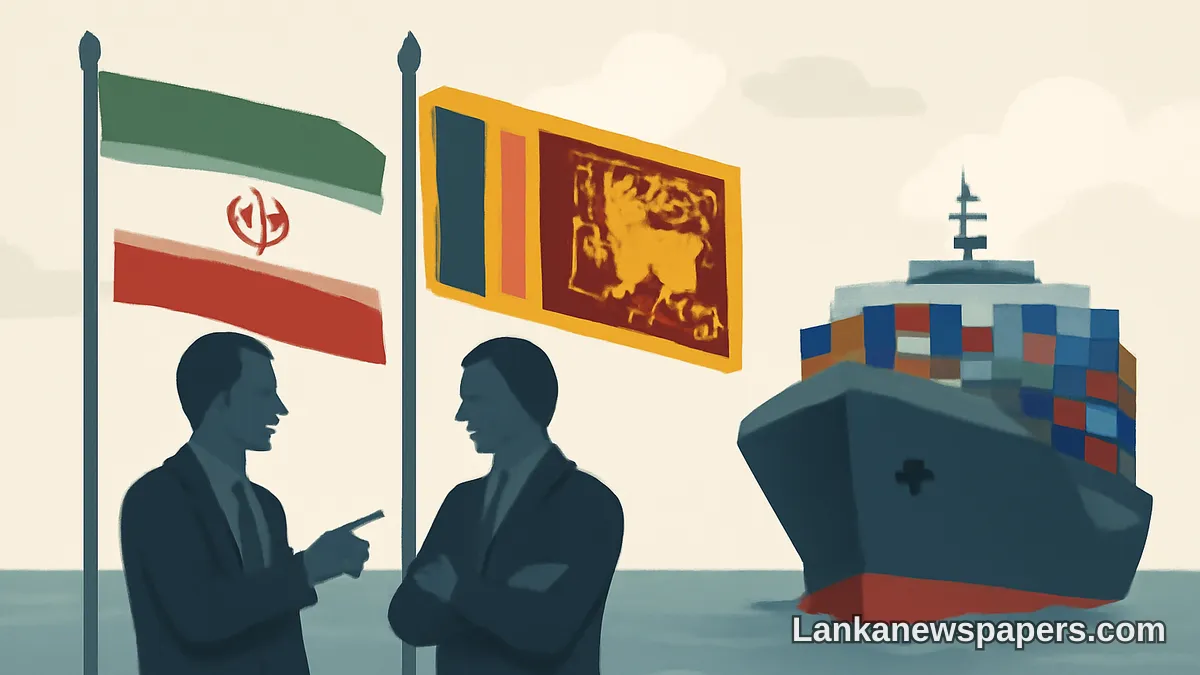
Diplomatic Pressure Mounts as Iranian Ships Remain Stranded Off Sri Lankan Waters
Iran has issued a firm reminder to Sri Lanka's National People's Power (NPP) government that, as a member state of the United Nations, it is bound by its international legal obligations — particularly with regard to the plight of Iranian vessels stranded in Sri Lankan waters.
Ambassador Cites International Maritime Law
Iranian Ambassador to Colombo, Alireza Delkhosh, drew attention to Sri Lanka's responsibilities under two key international frameworks — the United Nations Convention on the Law of the Sea, specifically Article 98, as well as provisions under the International Convention for the Safety of Life at Sea (SOLAS). The ambassador's remarks underscored Tehran's growing impatience over the handling of the situation by Colombo.
Ambassador Delkhosh emphasised that these are not merely diplomatic courtesies, but legally binding commitments that Sri Lanka voluntarily assumed upon joining international maritime conventions. The stranded Iranian vessels have become a point of increasing diplomatic friction between the two nations.
Backdrop of the Crisis
The situation has drawn wider attention at a time when a United States warship recently departed from the Port of Colombo, adding a layer of geopolitical sensitivity to the unfolding maritime standoff. Critics and opposition voices have used the moment to remind the NPP administration of what they describe as unfulfilled responsibilities toward vessels in distress within or near Sri Lankan territorial waters.
Government Under Scrutiny
The NPP government now finds itself navigating a delicate balancing act — managing its relationships with major global powers while honouring its commitments under international maritime law. Legal experts and maritime observers have noted that failure to act in accordance with the cited conventions could expose Sri Lanka to criticism at international forums and potentially damage its standing as a responsible maritime nation.
- Article 98 of UNCLOS obligates states to render assistance to persons and vessels in distress at sea.
- SOLAS provisions similarly require signatory nations to ensure the safety and welfare of seafarers in emergency situations.
- Sri Lanka is a signatory to both international frameworks.
As diplomatic communications continue between Colombo and Tehran, all eyes are on the Sri Lankan government to determine what course of action it will take to resolve the standoff in a manner consistent with both its international obligations and its broader foreign policy interests.



💬 Join the Discussion 4
See what readers are saying — and add your view.
what happened to the crew members though, anyone knows? ppl forgetting about them
goverment always signing things and then acting surprised when they have to actually do something
Iran is right no? We signed these agreements, we have to follow lah
easy to say but who paying for all this, country is broke