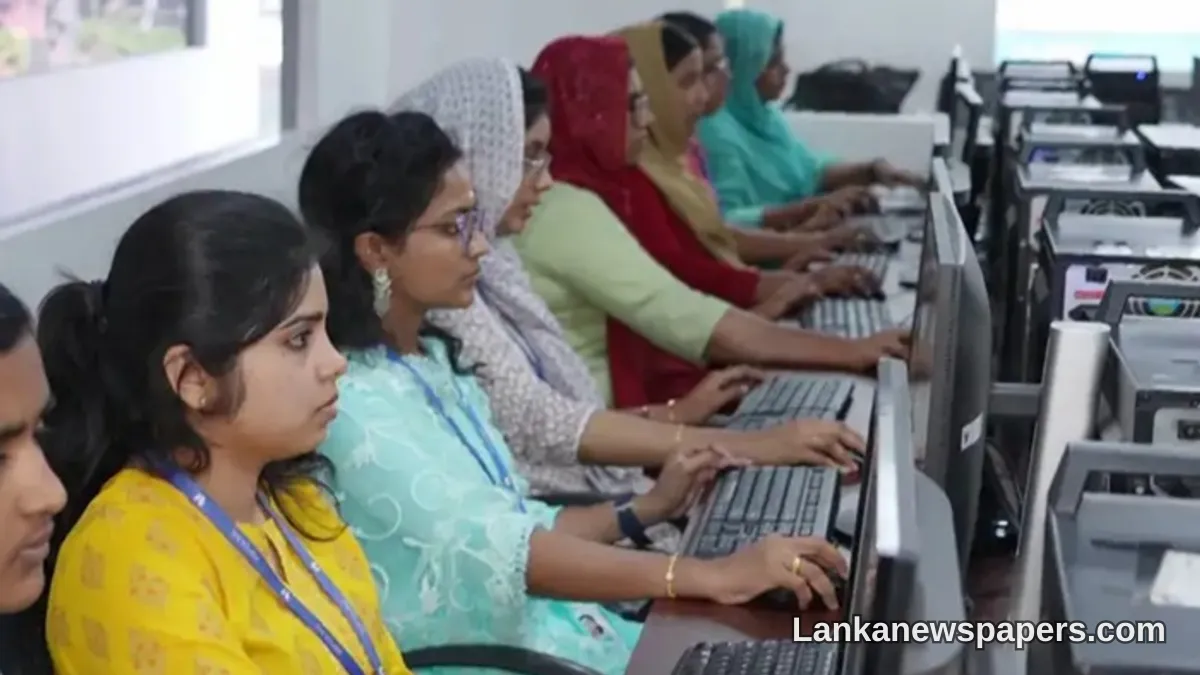
Artificial intelligence is opening up a new frontier of employment for women in Kerala, India, as the rapidly expanding technology sector drives surging demand for data labelling and annotation workers — roles that are increasingly being filled by women across the southern Indian state.
A New Kind of Digital Work
At the heart of this emerging opportunity is data labelling, a foundational process in which human workers tag, categorise, and annotate vast datasets that are used to train AI systems. While the work may appear unglamorous compared to the headline-grabbing breakthroughs of artificial intelligence, it is an indispensable part of the industry's supply chain — and it is generating meaningful income for thousands of women who may have previously had limited access to formal employment.
Kerala, long celebrated for its high literacy rates and relatively strong indicators of gender equality compared to other Indian states, appears well positioned to take advantage of this shift. Educated women with basic digital skills are finding that data labelling work can be performed flexibly, often from home, making it particularly accessible to those balancing domestic responsibilities.
Part of India's Wider AI Expansion
The growth in Kerala mirrors a broader national trend. India has emerged as a significant global hub for AI data services, with international technology companies increasingly outsourcing data preparation tasks to the country's large, English-literate workforce. This has created a tiered ecosystem of employment, ranging from highly skilled AI engineers to entry-level data annotators.
For Sri Lankan observers, the development offers a noteworthy case study. Sri Lanka, which shares certain socioeconomic characteristics with Kerala — including strong female literacy and a tradition of women participating in export-oriented industries — may find lessons in how its neighbour is channelling the AI boom into grassroots economic empowerment.
Opportunities and Cautions
While the trend is broadly positive, analysts caution that data labelling jobs, though accessible, often come with limitations:
- Wages can be modest and are subject to fluctuation based on global tech spending cycles.
- The work is largely project-based, offering limited long-term job security.
- As AI systems become more sophisticated, some categories of labelling work may themselves become automated over time.
Nevertheless, for many women in Kerala entering the workforce for the first time or returning after career breaks, these roles represent a tangible and immediate pathway into the digital economy.
The AI industry's need for human input — at least at this stage of its development — is proving to be an unexpected equaliser, bringing technology-sector income to communities far beyond Silicon Valley or Bengaluru.
As artificial intelligence continues its rapid global expansion, the experience unfolding in Kerala underscores an important truth: the technology revolution is not only about algorithms and computing power, but also about the millions of people whose quiet, careful work makes those systems possible.



💬 Join the Discussion 2
See what readers are saying — and add your view.
Good for them. Our women also capable but goverment not supporting properly.
Exactly, always talking only, no action from our side.