Sri Lanka Records 708 New HIV Infections in Ten Months as Experts Warn of Rising Cases Among Youth
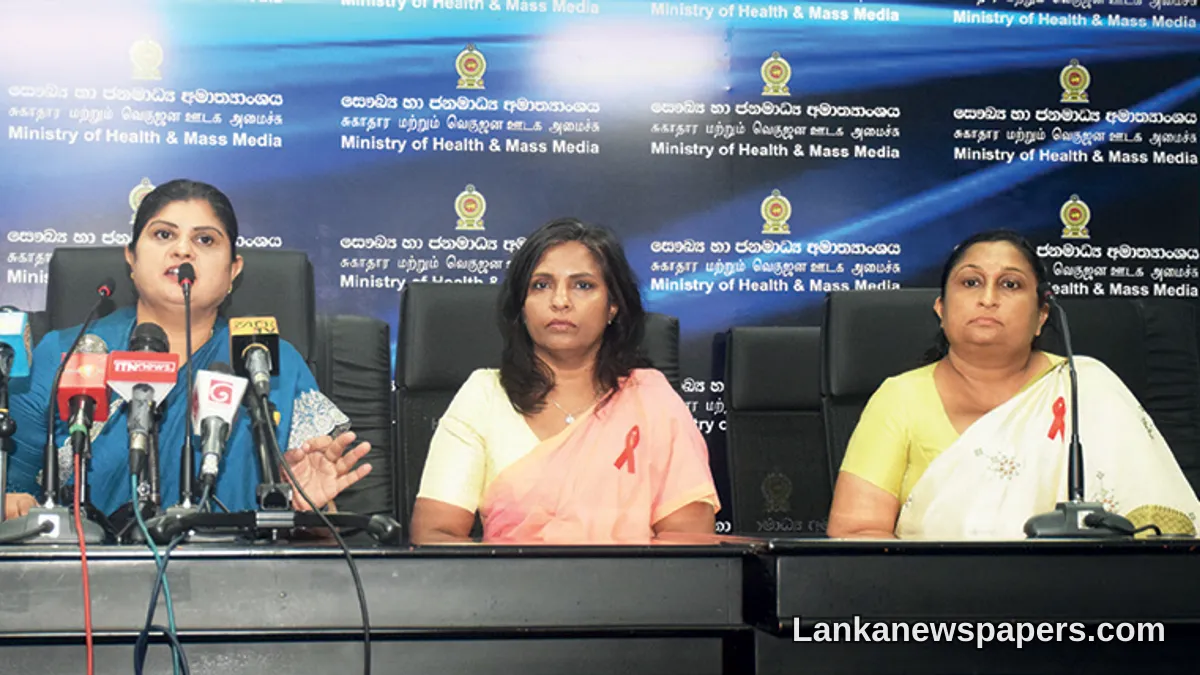
Sri Lanka has identified 8,700 people currently living with HIV, with 708 new infections recorded in just the first ten months of this year, according to specialists from the National STD and AIDS Control Programme who spoke at a press briefing held at the Ministry of Health on 25 November 2026.
Dr. Vinoo Dharmakulasinghe, a venereologist attached to the National STD and AIDS Control Programme, stated that 874 new HIV infections had been reported throughout 2025 in total. She urged the public not to delay in visiting HIV clinics for testing.
Males Account for 87% of New Cases
Of the new infections identified in 2025, 87 percent involve male individuals. Dr. Dharmakulasinghe identified the primary drivers of the increase as same-sex contact and intravenous drug use — particularly instances where needles are shared among users, allowing the virus to pass from one person to another.
She also noted that only 66 percent of those living with HIV in Sri Lanka are currently aware of their status, highlighting a significant gap in diagnosis. A notable rise has been observed among the 15 to 24 age group, raising concern among public health officials.
No Symptoms for Years — But the Virus is Active
Dr. Umedha Jayasinghe, another venereologist from the National STD and AIDS Control Programme, cautioned that HIV-positive individuals may show no symptoms whatsoever for eight to nine years after infection. By the time the immune system becomes severely weakened, the condition can reach a dangerous stage.
She emphasised, however, that early detection changes the picture significantly. A person diagnosed with HIV at an early stage can manage the condition and live a normal life, with a life expectancy reaching into their seventies or eighties.
40 Clinics Island-Wide Offering Lifelong Treatment
Dr. Jayasinghe noted that 40 HIV clinics are now operational across the island, covering all 25 districts. Patients are encouraged to attend these clinics and continue treatment throughout their lifetime, as consistent medical care is essential to maintaining health and preventing transmission.
Sex Education May Enter School Curriculum
Looking ahead, Dr. Jayasinghe revealed that the Ministry of Health is planning discussions with the Ministry of Education on incorporating sexual health education into the school curriculum — a step officials hope will help reduce new infections, particularly among young people.
The press briefing was also addressed by Dr. Madhavi Gunathilaka, an epidemiologist from the National STD and AIDS Control Programme, and Manoj Jinadasa, a senior lecturer in the Department of Mass Communication at the University of Kelaniya.

💬 Join the Discussion 2
See what readers are saying — and add your view.
sex education in schools is a must now, no point hiding from reality
exactly but parents here will never allow it, too embarrassed to talk