Sri Lanka's Parliamentary Committee on Ways and Means has held detailed discussions on restructuring vehicle import taxes, with a strong emphasis on introducing concessions to make electric vehicles (EVs) more accessible to the general public.
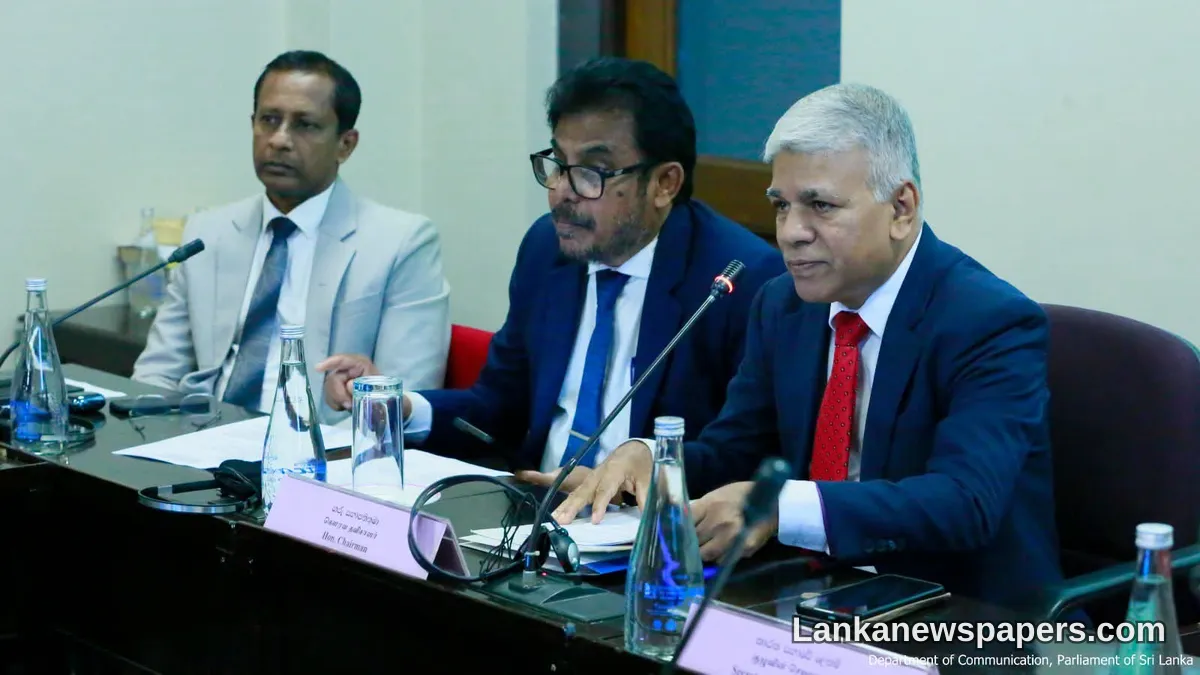
The committee meeting, held on November 18 at Parliament under the chairmanship of MP Wijesiri Basnayake, brought together Sri Lanka Customs officials alongside several lawmakers to examine the country's current vehicle import tax framework in light of the recent easing of import restrictions.
A Tangled Tax Structure Under Review
Members of the committee noted that the existing vehicle import tax system is overly complex, taking into account multiple variables including engine capacity, Cost, Insurance and Freight (CIF) value, excise duty and a range of other tax components. Officials acknowledged that this complexity, combined with current Customs valuation procedures, has created significant challenges for importers navigating the post-restriction landscape.
The committee stressed the urgent need to streamline tax policies and revisit Customs valuation practices to ease the burden on the import trade.
Push to Make Electric Vehicles More Affordable
A central theme of the discussions was the promotion of electric vehicles in Sri Lanka. The committee examined proposals to introduce targeted tax concessions and policy incentives designed to lower the cost of EVs and encourage broader public uptake.
Alongside direct import incentives, members also discussed the importance of supporting solar power generation and battery energy storage infrastructure — recognising that a large-scale shift to electric vehicles would place considerable additional demand on the national electricity grid.
EV Battery Disposal a Growing Concern
Officials raised alarm over the lack of a formal system in Sri Lanka for the safe disposal or recycling of electric vehicle batteries at the end of their operational life. The committee explored the possibility of placing responsibility for battery disposal and recycling squarely on the shoulders of vehicle importers or manufacturers.
The meeting also highlighted the need to establish quality standards for electric vehicles and batteries, as well as the introduction of updated Harmonised System (HS) codes to ensure proper Customs classification of EVs and their components.
Customs Clearance Delays Flagged
The committee turned its attention to persistent delays in Customs clearance, attributed largely to the requirement for approvals from multiple government agencies before goods can be released. A key obstacle identified was the absence of an integrated digital platform linking Sri Lanka Customs, the Department of Import and Export Control and other relevant institutions.
These procedural bottlenecks mean containers frequently remain at ports for extended periods, leaving importers to absorb mounting storage costs. The committee called for stronger inter-agency coordination and faster clearance timelines to address the problem.
Who Attended
The meeting was attended by Deputy Ministers Eranga Weeraratne and Nishantha Jayaweera, along with MPs Ashoka Sapumal Ranwala, Dr. Nandana Millagala and Champika Hettiarachchi, in addition to Sri Lanka Customs representatives.
While the committee's discussions covered a wide range of potential reforms and tax concessions, no immediate policy changes or new EV tax relief measures were announced at this stage.


💬 Join the Discussion 3
See what readers are saying — and add your view.
EV concessions sound good but who can afford those cars anyway
finally some good news, but lets see if they actually do it
exactly, talk only no? every year same story