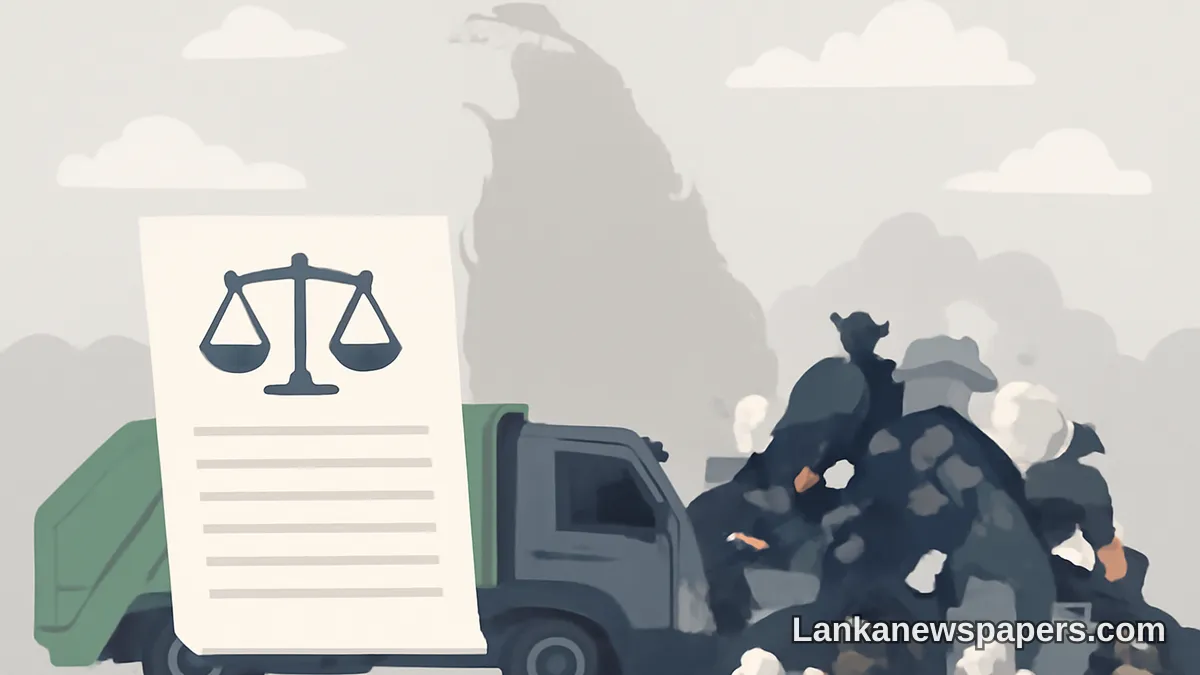
Sri Lanka is drowning in waste. From overflowing municipal dumps to plastic-choked waterways and garbage heaped along roadsides, the island's solid waste crisis has become impossible to ignore. Yet, for all the urgency the problem demands, the country already possesses a substantial body of legislation designed to tackle it. The uncomfortable truth, experts and observers agree, is that enforcement remains critically, chronically weak.
A Legal Framework That Exists Only on Paper
Sri Lanka is not short of laws governing waste management. Regulations fall under multiple statutes and are administered by a patchwork of authorities, including local government bodies, the Central Environmental Authority, and provincial councils. On paper, the framework is comprehensive. In practice, it is largely ineffective.
Illegal dumping continues in plain sight. Businesses and households routinely discard waste without consequence. Penalties that exist within the law are rarely imposed, and prosecutions remain the exception rather than the rule. The result is a regulatory environment where violations are widespread and accountability is virtually absent.
Local Authorities Struggling to Cope
Municipal councils and local authorities bear the primary burden of waste collection and disposal across the country. Many are under-resourced, lacking adequate vehicles, equipment, and trained personnel to manage the volumes of waste their communities generate daily. Some councils collect fees for waste services but fail to reinvest those funds into improving infrastructure or enforcement capacity.
The financial and institutional weaknesses at the local government level create a ripple effect. Without proper collection systems, residents resort to open burning or illegal dumping. Without meaningful penalties being applied, there is little incentive to change behaviour. The cycle continues unbroken.
A Growing Environmental and Public Health Threat
The consequences of this enforcement gap extend well beyond aesthetics. Improperly managed waste contaminates groundwater, pollutes rivers and coastal areas, and creates breeding grounds for disease-carrying mosquitoes. Urban flooding is worsened when drainage channels become blocked with solid waste. Communities living near unofficial dump sites bear a disproportionate health burden, often with no legal recourse.
Sri Lanka generates an estimated 6,000 to 7,000 metric tonnes of solid waste per day, a figure that has grown steadily alongside population growth and changing consumption patterns. Organic matter makes up the largest share of this waste stream, yet composting and organic waste diversion programmes remain limited in scale and reach.
The Gap Between Policy and Reality
Successive governments have announced plans, launched awareness campaigns, and introduced pilot programmes aimed at modernising waste management. Some initiatives have shown promise at a local level. However, scaling such efforts nationally and sustaining them over time has proven elusive. Political will, consistent funding, and strong institutional coordination have all fallen short of what the problem demands.
Civil society groups and environmentalists have long argued that what Sri Lanka needs is not more legislation but rigorous enforcement of the laws already in existence. That means equipping enforcement officers with the authority and resources to act, ensuring that penalties are applied consistently, and holding both individuals and industries accountable for the waste they generate.
What Needs to Change
- Strengthening enforcement capacity at the local government level with dedicated personnel and funding
- Applying existing penalties consistently to deter illegal dumping and open burning
- Expanding composting and waste separation programmes to reduce landfill pressure
- Improving inter-agency coordination between the Central Environmental Authority, local councils, and provincial bodies
- Investing in public education to shift household and community behaviour around waste disposal
Sri Lanka does not lack the legal tools to address its waste crisis. What it lacks is the consistent political and institutional will to use them.
Until enforcement catches up with legislation, the gap between the country's environmental laws and the reality on its streets will continue to widen — and so will the mountains of uncollected garbage that have become a defining and damaging feature of the national landscape.



💬 Join the Discussion 3
See what readers are saying — and add your view.
goverment prints rules then forgets about it, same story every time
laws are there but who is enforcing? nobody gets fined ever
exactly, my neighbor burns garbage every night, nobody cares