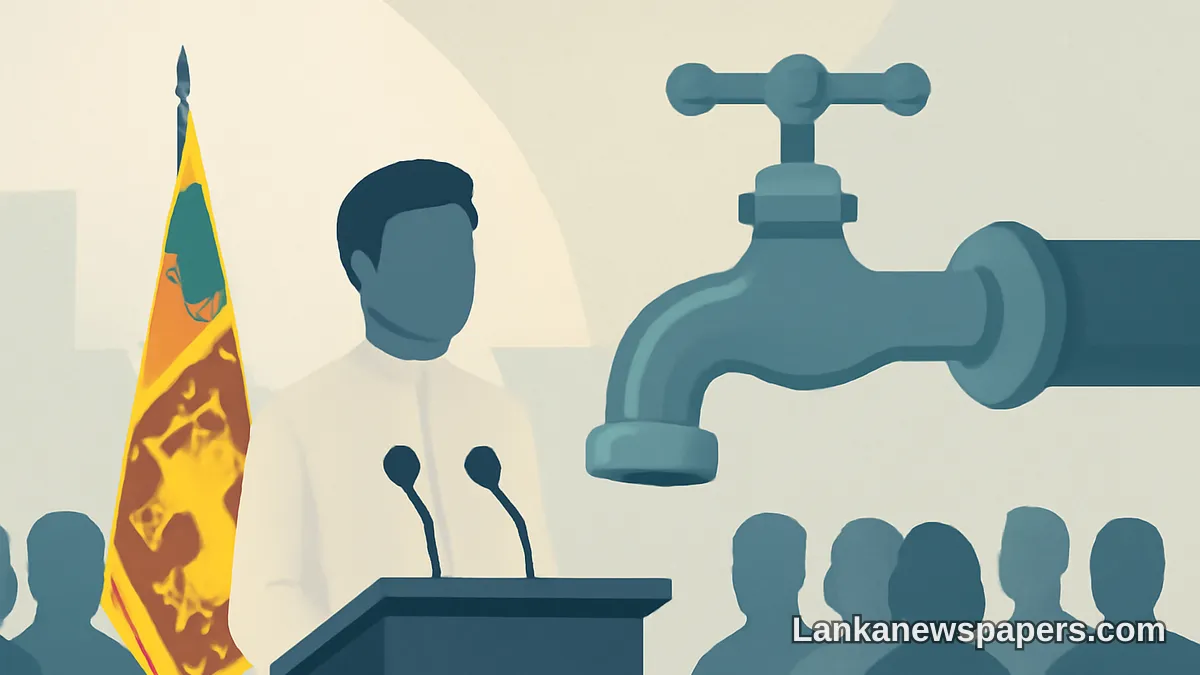
Power politics, by its very nature, has rarely been associated with principle or loyalty — and Sri Lanka is no exception to this universal truth. If anything, the island's political culture has cultivated a particularly sharp brand of self-interest, where those who rise on the coattails of the powerful can fall just as swiftly when the winds of favour shift.
The Machinery of Political Patronage
Across successive governments, a familiar pattern has emerged: certain individuals — bureaucrats, officials, and allies — are elevated to positions of privilege not necessarily on merit, but on the strength of their proximity to those in power. These so-called "blue-eyed boys" enjoy the protection, perks, and prestige that come with being in a ruling faction's inner circle.
State institutions have repeatedly been witness to appointments driven more by political calculation than by competence. Officials willing to serve the agenda of their political patrons are rewarded handsomely, while those who resist or fall out of favour find themselves sidelined, transferred, or worse.
A Relationship Built on Sand
Yet history has shown, time and again, that such arrangements carry a hidden cost. The very politicians who elevate their favourites rarely hesitate to abandon them when it becomes politically expedient to do so. When investigations are launched, public scrutiny intensifies, or a change of government occurs, those who once basked in official favour can find themselves dangerously exposed.
Politicians in Sri Lanka are so self-seeking that they do not hesitate to safeguard their own interests at the expense of those around them — including the very individuals they once championed.
The pattern is deeply entrenched. Officials who carried out questionable directives at the behest of political masters often discover, in their hour of need, that those masters are nowhere to be found. Loyalty, it turns out, is a one-way street in Sri Lankan power politics.
The Reckoning That Follows
What awaits these individuals when the political tide turns is rarely pleasant. Some face disciplinary proceedings. Others find their careers abruptly derailed. In more serious cases, legal accountability comes knocking — and without the shield of political protection, they stand fully exposed to consequences they once believed they were immune from.
For the Sri Lankan public, these episodes offer a cautionary tale about the dangers of a system where personal allegiance to powerful figures takes precedence over institutional integrity and the rule of law.
A System in Need of Reform
Until structural reforms are put in place to insulate public institutions from political interference, the cycle is likely to continue. Capable officials will remain vulnerable to pressure from above, while those willing to bend the rules for political masters will continue to be rewarded — at least temporarily.
The question Sri Lanka must eventually confront is not merely what fate awaits the blue-eyed boys of any particular government, but how long the country can afford a political culture that produces them in the first place.



💬 Join the Discussion 1
See what readers are saying — and add your view.
these ppl act loyal until the minister stops calling. then suddenly they "never knew him