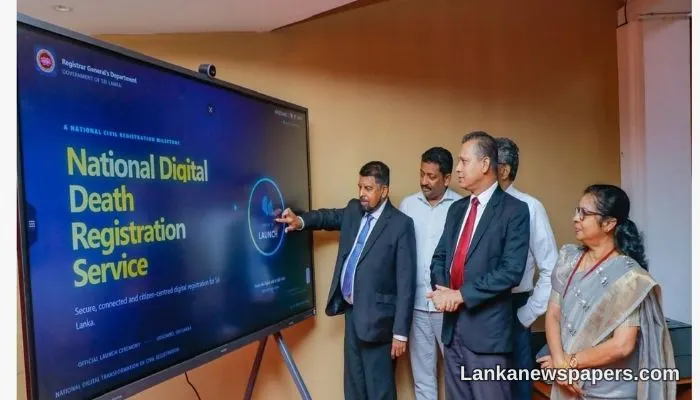
Sri Lanka has taken a significant step towards modernising its civil registration infrastructure with the official launch of a new digital death certificate system, introduced under the Registrar General's Department's e-Population Register programme.
A Move Away from Paper-Based Processes
The newly launched system marks a decisive shift from the country's longstanding paper-based death registration process, which has historically been associated with delays, bureaucratic hurdles, and inconvenience for grieving families at an already difficult time.
The digital platform is designed to streamline the issuance of death certificates, reducing the time and effort required by citizens to obtain official documentation following the loss of a loved one.
Part of a Broader Digital Transformation
The initiative falls under the broader e-Population Register programme spearheaded by the Registrar General's Department, which aims to bring Sri Lanka's civil registration services into the digital age. The programme reflects the government's ongoing commitment to improving public service delivery through technology.
- Faster processing and issuance of official death certificates
- Reduced need for in-person visits to government offices
- Greater accuracy and security in maintaining vital records
- Improved accessibility for citizens across the country
Significance for Sri Lankan Families
For ordinary Sri Lankans, obtaining a death certificate has traditionally involved multiple visits to government offices, lengthy waiting periods, and significant paperwork. The new digital system is expected to ease this burden considerably, allowing documentation to be processed more efficiently during what are often emotionally and logistically demanding circumstances.
The launch of the digital death certificate system represents a meaningful advancement in how the state serves its citizens, placing convenience and efficiency at the forefront of civil administration.
The Registrar General's Department has indicated that the digital system is part of a continuing effort to bring all key civil registration services — including births, marriages, and deaths — under a unified and modernised electronic framework.
Observers and civil society groups have broadly welcomed the development, noting that digital civil registration is a vital component of good governance and transparent public administration in the 21st century.

💬 Join the Discussion 3
See what readers are saying — and add your view.
what happens to ppl in villages with no internet? they just forgotten?
finally something useful from the goverment, about time honestly
useful if the system actually works lah, knowing our lot it will crash day one