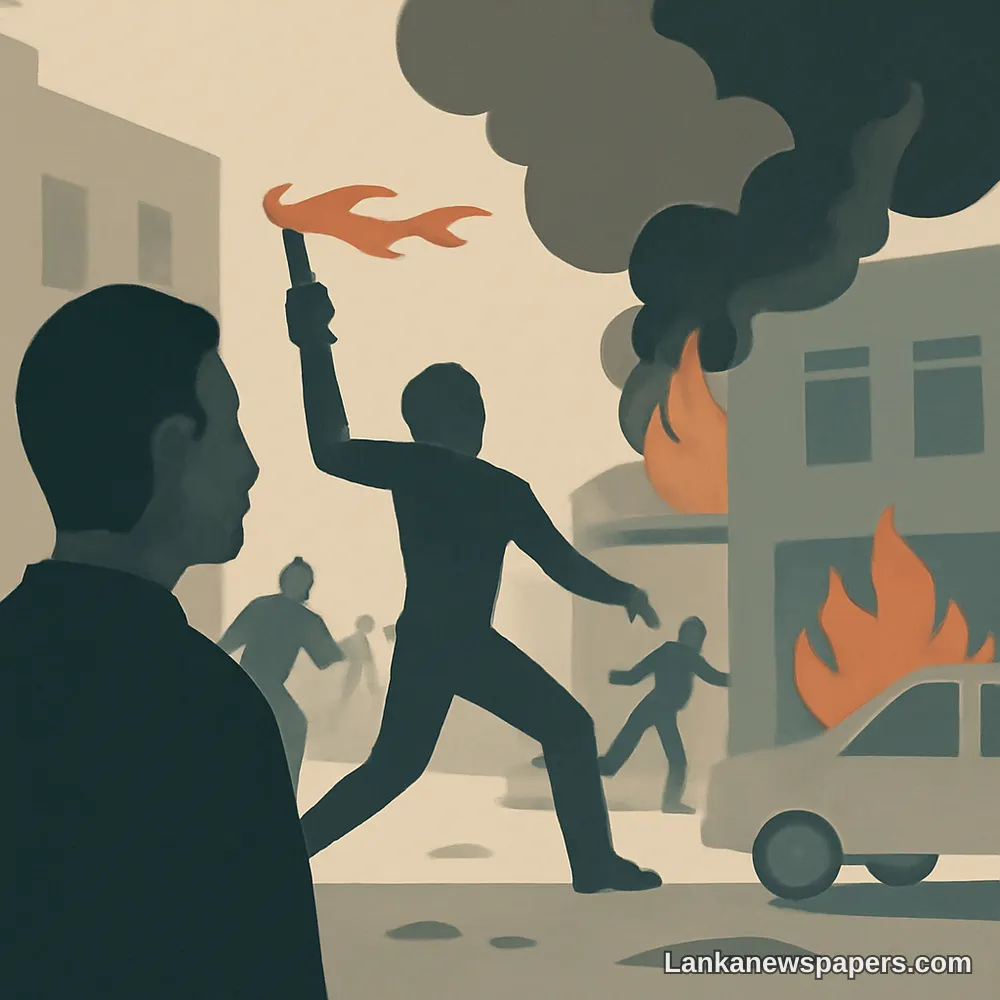
A Nation Scarred by Seven Days of Violence
Forty-two years have passed since one of the darkest chapters in Sri Lanka's modern history unfolded across the island, yet the wounds carved by Black July continue to shape the nation's collective memory, its politics, and its identity. The anti-Tamil pogrom of July 1983 remains a defining moment — a week that irrevocably altered the course of Sri Lankan society and set the country on a path toward nearly three decades of civil war.
What Happened in July 1983
The violence erupted on the night of 23 July 1983, following an ambush by the Liberation Tigers of Tamil Eelam in Thirunelveli, Jaffna, in which 13 Sri Lanka Army soldiers were killed. When the bodies were brought to Colombo and news of their deaths spread, mobs began targeting Tamil civilians, businesses, and homes across the capital and beyond.
What followed was not spontaneous chaos alone. Evidence has long suggested that organised elements, including individuals with political connections, played a role in directing and facilitating the violence. Voter registration lists were allegedly used to identify Tamil-owned properties. Entire neighbourhoods were torched. Thousands of Tamil families fled their homes, many seeking refuge in temples, schools, and police stations.
- An estimated 400 to 3,000 Tamils were killed, with figures varying widely across different accounts and investigations.
- Approximately 150,000 Tamil civilians were displaced within the country.
- Hundreds of Tamil-owned businesses and homes across Colombo and other cities were burned or looted.
- Dozens of Tamil political prisoners were massacred inside Welikade Prison in two separate incidents during the same week.
The Aftermath and the Diaspora
The events of Black July triggered a mass exodus of Sri Lankan Tamils to countries including the United Kingdom, Canada, Australia, France, and Germany. This diaspora would go on to play a significant role in funding and sustaining the Tamil militant movement for years to come, deepening the conflict far beyond Sri Lanka's shores.
Within the island, Black July acted as a catalyst that transformed what had been a simmering ethnic tension into full-scale civil war. Recruitment into Tamil militant groups surged dramatically in the weeks and months that followed, with many young Tamil men and women citing the pogrom as the moment they concluded that peaceful coexistence within a unitary Sri Lankan state was no longer possible.
Accountability That Never Came
Decades later, no individual has been formally convicted for organising or directing the violence of July 1983. Survivors and human rights advocates continue to call for official accountability, a credible investigation, and state recognition of the atrocities committed. While successive governments have acknowledged the tragedy to varying degrees, critics argue that meaningful justice remains elusive.
For the Tamil community, Black July is not simply a historical event to be commemorated — it is an open wound that demands acknowledgement, accountability, and genuine reconciliation from the Sri Lankan state.
Remembrance and Reconciliation
Each year, civil society groups, Tamil community organisations, and interfaith bodies across Sri Lanka and in the diaspora mark the anniversary of Black July. Memorial events, discussions, and cultural programmes are held to honour the victims and to ensure that the events of 1983 are not forgotten or minimised in the national narrative.
For many Sri Lankans — Sinhalese, Tamil, and Muslim alike — remembering Black July is understood not as an act of division but as a necessary step toward honest reckoning with the past. Scholars, activists, and community leaders stress that a lasting peace in Sri Lanka cannot be built on silence or selective memory, but only on a foundation of truth and genuine mutual respect.
As Sri Lanka continues its long and often painful journey toward post-war reconciliation, the legacy of Black July serves as both a warning and a moral obligation — a reminder of how quickly hatred can consume a society, and how much work remains to ensure it never does so again.
💬 Join the Discussion 3
See what readers are saying — and add your view.
my grandfather lost everything that week. we dont talk about it enough.
40 years and still no real justice for those families. shameful.
exactly. goverment just does ceremony and forgets after.