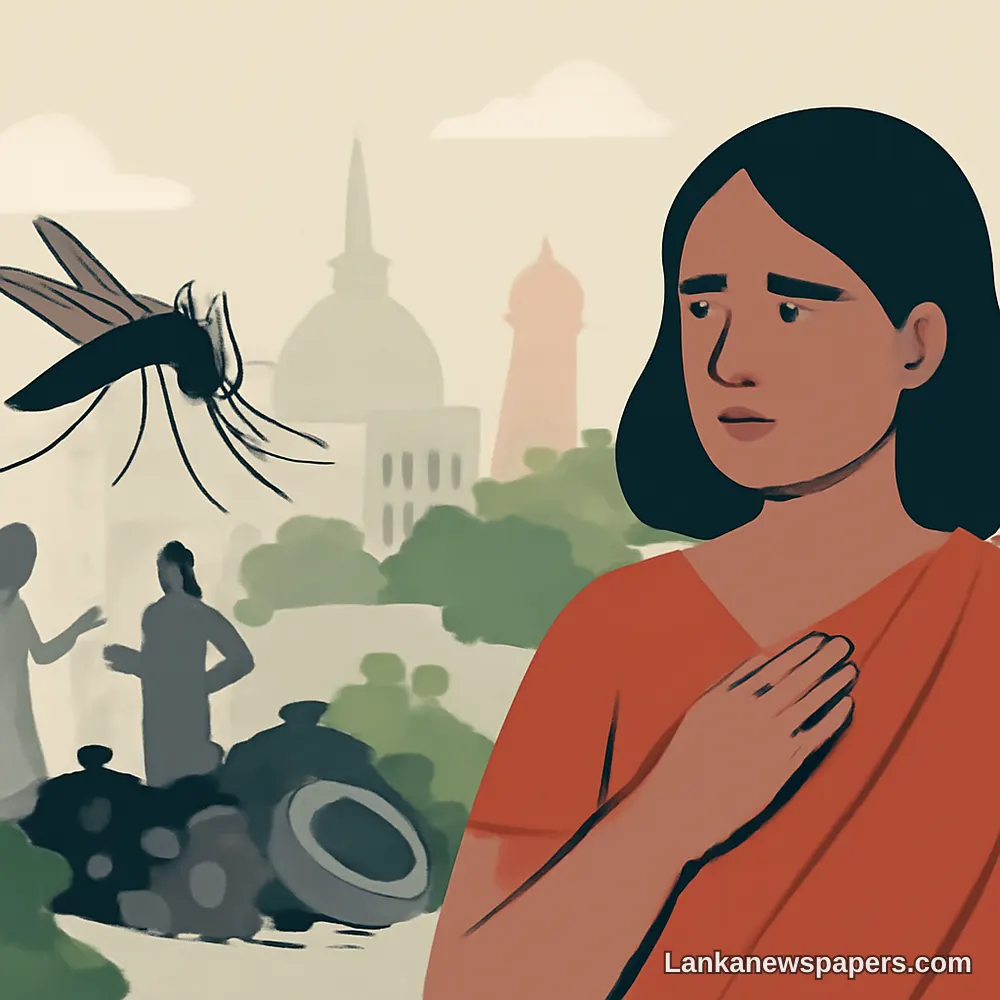
The death of a young university student at Ruhuna from dengue fever has once again cast a harsh spotlight on Sri Lanka's seemingly endless battle with a disease that health authorities have failed to bring under lasting control. The tragedy is not merely that a promising life has been cut short — it is that this loss feels grimly familiar, a pattern repeated season after season with little meaningful change.
A Crisis Met With Clichés
Each time dengue claims another victim, officials reach for the same well-worn responses: appeals to keep premises clean, reminders about stagnant water, and an implicit finger pointed squarely at the public. While personal responsibility does play a role in disease prevention, this ritualistic cycle of blame has come to substitute for genuine policy action — and communities across the country are paying the price with their lives.
The repeated emphasis on individual behaviour conveniently deflects scrutiny away from systemic failures in public health infrastructure, vector control programmes, and emergency response capacity. Dengue is not a new enemy in Sri Lanka. It is a recurring epidemic that the health system has had decades to confront with appropriate seriousness.
Why Recurring Epidemics Signal a Deeper Failure
Dengue fever, transmitted through the bite of the Aedes aegypti mosquito, thrives in urban and semi-urban environments where water collects in containers, construction sites, and poorly maintained drainage systems. Sri Lanka's rapid urbanisation, combined with inconsistent municipal waste management and inadequate drainage infrastructure, creates ideal breeding conditions that no amount of public awareness messaging can fully address on its own.
What is needed is not another pamphlet campaign. What is needed is coordinated, sustained, and adequately funded vector control — the kind of commando-style operational response that treats dengue outbreaks as the public health emergencies they genuinely are.
The Cost of Inaction
The human cost is incalculable. University students, children, working adults — dengue does not discriminate. Beyond the grief of families, there is a significant economic burden on the healthcare system, on families managing hospitalisation costs, and on employers absorbing the loss of productive workers during outbreak periods.
- Hospital admissions spike predictably during rainy seasons, yet surge preparedness remains inadequate.
- Vector control teams are often under-resourced and unable to sustain operations between outbreak peaks.
- Coordination between local government bodies, health authorities, and community organisations remains fragmented.
What Bold Action Would Look Like
Meaningful progress against dengue requires a fundamental shift in approach. Rather than reactive scrambles when death tolls rise, Sri Lanka needs a standing, year-round dengue control mechanism with clear accountability at every level of government.
Treating dengue prevention as a seasonal obligation rather than a permanent public health priority is precisely what allows the epidemic cycle to repeat itself year after year.
Local authorities must be empowered — and held accountable — to conduct regular inspections, enforce environmental hygiene standards, and mobilise rapid-response fogging and larviciding operations before outbreaks peak. The Ministry of Health must move beyond awareness campaigns and invest in the operational infrastructure that makes sustained vector control possible.
A Call to Act Before the Next Funeral
The Ruhuna student who lost her life deserved better. So do the thousands of Sri Lankans who will be hospitalised with dengue this year, and the families who will face the unbearable news that a preventable disease has taken someone they love.
Sri Lanka has the knowledge, the medical expertise, and the institutional framework to tackle dengue far more effectively than it currently does. What has been missing is the political will and operational urgency to treat this epidemic as the national emergency it has long been. That must change — not after the next outbreak, but now.



💬 Join the Discussion 2
See what readers are saying — and add your view.
My cousin also got dengue last month, goverment did nothing. So sad about this student.
Same in our area, drains full but officers just talking talking.