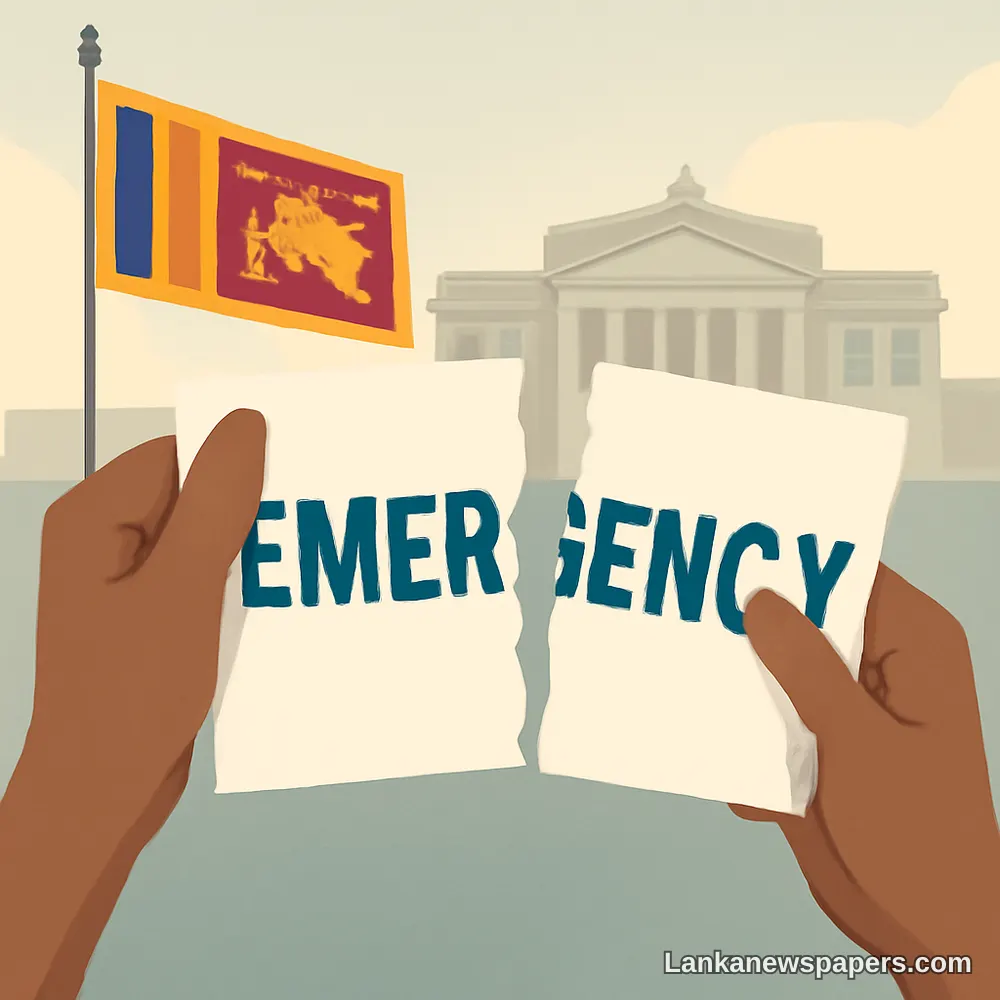
The JVP-NPP government has decided to let the Emergency regulations lapse, according to media reports, bringing an end to a period of rule that many observers had long argued was unnecessary and unjustifiable in its continuation.
A Step in the Right Direction
The decision has been broadly welcomed across political and civil society circles in Sri Lanka. Emergency powers, by their very nature, are intended to be temporary measures deployed during periods of acute national crisis. That the government has now chosen not to renew them is a positive development — one that signals at least a nominal commitment to restoring normalcy and upholding democratic norms.
However, the relief is tempered by a straightforward reality: this should have happened considerably earlier. The delay in lifting the Emergency regulations raises legitimate questions about the government's appetite for retaining extraordinary powers well beyond any reasonable justification.
Better Late Than Never
While the timing is far from ideal, the lapsing of Emergency regulations is nonetheless a step that Sri Lankans and democratic advocates had been calling for. Civil liberties that are curtailed under Emergency rule — including restrictions on assembly, expression, and legal recourse — can now begin to be fully restored in practice.
Critics, however, are quick to note that allowing the regulations to lapse appears to be less a principled decision and more a case of the government making a virtue of necessity. In other words, rather than proactively dismantling Emergency powers as a demonstration of democratic confidence, the administration appears to have simply allowed them to expire when sustaining them became politically untenable.
Much Work Remains Ahead
The end of Emergency regulations, while significant, should not be mistaken for the completion of a broader democratic renewal. Sri Lanka faces a substantial agenda of reforms that remain unaddressed, including:
- Strengthening institutional independence and accountability across state bodies
- Addressing the economic grievances that continue to affect ordinary Sri Lankans
- Rebuilding public trust in governance following years of political turbulence
- Ensuring that Emergency-era measures have not left lasting damage to civil liberties frameworks
The JVP-NPP government came to power on a wave of public hope and a mandate for meaningful change. Allowing Emergency regulations to quietly lapse, months after they should have been lifted, is a reminder that delivering on that mandate requires more than passive inaction — it demands deliberate, courageous governance.
The government has apparently made a virtue of necessity — but Sri Lanka needs leadership that acts on principle, not merely on political convenience.
As the country moves forward, citizens and political observers alike will be watching closely to see whether this development marks the beginning of a genuine democratic reset, or simply the removal of one headline concern while deeper challenges remain unresolved.
💬 Join the Discussion 2
See what readers are saying — and add your view.
finally lah, took them long enough. better late than never i suppose.
exactly, why did they wait this long though? what were they afraid of?