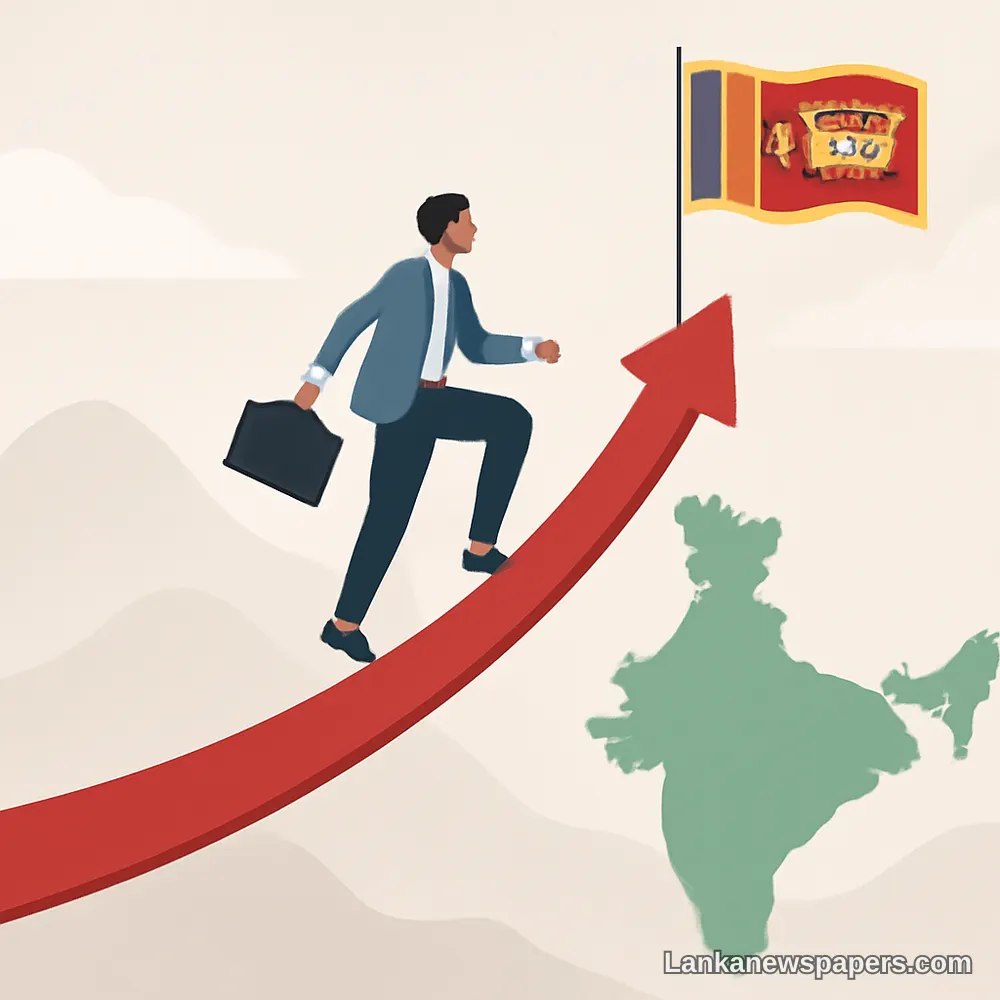
Sri Lanka has achieved a significant economic milestone, being reclassified by the World Bank as an upper-middle-income economy — a distinction that its far larger neighbour India has yet to attain. The development has drawn considerable attention given that Sri Lanka is still recovering from one of the worst economic crises in its post-independence history.
What the Classification Means
The World Bank classifies economies based on Gross National Income (GNI) per capita. Countries are grouped into four tiers: low-income, lower-middle-income, upper-middle-income, and high-income. To qualify as upper-middle-income, a country must record a GNI per capita of between USD 4,516 and USD 14,005. Sri Lanka has now crossed that lower threshold, earning it the upgraded classification.
Sri Lanka's Remarkable Turnaround
The reclassification is particularly striking given that just a few years ago, Sri Lanka was in the grip of a devastating economic collapse. In 2022, the island nation defaulted on its foreign debt for the first time in its history, faced crippling fuel and medicine shortages, and saw mass public protests that ultimately led to the ousting of then-President Gotabaya Rajapaksa.
Since then, Sri Lanka has undertaken a rigorous economic stabilisation programme backed by the International Monetary Fund. Reforms in taxation, energy pricing, and public spending helped gradually restore macroeconomic stability, rebuild foreign reserves, and revive investor confidence.
Why India Has Not Yet Made the Cut
India, despite being the world's fifth-largest economy by total GDP and one of the fastest-growing major economies, has a much lower GNI per capita due to its enormous population of over 1.4 billion people. Total national income, when divided across such a vast population, results in a per capita figure that currently places India in the lower-middle-income category.
In essence, aggregate economic size does not automatically translate into per capita prosperity — a distinction that separates India's situation from smaller nations like Sri Lanka, which has a population of approximately 22 million.
A Point of National Pride Amid Ongoing Challenges
For Sri Lankans, the reclassification represents a meaningful symbolic and practical achievement. Upper-middle-income status can influence a country's access to certain categories of concessional financing and signals improved creditworthiness to international markets.
However, economists caution that the classification should not breed complacency. Sri Lanka continues to carry a heavy external debt burden, and the full implementation of its IMF programme remains critical to sustaining the recovery.
The reclassification is an important recognition of progress, but the work of rebuilding a resilient and inclusive economy is far from complete.
For a country that was on the brink of total economic collapse just three years ago, reaching upper-middle-income status is nonetheless a notable marker of how far Sri Lanka has come — and a reminder of how much still depends on disciplined and consistent reform in the years ahead.



💬 Join the Discussion 4
See what readers are saying — and add your view.
goverment will use this to avoid helping the poor, watch
india has 1.4 billion ppl, cant compare like this men
after the economic crisis we climbed back? ok impressive ngl
bro we still struggling here, who is feeling this upper middle income