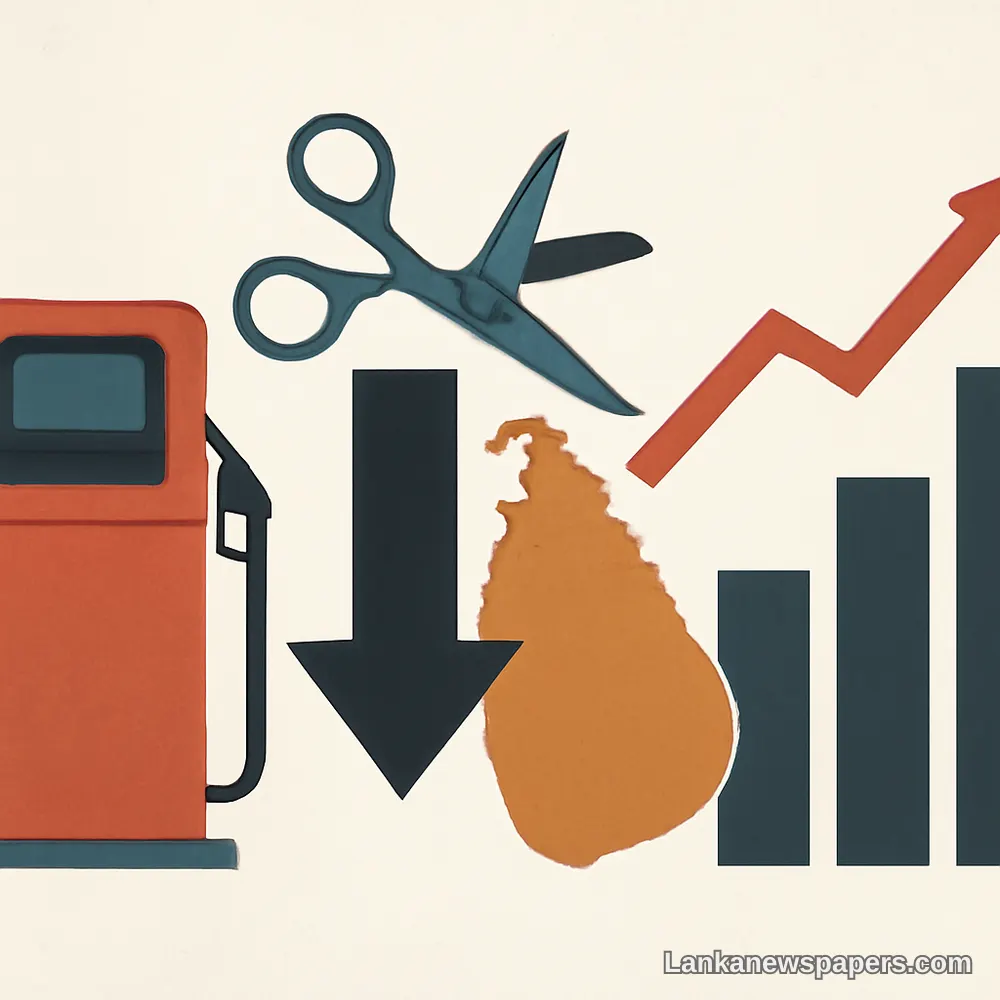
Sri Lanka has announced a reduction in fuel prices, offering some relief to consumers and businesses still recovering from the island nation's historic economic crisis — even as the country grapples with inflation rising to its highest level in three years.
Fuel Price Reduction Brings Temporary Relief
The government moved to cut fuel prices in a bid to ease the financial burden on households and industries that have long struggled with elevated energy costs. The reduction is expected to have a ripple effect across the economy, potentially lowering transportation costs and bringing down the prices of essential goods that depend heavily on fuel for distribution and production.
The move has been welcomed by motorists and business operators alike, many of whom have endured punishing fuel costs in the aftermath of the 2022 economic collapse, which saw Sri Lanka run critically short of foreign exchange reserves needed to finance fuel imports.
Inflation Surges to Three-Year High
However, the positive news on fuel pricing is tempered by a concerning rise in inflation, which has climbed to its highest point in three years. The increase signals that price pressures remain deeply embedded in the Sri Lankan economy despite ongoing stabilisation efforts supported by the International Monetary Fund.
Rising inflation poses a significant challenge to policymakers, who must balance the need to stimulate economic recovery with the imperative of keeping prices under control. For ordinary Sri Lankans, higher inflation means the cost of living continues to erode purchasing power, particularly for those in lower-income brackets who spend a disproportionate share of their earnings on food and basic necessities.
A Delicate Balancing Act for Policymakers
The simultaneous announcement of fuel price cuts alongside surging inflation highlights the complex and often contradictory pressures facing Sri Lanka's economic managers. While reducing fuel prices may contribute to easing inflationary pressures over time by lowering production and transport costs, the immediate inflation figure suggests structural challenges that go beyond energy pricing alone.
Sri Lanka has been working to restore macroeconomic stability following the unprecedented crisis that forced the country to default on its foreign debt for the first time in its history. The government has undertaken a series of tough fiscal reforms as part of its IMF-backed recovery programme, including tax increases and subsidy reductions.
Economists and market observers will be closely watching how the dual dynamics of falling fuel prices and rising inflation play out in the coming months, as Sri Lanka continues its fragile but ongoing path toward economic recovery.



💬 Join the Discussion 4
See what readers are saying — and add your view.
can someone explain how inflation high but fuel coming down, doesnt make sense to me
goverment trying to look good before election thats all
fuel price cut but everything else going up, what is the point
exactly, petrol cheap but rice price doubled no