How Sri Lanka's Economic Crisis Forced a Generation to Rebuild Life Abroad
A Nation Divided Between Celebration and Grief
For many Sri Lankans who lived through the devastating economic collapse of 2022, the contrast between joy and sorrow became an almost daily reality — sometimes playing out simultaneously within the same neighbourhood, or even the same building.
"On one side there'd be a wedding happening, on another, a funeral. We'd never seen this in Sri Lanka," one Sri Lankan recalled, capturing in a single image the raw emotional turbulence that gripped the island nation during its worst financial crisis in modern history.
A Crisis That Touched Every Household
The economic meltdown that brought Sri Lanka to its knees left few families untouched. Crippling fuel shortages, lengthy power cuts stretching up to thirteen hours a day, and the collapse of foreign currency reserves meant that ordinary life — already fragile for millions — became a test of sheer endurance.
Food prices soared beyond the reach of many households. Queues at petrol stations stretched for kilometres. Hospitals ran short of essential medicines. The rupee lost a catastrophic portion of its value almost overnight, wiping out the savings of middle-class families who had spent decades building financial security.
The Human Cost Behind the Headlines
What the economic data could never fully convey was the deeply personal cost carried by ordinary Sri Lankans. Weddings were postponed or scaled down drastically. Funerals, meanwhile, saw an uptick driven by despair, illness exacerbated by medicine shortages, and the stress of poverty closing in from all sides.
The juxtaposition — celebration and mourning side by side — became a symbol of a society struggling to hold itself together under extraordinary pressure.
Seeking a Future Elsewhere
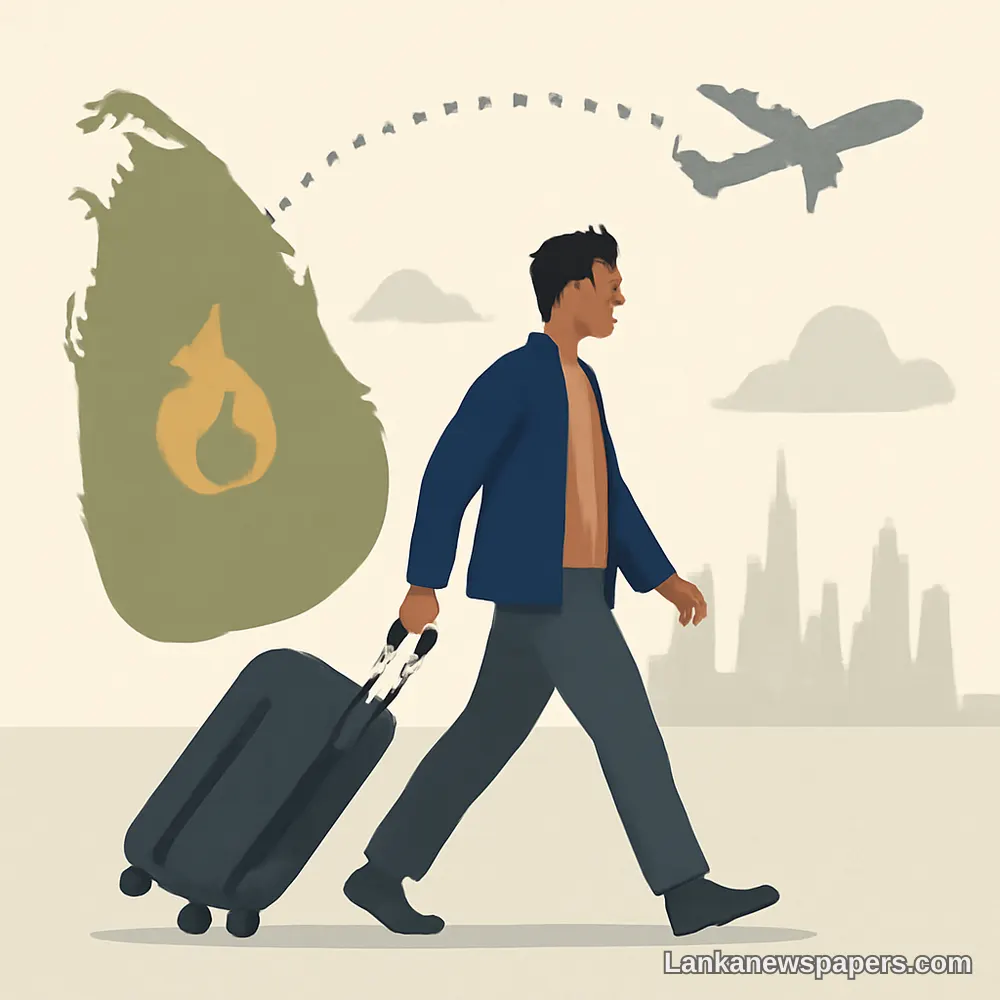
For a significant number of Sri Lankans, the crisis became the final push to leave the country they loved. A wave of emigration followed the worst months of the collapse, with professionals, young graduates, and skilled workers seeking opportunities in countries including the United Kingdom, Australia, Canada, and Ireland.
Many of those who left describe a painful mix of guilt and relief — grateful to have found stability abroad, yet haunted by the knowledge that family members and friends remained behind, still navigating a deeply uncertain economic landscape.
For those who left, the memories of that period — the queues, the darkness, the grief sitting alongside celebration — remain vivid reminders of just how close Sri Lanka came to complete collapse.
A Country Still Finding Its Footing
Sri Lanka has since taken significant steps toward economic stabilisation, securing an International Monetary Fund bailout and implementing a series of painful but necessary reforms. Tourism has shown signs of recovery, and foreign reserves have gradually improved.
Yet for many Sri Lankans — both those at home and those scattered across the diaspora — the scars of 2022 run deep. The extraordinary image of a wedding on one side of a street and a funeral on the other is not merely a striking anecdote. It is a testament to the resilience, and the heartbreak, of an entire generation that was forced to witness their country fracture — and somehow find the strength to carry on.



💬 Join the Discussion 0
Be the first to share your view on this story.