What Life Is There Without My Wife and Children?': A Father's Struggle to Rise From the Ruins of Cyclone Hidova
When Cyclone Hidova tore through Sri Lanka in the final days of November 2025, it left behind a trail of grief that the country may never fully recover from. According to BBC Sinhala, the disaster brought with it torrential rain, violent winds, catastrophic flooding and more than 1,800 landslides — claiming the lives of 646 people and leaving another 173 missing.
As the one-year anniversary of that tragedy approaches, BBC Sinhala visited the Rambadagama area in the Kothmale region of Nuwara Eliya District — one of the hardest-hit parts of the island. A single landslide that swept across three village divisions over a stretch of roughly three and a half kilometres killed nearly 49 people in Rambadagama alone. The bodies of only about half of them were ever recovered.
A Village That Looks Like a Graveyard
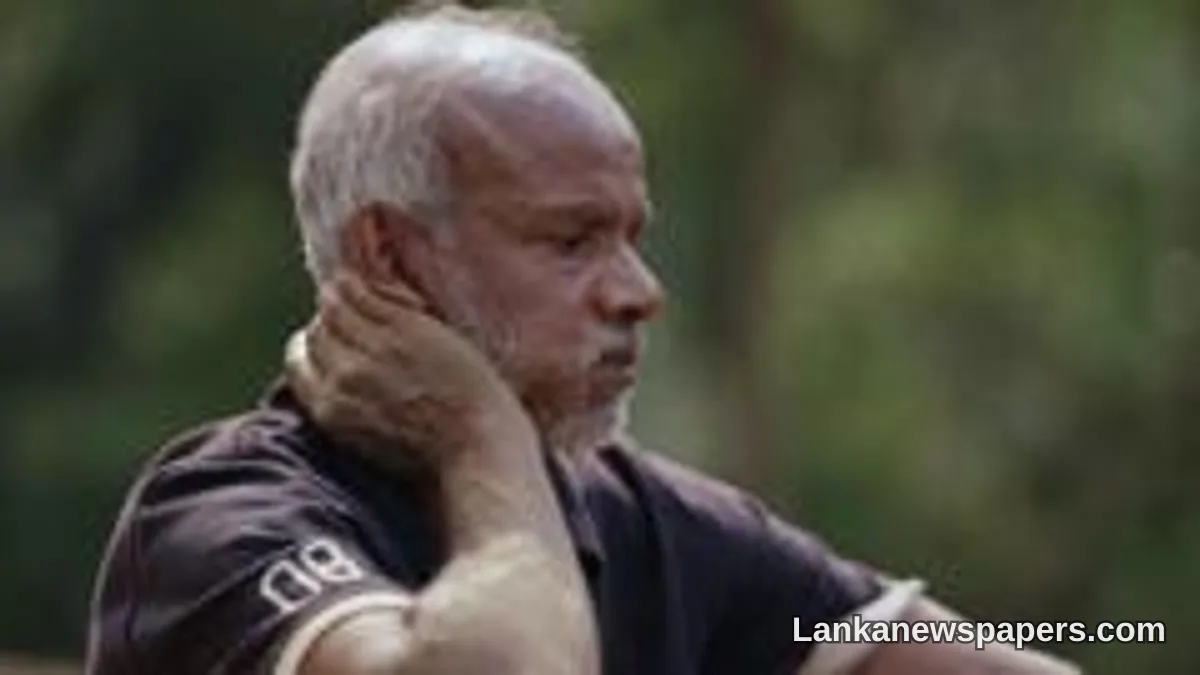
Anyone who enters the Medapathana area of Rambadagama today is met not with the picturesque hill-country village it once was, but with something that resembles a vast burial ground. Residents say they still feel as though cries of anguish rise from the earth beneath their feet. It was among the towering mounds of soil and rock that our reporters encountered a man who, despite losing everything, refuses to let go of life. That man is known to the community as Mudiyanse Mama.
The Night Everything Was Swallowed by the Earth
The night of 27 November 2025 was one of pitch darkness and terror for all of Rambadagama. Power and telephone connections had been severed for three days, and heavy rain continued to fall. At around 10.30 that night, Mudiyanse Mama was standing on the kitchen side of his home when the ground beneath him suddenly shook.
"All at once the ground shook. The moment it shook I looked up — the roof was gone, everything was gone. It came crashing and breaking all at once. The mud and the trees — everything came down together," he recalled.
As he scrambled to escape through the kitchen, the concrete roof slab collapsed and buried him under a layer of mud and debris. His beloved wife, his daughter — who was three months pregnant — his son-in-law, and their three-year-old granddaughter, all of whom had been inside the house at that moment, were swallowed by the landslide.
Twelve Hours Buried Alive
When Mudiyanse Mama regained consciousness, it was around three o'clock in the morning. The lower half of his body was completely trapped between mud and rock, his body battered and bruised. Yet he fought for his life.
"I told myself I had to survive, and somehow I managed to breathe. I had long fingernails, and I used them to scrape the mud away bit by bit. I dug and dug with my fingers until I could lift my head. And then I started to shout," he said.
His cries were finally heard by villagers the following morning. A group of young men — including a doctor who lived nearby — waded through the mud with great effort and pulled Mudiyanse free. By the time he was taken to hospital, it was around 11.00 the next morning. He had been trapped beneath the landslide for more than twelve hours.
Though fortune spared his life, the four members of his family — his entire world — were gone forever.
A Son Who Returned to Devastation
Mudiyanse Mama's only son, Amila Madhushan Bandara, had been away in Colombo for work on the night of the landslide, and so his life was spared. When Amila returned to the village the following day, he joined other residents in searching the debris. They were able to recover only his mother's body. The remains of his sister, her husband, and their little daughter remain buried beneath the great mound of earth to this day.
Where Mudiyanse Mama's house once stood, there is now no trace — no marker, no remnant of walls. Vegetation has grown over the rubble. Of everything that existed there before the disaster, only a single coconut palm still stands.
As Sri Lanka marks one year since Cyclone Hidova, the story of Mudiyanse Mama is a stark reminder that for many survivors, the landslide did not end when the mud settled — it continues, every day, in the silence left behind by those who were lost.

💬 Join the Discussion 2
See what readers are saying — and add your view.
poor man, no words. goverment must help these ppl properly not just talk
exactly, after every disaster same story, politicians come take photos and disappear