Eight EPDP Members Handed Death Sentences for 2008 Batticaloa Abduction and Murder
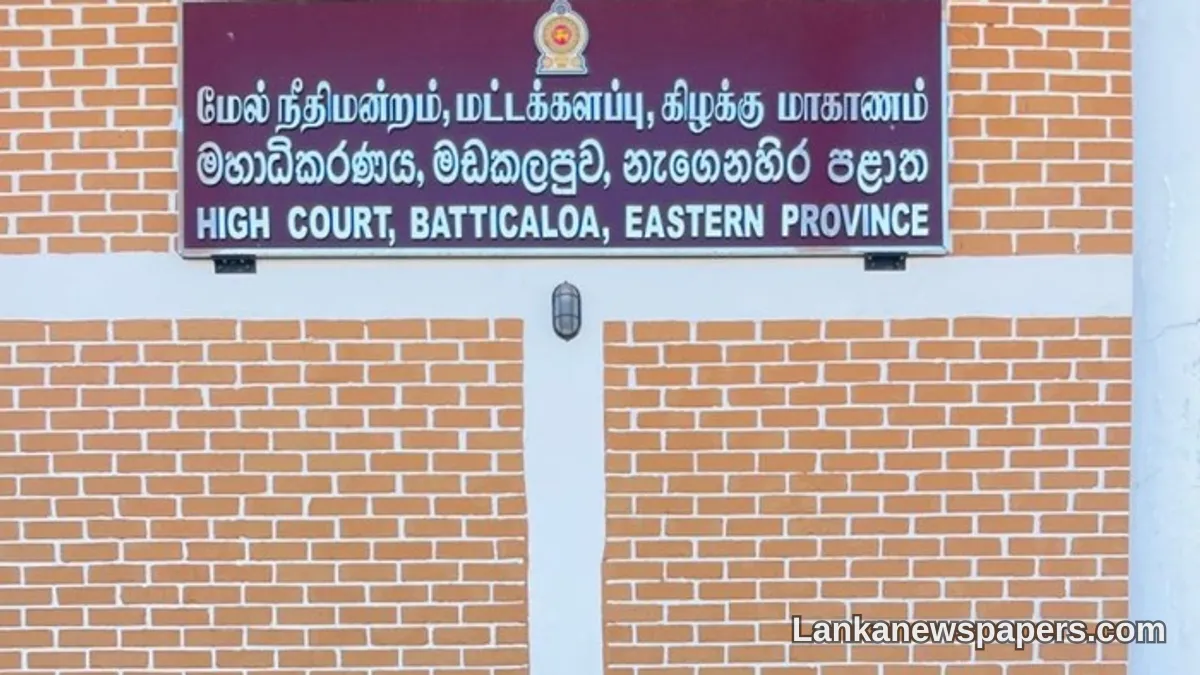
Eight members of the Eelam People's Democratic Party (EPDP) have been sentenced to death by the Batticaloa High Court over a chilling abduction and murder that took place in the Eastern Province back in 2008.
The verdict, delivered on Tuesday (19), marks a significant moment in Sri Lanka's judicial reckoning with political violence that scarred the country's north and east during and after the civil war era.
Court Delivers Landmark Ruling
The Batticaloa High Court handed down the capital punishment to all eight convicted EPDP members in connection with the abduction and killing that occurred over sixteen years ago. The case is among several that have slowly worked their way through Sri Lanka's court system, reflecting the complex and often lengthy process of delivering justice for crimes committed during one of the country's most turbulent periods.
The EPDP, led by Minister Douglas Devananda, was a Tamil political party that maintained armed cadres and operated primarily in the north and east of Sri Lanka during the conflict years. The party has been linked to allegations of abductions and extrajudicial violence, charges it has consistently denied at the institutional level.
Justice Long Awaited
For the families of victims of political violence in the Eastern Province, rulings such as this one carry profound weight. Many cases from the conflict and post-conflict period have gone unresolved for years, with witnesses reluctant to come forward and investigations hampered by political sensitivities.
The sentencing of the eight individuals serves as a reminder that Sri Lanka's judiciary continues to pursue accountability for crimes committed during this period, even as the passage of time presents mounting challenges to prosecution efforts.
Death Penalty in Sri Lanka
While Sri Lanka retains the death penalty on its statute books, the country has observed a de facto moratorium on executions for several decades. Death sentences handed down by courts are therefore subject to appeal and, in practice, are unlikely to be carried out in the near term given the country's long-standing position on capital punishment.
It is expected that the convicted parties will exercise their right to appeal the verdict before higher courts.
The case continues to draw attention to unresolved issues of transitional justice in Sri Lanka, as the country grapples with how best to address the legacy of violence that affected thousands of families across the north and east.


💬 Join the Discussion 0
Be the first to share your view on this story.