Caught Between Iran and America: The Tanker Crisis Putting Sri Lanka in a Diplomatic Bind
A Delicate Balancing Act on the High Seas
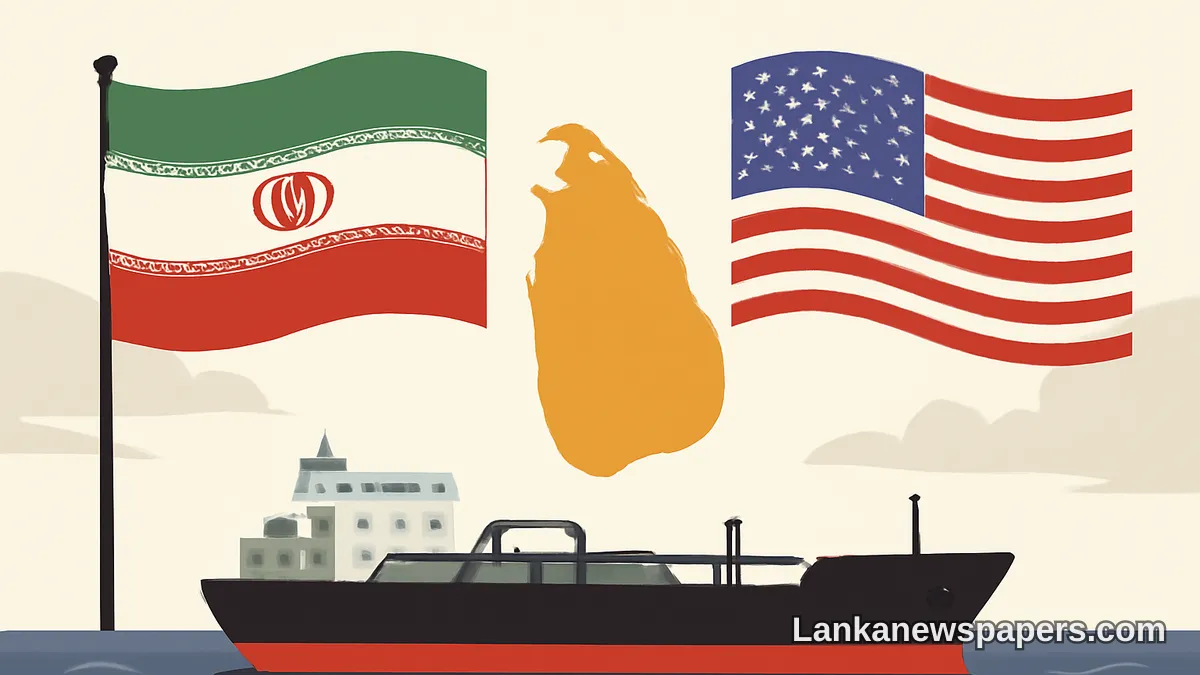
Sri Lanka finds itself navigating treacherous diplomatic waters as stranded Iranian oil tankers and mounting pressure from the United States have placed the island nation in an increasingly uncomfortable position — one that could have serious consequences for its foreign policy, economy, and international standing.
Iranian Tankers at the Centre of the Storm
The presence of Iranian tankers in Sri Lankan waters has drawn sharp attention from Washington, which has long maintained strict sanctions against Iran's oil trade. The United States has made clear its expectations that countries around the world, including Sri Lanka, comply with those sanctions — leaving Colombo with little room to manoeuvre without offending one side or the other.
For a country still recovering from the devastating economic crisis of recent years, Sri Lanka can ill afford to antagonise a powerful Western ally that plays a significant role in trade, investment, and financial assistance. At the same time, Colombo has historically pursued a non-aligned foreign policy, maintaining cordial relations with a broad range of nations including Iran.
The Weight of American Pressure
Washington's position is unambiguous. American sanctions on Iranian oil exports are among the most comprehensive in the world, and the United States has not hesitated to penalise third-party nations and companies that facilitate transactions with Tehran. For Sri Lanka, the risk of falling foul of these measures could translate into restricted access to the US financial system, complications with international trade, and damage to bilateral ties.
Sri Lanka's leadership is acutely aware of these stakes. The country's fragile economic recovery depends heavily on foreign exchange inflows, tourism, remittances, and access to global credit markets — all of which could be disrupted by a deterioration in relations with Washington.
Non-Alignment Under Pressure
Sri Lanka's traditional foreign policy has been rooted in non-alignment, seeking to maintain friendly ties with all major powers without being drawn firmly into any single geopolitical orbit. However, that posture is becoming increasingly difficult to sustain in a world where great power competition is intensifying and neutrality itself is viewed with suspicion by rival blocs.
- Sri Lanka has existing trade and energy ties with Iran dating back decades.
- The United States remains one of Sri Lanka's most important export destinations.
- Colombo is simultaneously deepening engagement with China, India, and Western nations.
- Any decision on the Iranian tankers will be interpreted as a signal of broader strategic intent.
What Sri Lanka Stands to Lose
Analysts warn that however Sri Lanka chooses to respond, there will be a cost. Allowing Iranian tankers to operate freely or facilitating their affairs could invite American sanctions and diplomatic fallout. Firmly turning them away, on the other hand, risks souring relations with Tehran and could be seen as capitulating entirely to Western pressure — a perception that may unsettle other regional partners watching closely.
Sri Lanka's challenge is not simply a question of which ship to accommodate in its waters — it is a test of whether a small, economically vulnerable nation can carve out an independent path in an era of intensifying global rivalry.
The Road Ahead
As Colombo weighs its options, the situation serves as a stark reminder of the complex geopolitical pressures facing small island nations in the Indian Ocean region. With its strategic location along one of the world's busiest maritime corridors, Sri Lanka will continue to find itself at the intersection of competing global interests — and the decisions it makes in moments like these will shape its international relationships for years to come.
For now, the government has offered little by way of a definitive public statement, as officials quietly explore what diplomatic off-ramps, if any, may be available. The clock, however, is ticking — and the world is watching.


💬 Join the Discussion 0
Be the first to share your view on this story.