Sri Lanka Walks Geopolitical Tightrope as Economic Recovery Shapes Foreign Policy Choices
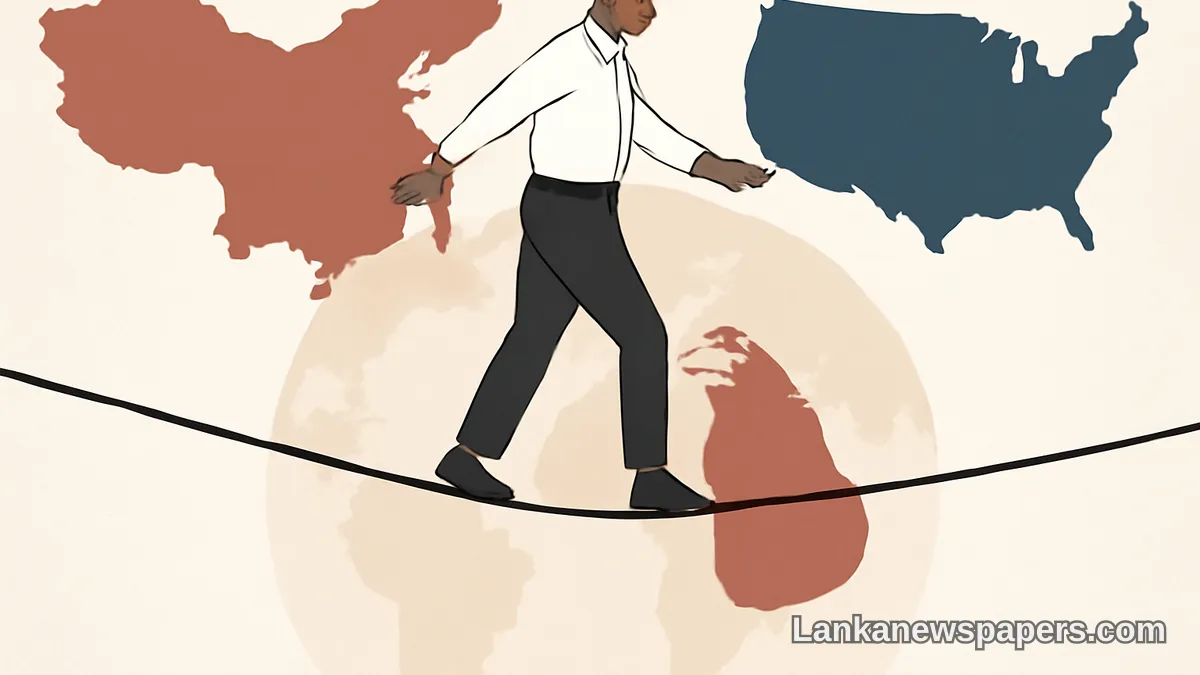
Sri Lanka finds itself navigating an increasingly complex balancing act between major global powers, as the island nation works to stabilise its economy following one of the worst financial crises in its post-independence history.
A Nation at the Crossroads
Positioned strategically in the Indian Ocean, Sri Lanka has long been courted by competing regional and global powers, including India, China, and the United States. However, the country's devastating 2022 economic collapse — which triggered widespread food and fuel shortages, mass protests, and the ousting of then-President Gotabaya Rajapaksa — has added new urgency to how Colombo manages these relationships.
With the nation still working through the terms of its International Monetary Fund bailout programme and restructuring agreements with bilateral creditors, Sri Lanka's foreign policy decisions are now inextricably tied to its economic imperatives.
Competing Interests, Careful Diplomacy
China remains one of Sri Lanka's largest creditors and a significant infrastructure investor, most notably through projects linked to the Belt and Road Initiative. India, meanwhile, shares not only a maritime border with Sri Lanka but also deep cultural, historical, and economic ties, and has emerged as a first responder during the island's financial emergency.
Western nations, led by the United States, continue to press Sri Lanka on governance, human rights accountability, and democratic reform — conditions that often accompany financial assistance and trade arrangements.
Colombo's challenge is to extract maximum economic benefit from each of these relationships without fatally alienating any one partner — a diplomatic needle that is proving increasingly difficult to thread.
Economic Recovery as a Foreign Policy Driver
Analysts note that Sri Lanka's current foreign policy posture is being shaped less by ideology and more by financial necessity. Debt restructuring negotiations have required Colombo to engage delicately with both Beijing and Western-backed multilateral lenders simultaneously, a process that has at times placed competing demands on the government.
- Sri Lanka secured a critical IMF Extended Fund Facility arrangement to stabilise its public finances.
- Debt restructuring agreements with bilateral creditors, including China and India, were essential prerequisites for IMF disbursements.
- Foreign direct investment attraction and tourism recovery remain central to the government's medium-term economic strategy.
Strategic Location Adds Pressure
Sri Lanka's position along some of the world's busiest shipping lanes means that its ports, particularly Hambantota and Colombo, attract intense geopolitical interest. Any development involving foreign access to these facilities is closely watched by regional players, particularly India, which has expressed sensitivity over Chinese naval presence in its neighbourhood.
The island's geography is both its greatest strategic asset and its most persistent source of external pressure.
The Road Ahead
As Sri Lanka gradually stabilises its macroeconomic fundamentals, the government of President Anura Kumara Dissanayake faces the enduring challenge of translating economic recovery into a coherent and sustainable foreign policy framework — one that preserves sovereignty while remaining open to the investment and partnerships the country desperately needs.
Whether Sri Lanka can successfully maintain its multi-directional engagement without being drawn too deeply into any single power's orbit will be one of the defining questions of its recovery decade.


💬 Join the Discussion 0
Be the first to share your view on this story.