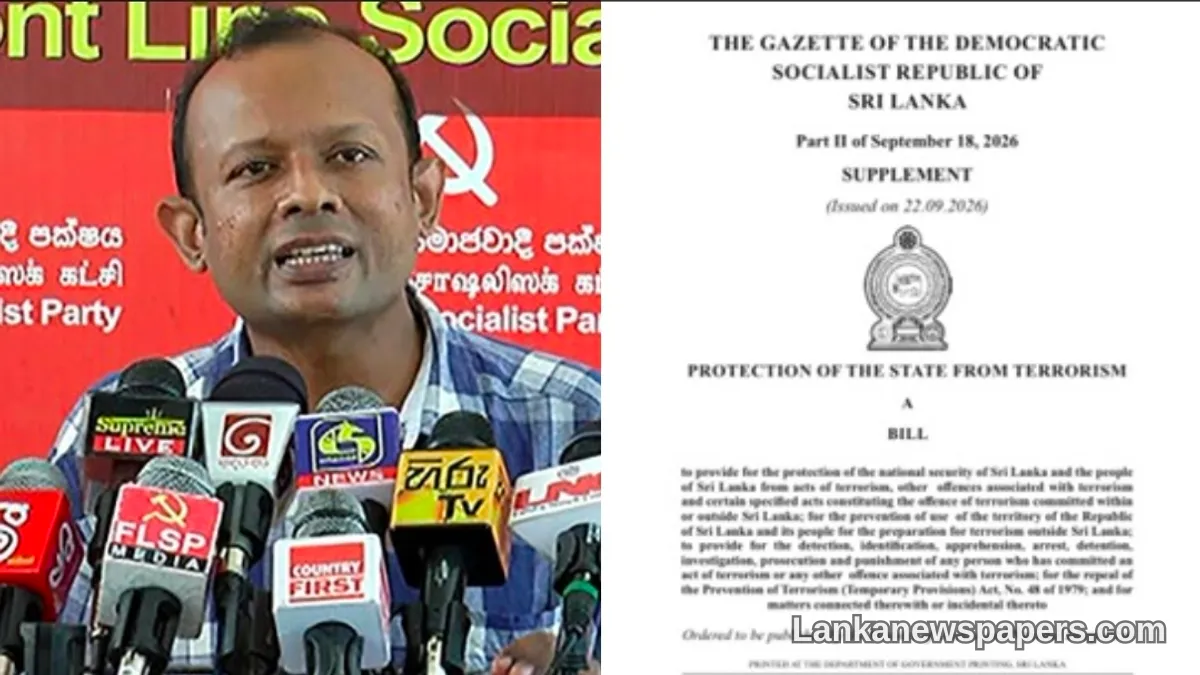
The Frontline Socialist Party (FSP) has come out strongly against the government's proposed Protection of the State from Terrorism Bill, warning that the legislation poses a serious threat to civil liberties and democratic governance in Sri Lanka.
Concerns Over Military Authority
At the heart of the FSP's objections is what the party describes as a dangerous blurring of the lines between civilian law enforcement and military authority. Party representatives have raised alarm over provisions within the Bill that they believe could effectively extend police-like powers to the armed forces — a move they argue is fundamentally incompatible with a functioning democracy.
The FSP contends that granting such sweeping powers to the military under the guise of counter-terrorism measures sets a deeply troubling precedent, one that could be exploited to suppress legitimate dissent and political opposition rather than address genuine security threats.
A Pattern of Concern
Critics of Sri Lanka's successive anti-terror frameworks have long argued that such legislation tends to cast an overly broad net, disproportionately affecting minority communities, activists, and journalists. The FSP's latest intervention reflects those enduring anxieties, as the country moves to replace the long-controversial Prevention of Terrorism Act (PTA).
The party has urged lawmakers and civil society to scrutinise the Bill carefully before it advances further, warning that reforms dressed up as progressive could in practice entrench authoritarian mechanisms within the state apparatus.
Calls for Transparent Debate
The FSP has called for a wide and transparent public consultation process before the Bill is passed into law. The party insists that any genuine anti-terrorism framework must:
- Contain robust oversight mechanisms to prevent abuse of power
- Clearly define the boundaries of military involvement in civilian affairs
- Uphold the constitutional rights of all Sri Lankan citizens
- Be subject to independent judicial review
The proposed legislation risks handing the military powers that rightfully belong to civilian law enforcement, undermining the democratic foundations of the state.
The FSP's warning adds to a growing chorus of voices from opposition parties, human rights organisations, and legal experts who have expressed reservations about the Bill's scope and intent. As parliamentary debate on the matter draws closer, pressure is mounting on the government to address these concerns transparently and comprehensively.
Sri Lanka has faced longstanding international criticism over its use of anti-terror legislation, and observers say the manner in which this new Bill is handled will be a significant test of the current administration's commitment to democratic reform.


💬 Join the Discussion 2
See what readers are saying — and add your view.
FSP is right, these laws always end up targeting ordinary ppl not terrorists
same thing happened with PTA no, took decades to fix