Behind the Recovery Headlines: Three Deep Cracks That Could Derail Sri Lanka's Future
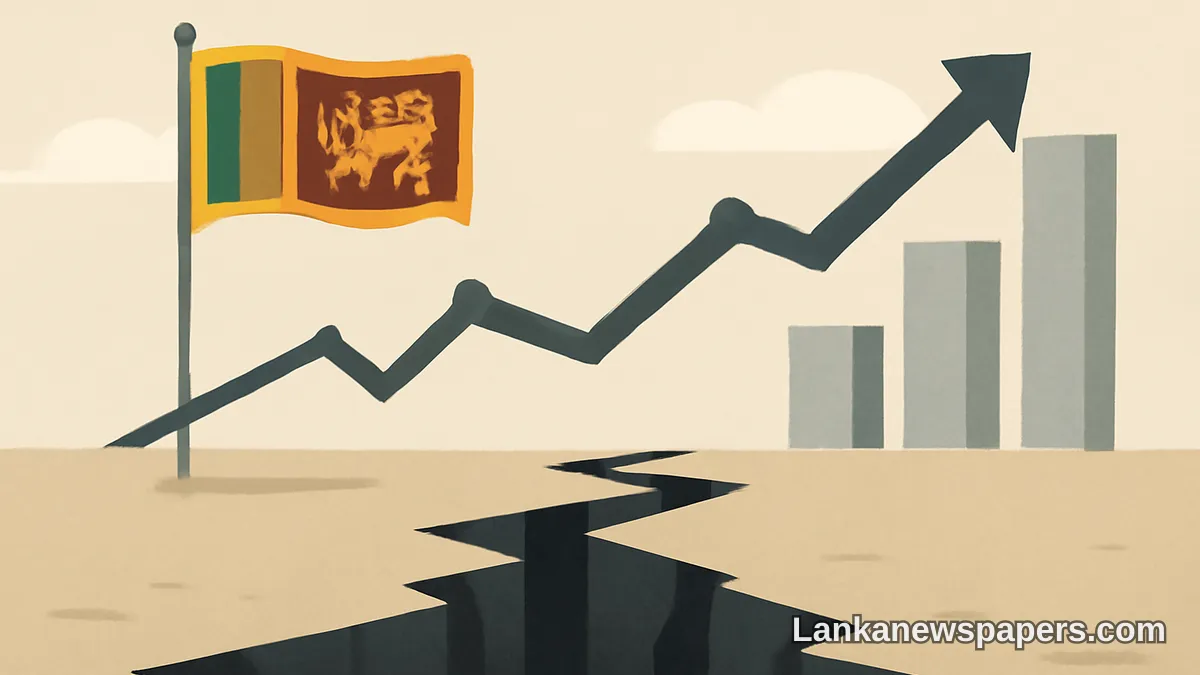
Sri Lanka's economic narrative has taken a cautiously optimistic turn in recent months, with officials pointing to stabilising foreign reserves, a recovering rupee, and a return to international credit markets. But beneath this surface-level progress, analysts warn that three fundamental fault lines remain unaddressed — and that ignoring them could unravel whatever gains have been made.
The Structural Debt Trap
Sri Lanka's debt restructuring process, while celebrated as a milestone, has not eliminated the country's underlying vulnerability to external shocks. The terms of debt relief secured through bilateral and commercial negotiations provide only a temporary window of relief. Without transformative changes to how the state generates and manages revenue, the country risks sliding back into the same fiscal dead-end that triggered the 2022 collapse.
Tax collection remains inconsistent, state-owned enterprises continue to bleed public funds, and capital expenditure is being squeezed to meet short-term IMF targets. Economists caution that meeting programme benchmarks on paper is not the same as building a resilient economy.
Governance Reforms Stalling at the Surface
The second fault line lies in the pace and depth of institutional reform. Corruption, inefficiency, and political interference in public institutions were central to Sri Lanka's economic unravelling — yet meaningful reform of these systems has been slow and, in some cases, cosmetic.
Anti-corruption legislation has been passed, but enforcement mechanisms remain weak. Key state institutions continue to operate with limited accountability. Observers note that without genuine structural reform of governance, Sri Lanka's recovery will remain fragile and dependent on external goodwill rather than internal institutional strength.
Without genuine accountability mechanisms, new laws risk becoming little more than political theatre.
The Social Cost Being Quietly Carried by Ordinary Citizens
Perhaps the most pressing fault line is the human one. Austerity measures tied to the IMF programme have placed a disproportionate burden on low and middle-income Sri Lankans. Rising taxes, reduced subsidies, and the high cost of living continue to erode household incomes even as macroeconomic indicators improve.
Malnutrition, migration of skilled workers, and declining access to healthcare and education are trends that do not appear in GDP figures but represent a long-term cost to the nation's human capital. A recovery that bypasses the majority of the population is not only socially unjust — it is economically unsustainable.
A Recovery That Must Be More Than a Headline
Sri Lanka has survived its worst peacetime economic crisis and deserves credit for stabilising a situation that, at its peak, saw empty fuel queues, medicine shortages, and rolling power cuts lasting up to thirteen hours a day. That stabilisation, however, should not be mistaken for transformation.
The window for meaningful reform remains open, but it will not stay open indefinitely. Political cycles, global economic pressures, and public fatigue with austerity all pose risks to sustained progress. For Sri Lanka's recovery to be real rather than illusory, policymakers must confront these fault lines honestly — before the next tremor exposes them once again.


💬 Join the Discussion 2
See what readers are saying — and add your view.
same old story. goverment shows numbers, people still struggling to eat
exactly, statistics dont feed anyone no?