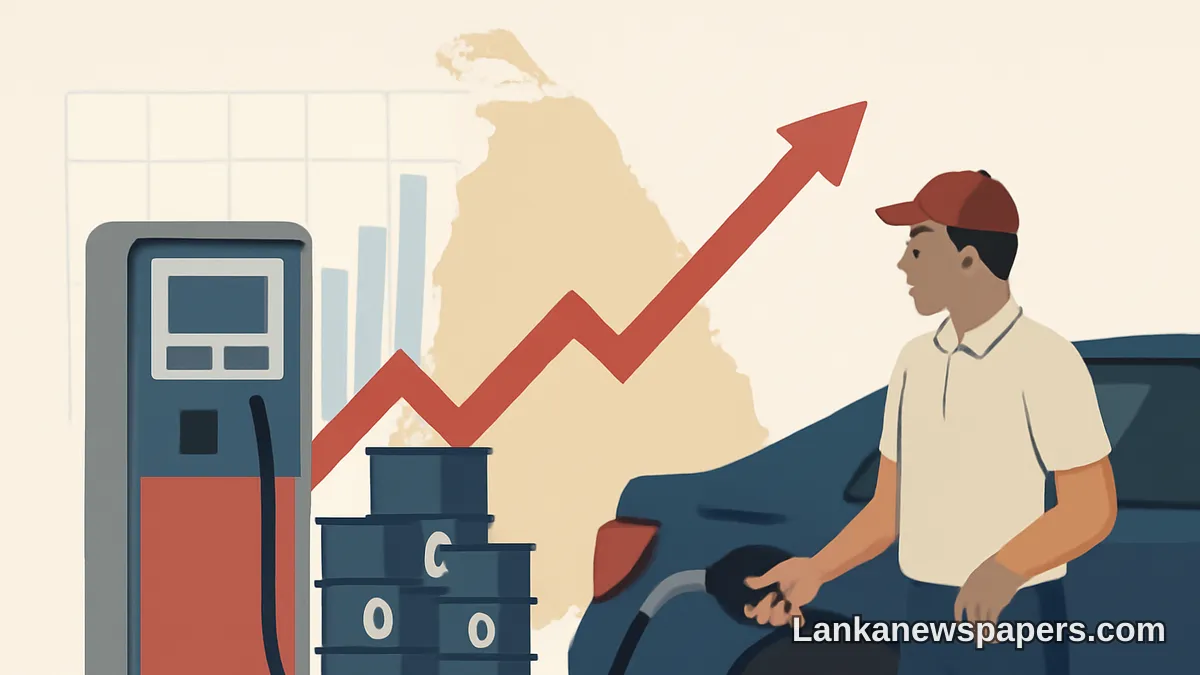
Sri Lanka's fuel market is facing renewed strain as escalating tensions in West Asia and significant disruptions to major oil-shipping routes continue to drive up international crude and refined-fuel prices, placing fresh pressure on the island's petroleum sector.
CPC Feels the Heat
A senior official from the Ceylon Petroleum Corporation (CPC) has confirmed that the state-owned energy giant is closely monitoring the deteriorating situation, as rising global fuel costs threaten to upset the fragile stability the country's energy market has only recently begun to regain following years of economic turbulence.
The surge in prices is being driven by a combination of factors, including heightened military conflict across the West Asian region and growing disruptions to critical maritime shipping corridors through which a significant portion of the world's oil supply is transported.
Global Conflict Ripples Reach Colombo
Sri Lanka, which relies heavily on imported crude oil and refined petroleum products to meet its domestic energy needs, remains particularly vulnerable to such international price shocks. Any sustained increase in global fuel costs has the potential to directly impact pump prices for consumers, freight costs, and the broader cost of living across the country.
The situation presents a difficult balancing act for both the CPC and the government, which must weigh the financial burden on the state energy body against the impact that fuel price hikes would have on ordinary Sri Lankans still recovering from the economic crisis of recent years.
Shipping Route Disruptions Add to Woes
Beyond the conflict itself, disruptions to key oil-shipping lanes have compounded supply concerns, pushing freight and insurance costs higher and adding further upward pressure on the landed cost of fuel imports into Sri Lanka.
- International crude oil prices have been climbing in response to West Asian conflict escalation
- Disruptions to major maritime shipping routes are affecting global fuel supply chains
- Sri Lanka's dependence on fuel imports makes the country especially exposed to these pressures
- The CPC is actively assessing the impact on its procurement and pricing strategy
Energy analysts warn that if the geopolitical situation in West Asia does not stabilise in the near term, Sri Lanka could face difficult decisions regarding fuel pricing in the weeks ahead. The government has yet to make any formal announcement on whether pump prices will be revised in response to the current market conditions.
A top CPC official indicated that the Corporation is closely tracking developments in global oil markets and the impact of the ongoing West Asian conflict on fuel procurement costs.
Sri Lankan consumers and businesses alike will be watching closely as authorities navigate this latest wave of external economic pressure, hoping that diplomatic and market developments can bring some relief before the situation worsens further.


💬 Join the Discussion 0
Be the first to share your view on this story.