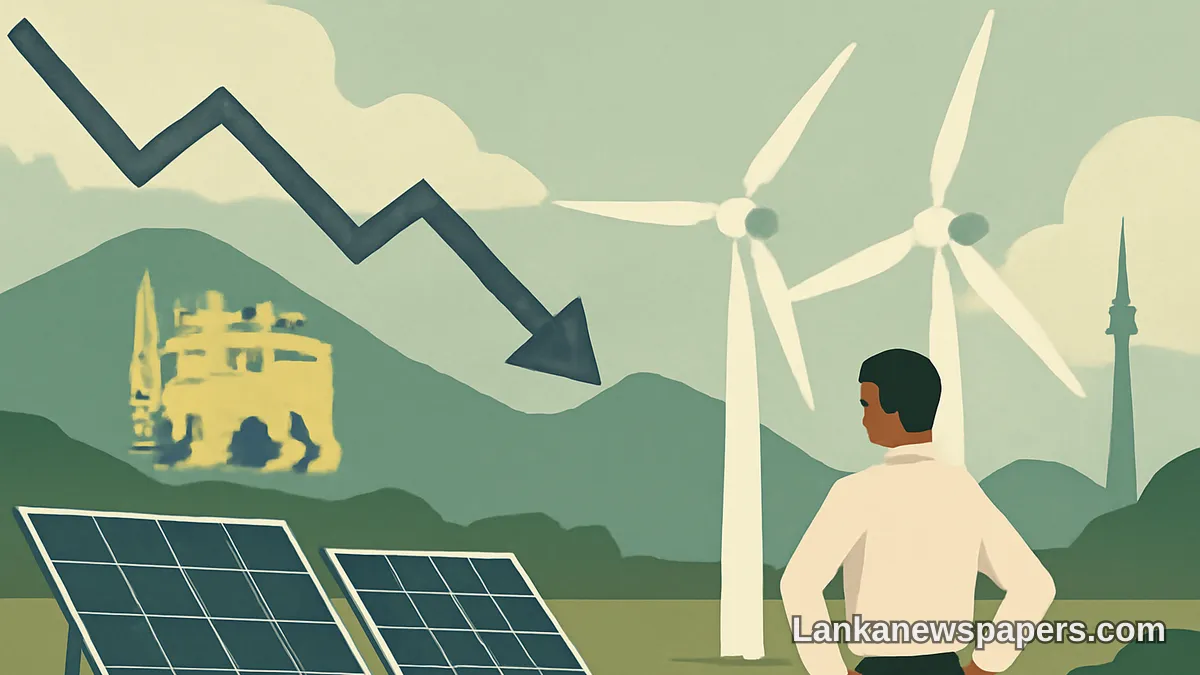
A Transition in Name Only?
Sri Lanka has long spoken of transforming its energy sector, pledging a bold shift toward renewable sources as the answer to both its chronic power shortages and its battered economy. Yet despite the ambitious rhetoric, the country's green energy transition appears to be stalling — raising serious questions about whether the island nation's clean power ambitions are little more than a well-marketed illusion.
The Gap Between Promise and Reality
Successive governments have unveiled targets and timelines for increasing the share of renewable energy in Sri Lanka's national grid. Solar, wind, and hydropower have all been positioned as cornerstones of a sustainable energy future. However, structural barriers, bureaucratic delays, and a chronic shortage of financing continue to undermine meaningful progress on the ground.
Investors and project developers have repeatedly flagged a frustrating environment marked by slow approvals, unclear regulatory frameworks, and inconsistent policy signals from authorities. For a country that desperately needs both affordable electricity and foreign investment, this institutional inertia carries a steep economic cost.
Financing Remains the Central Obstacle
Access to capital is among the most pressing challenges facing Sri Lanka's renewable energy sector. The country's ongoing fiscal crisis has left state institutions with little capacity to co-invest in large-scale clean energy infrastructure. Private developers, meanwhile, remain cautious in an environment where power purchase agreements and tariff structures have historically lacked stability.
International climate financing, which many developing nations have tapped to accelerate their energy transitions, has also proven difficult for Sri Lanka to access at scale — partly due to governance concerns and the administrative complexity of aligning projects with donor requirements.
Grid Infrastructure and Technical Readiness
Even where renewable energy projects have been successfully developed, integrating them into the national grid presents a separate set of challenges. Sri Lanka's transmission and distribution infrastructure was not designed with large volumes of intermittent renewable power in mind. Without significant upgrades to grid management systems and storage capacity, the practical ceiling for renewable penetration remains limited regardless of how many solar panels or wind turbines are installed.
What Needs to Change
Energy analysts and industry stakeholders have pointed to several areas requiring urgent reform if Sri Lanka is to honour its clean energy commitments:
- Streamlining the permitting and approval process for renewable energy projects to reduce delays and developer uncertainty
- Establishing stable, transparent tariff structures that give investors the confidence to commit long-term capital
- Accelerating investment in grid modernisation and energy storage solutions
- Strengthening institutions responsible for energy planning and regulation to reduce policy inconsistency
- Actively pursuing multilateral climate financing through improved project pipelines and governance standards
The Stakes for Sri Lanka
The consequences of continued stagnation extend well beyond the energy sector. Sri Lanka imports vast quantities of fossil fuels, placing enormous pressure on its foreign exchange reserves — a vulnerability that contributed significantly to the 2022 economic crisis. A genuine transition to domestic renewable energy would reduce this import dependency, stabilise electricity costs for households and businesses, and position the country more competitively in a global economy increasingly shaped by clean energy standards.
Without decisive action to remove the structural and financial obstacles holding back the sector, Sri Lanka risks being left behind as the rest of the region accelerates its own renewable energy transformation.
The green energy future remains within reach for Sri Lanka — but achieving it will demand far more than policy announcements. It will require political will, institutional reform, and a credible commitment to turning ambitious targets into tangible outcomes on the ground.



💬 Join the Discussion 3
See what readers are saying — and add your view.
anyone know why the solar projects got delayed? genuine question.
same story every year. goverment talks, nothing happens.
exactly. all talk no action since 2015 men.