Wounds That Never Heal: Families of Sri Lanka's Missing Mark 17 Years of Unanswered Questions
A Grief With No End
Seventeen years after the final battles of Sri Lanka's devastating civil war, thousands of families across the island continue to live in a state of painful uncertainty — not knowing the fate of their loved ones who disappeared during the conflict and its aftermath.
For many of these families, predominantly from the Tamil community in the north and east, the passage of time has done little to ease their anguish. Without answers, without closure, and in many cases without even a grave to mourn beside, they carry a grief that refuses to fade.
A Crisis of Accountability
The enforced disappearances that occurred during and following the civil war remain one of the most deeply contested and emotionally charged chapters in Sri Lanka's modern history. Human rights advocates have long maintained that tens of thousands of people vanished during the conflict, with many cases alleged to have occurred in the final stages of fighting in 2009.
Families have repeatedly called on successive governments to provide credible information about what happened to the missing — demands that have largely gone unmet over nearly two decades.
Institutions Falling Short
Sri Lanka established the Office on Missing Persons (OMP) in 2017 as a formal mechanism to address the crisis. However, critics and affected families argue that the institution has struggled to deliver meaningful results, pointing to limited progress in tracing individuals and a perceived lack of political will to pursue accountability.
- Thousands of cases formally submitted to authorities remain unresolved
- Families report feeling excluded from processes meant to serve them
- International human rights bodies have repeatedly urged Sri Lanka to do more
Mothers Who Keep Vigil
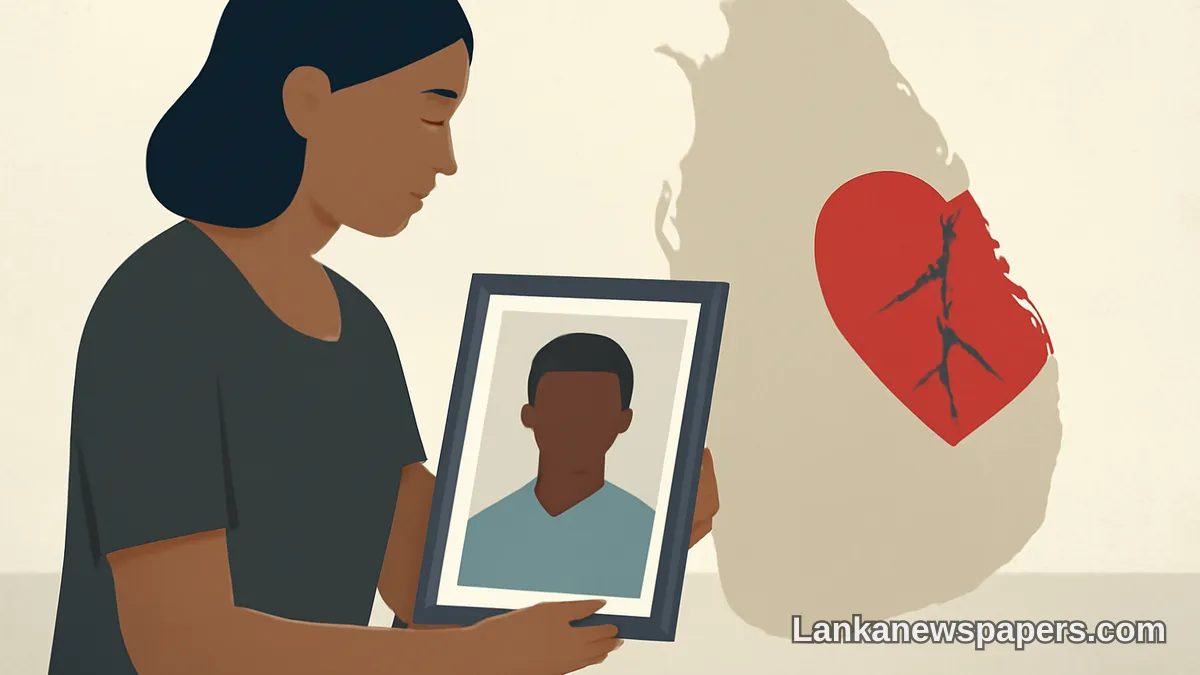
Among the most visible symbols of this unresolved tragedy are the mothers and wives who have spent years — in some cases, their entire remaining lifetimes — holding photographs of missing sons, daughters, and husbands at public demonstrations, pleading for the truth.
For these women, every passing year without an answer is another year of living suspended between hope and despair — unable to grieve fully, unable to move forward.
A Nation Still Divided by Its Past
The issue of the missing remains deeply intertwined with Sri Lanka's broader struggle for post-war reconciliation. Many in the affected communities argue that genuine national healing cannot begin until there is honest reckoning with what happened during the war's darkest chapters.
With 17 years now elapsed, advocates warn that witnesses are ageing, evidence is being lost, and the window for meaningful truth-seeking is narrowing with every passing year. For the families still waiting, the silence from authorities continues to be its own form of suffering.

💬 Join the Discussion 1
See what readers are saying — and add your view.
17 years and still nothing. goverment just wants us to forget.