As DP World Pours $800 Million Into India, Is Sri Lanka Squandering Trincomalee's Maritime Promise?
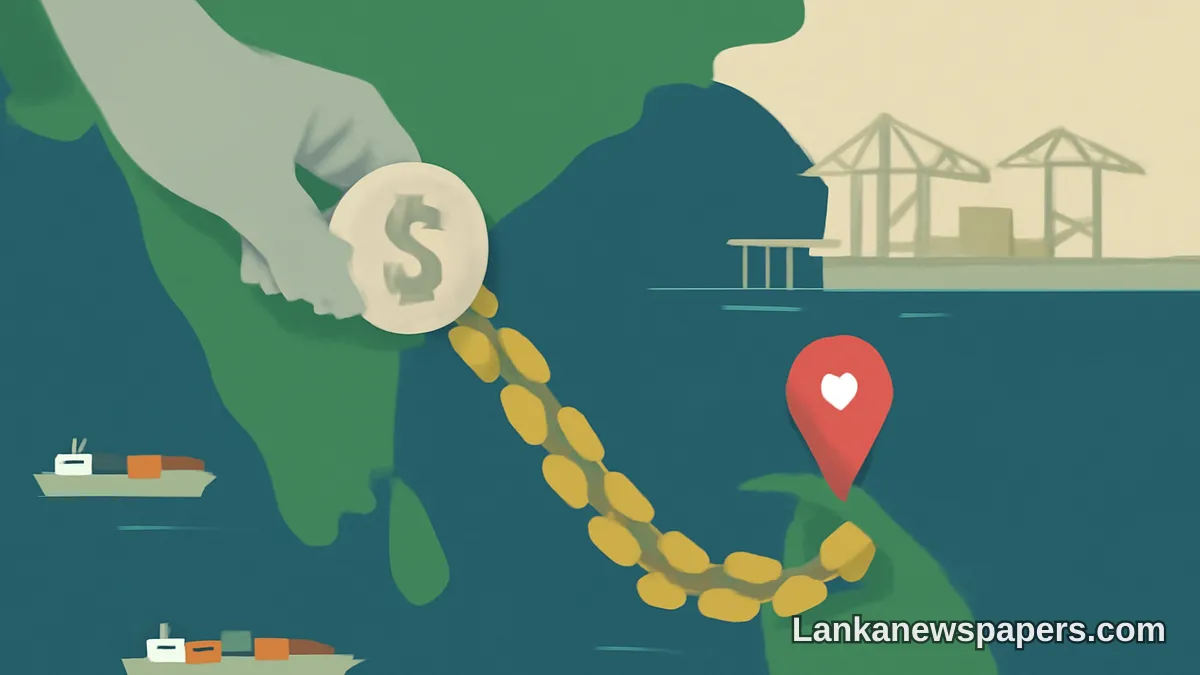
Global port operator DP World has committed an ambitious $800 million investment into expanding its maritime infrastructure across India, a move that is sending ripples of concern through Sri Lankan strategic and economic circles. The question being asked with increasing urgency is whether Sri Lanka, blessed with one of the finest natural harbours in the world at Trincomalee, is allowing a historic opportunity to drift beyond its grasp.
A Giant Doubles Down on India
DP World, the Dubai-headquartered port and logistics giant that operates across more than 70 countries, has signalled its firm confidence in India's maritime future with this substantial capital commitment. The investment is aimed at deepening port capacity, logistics corridors and trade facilitation across key Indian coastal locations, cementing India's position as a dominant force in South Asian and Indian Ocean shipping networks.
The scale of this commitment underscores how seriously global operators are treating the region's long-term trade potential — and raises pointed questions about whether Sri Lanka is being left behind in the race to attract comparable investment.
Trincomalee: The Harbour That History Coveted
Trincomalee's natural deep-water harbour on Sri Lanka's northeastern coast has been coveted by maritime powers for centuries. Naval strategists, colonial administrators and modern economists alike have recognised its exceptional geographic position — sitting astride some of the busiest shipping lanes in the world, connecting the Far East, South Asia, the Middle East and East Africa.
The port offers natural depth that many regional competitors cannot match without expensive dredging, and its location makes it a compelling candidate for a world-class transshipment and logistics hub. Yet despite these inherent advantages, Trincomalee has remained significantly underdeveloped compared to its potential.
A Window of Opportunity — But For How Long?
Sri Lanka has made incremental moves in recent years to attract investment into Trincomalee, including proposals for an industrial zone and energy-related development along its harbour. However, critics argue that progress has been painfully slow, hampered by political indecision, bureaucratic delays and a lack of cohesive long-term strategy.
Meanwhile, competing ports in the region are not standing still. India is aggressively expanding its own port infrastructure at multiple locations. Bangladesh is developing its deep-sea port at Matarbari. Even smaller regional players are working to carve out niches in the Indian Ocean logistics chain.
The window for Sri Lanka to position Trincomalee as a premier Indian Ocean hub is real, but it will not remain open indefinitely. Every year of inaction narrows the advantage that geography has so generously provided.
The Colombo Port Factor
Sri Lanka has demonstrated that it can attract major global port operators when the conditions are right. The Colombo Port's West Container Terminal and related developments have drawn significant international interest, including from major global operators. The Colombo Port today handles the vast majority of Sri Lanka's transshipment traffic and is among South Asia's busiest container ports.
But Trincomalee represents a separate and complementary opportunity — one that could diversify Sri Lanka's maritime economy, stimulate development in the country's north and east, and reduce the heavy concentration of port activity along the western coast.
What Sri Lanka Must Do
Analysts and business leaders point to several areas where Sri Lanka needs to sharpen its approach if it is to compete effectively for investment of the kind DP World is channelling into India:
- Establishing a clear, long-term masterplan for Trincomalee's port and industrial development with legal and regulatory certainty for investors
- Streamlining land acquisition and environmental approval processes that have historically caused costly delays
- Engaging proactively with global port operators, logistics companies and sovereign wealth funds rather than waiting for interest to arrive
- Resolving any outstanding bilateral sensitivities around foreign investment in strategically sensitive areas with transparent, rules-based frameworks
- Leveraging Sri Lanka's improved macroeconomic stability following its debt restructuring to present a more confident investment pitch to the world
The Bigger Picture
Sri Lanka is emerging from one of the most severe economic crises in its post-independence history. Attracting large-scale foreign direct investment into infrastructure is not merely desirable — it is essential for rebuilding growth, generating employment and restoring public finances over the long term.
DP World's $800 million commitment to India is a reminder that global capital is actively seeking a home in the Indian Ocean region. The fundamental question for Colombo's policymakers is straightforward: will Sri Lanka present Trincomalee as an irresistible proposition, or will it continue to let one of the Indian Ocean's most prized maritime assets remain a promise rather than a reality?
The ships are moving. The investment is flowing. Sri Lanka must decide, with some urgency, whether it intends to be part of that story.



💬 Join the Discussion 4
See what readers are saying — and add your view.
can someone explain why India gets priority over us? genuinely asking
DP World not coming here because of our port union politics, simple as that
Trinco is gold and we just sitting on it doing nothing as usual
exactly, goverment will form a committee and waste 5 years