Inside Sri Lanka's Billion-Dollar Ghost Import Fraud: How Phantom Shipments Drained the Nation's Foreign Reserves
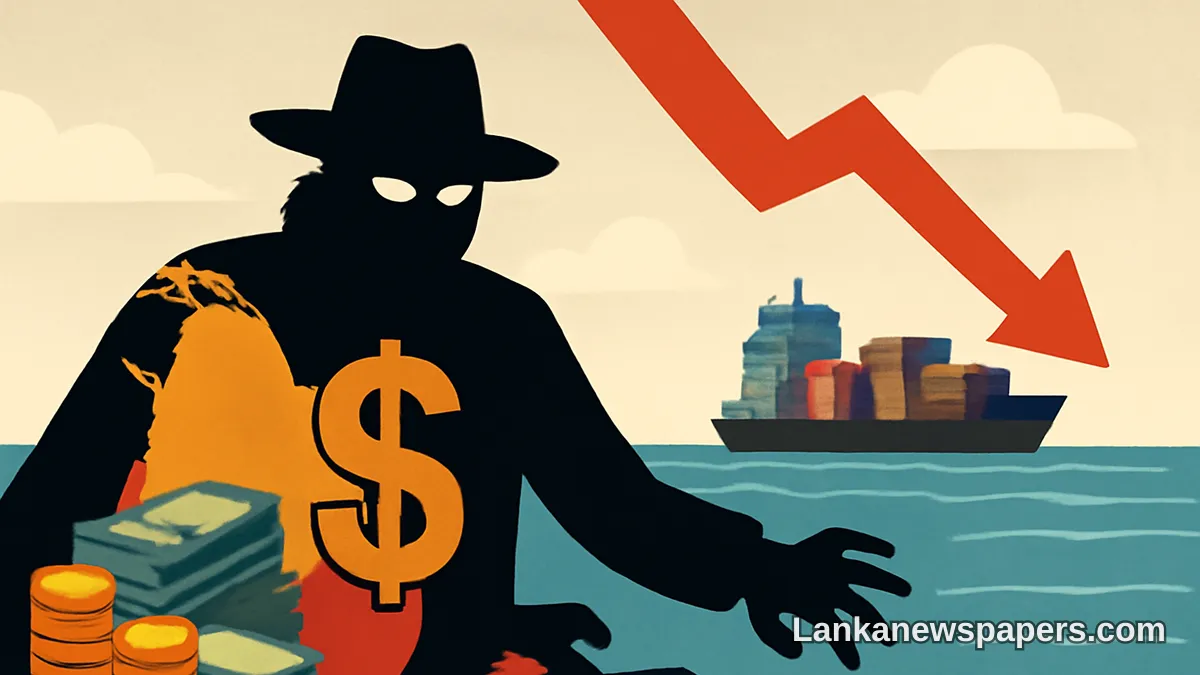
A sophisticated financial fraud scheme involving fake import documentation is believed to have siphoned off approximately one billion US dollars from Sri Lanka's already-strained foreign reserves, according to investigations into what has become one of the country's most alarming financial crimes in recent memory.
What Are Phantom Imports?
At the heart of the scandal lies a deceptive practice known as "phantom importing" — a scheme in which businesses fraudulently claim to have imported goods that never actually arrived in the country. Perpetrators fabricate shipping documents, invoices, and customs paperwork to create the illusion of legitimate trade activity, while in reality no physical goods cross the border.
The foreign exchange allocated for these fictitious transactions is then diverted abroad or absorbed into illegal financial networks, robbing Sri Lanka of desperately needed hard currency. The scale of the alleged fraud — reaching into the billions of dollars — makes it one of the largest financial crimes ever uncovered in the island nation.
How the Scheme Operated
Investigators have pieced together a pattern in which fraudulent importers exploited weaknesses in Sri Lanka's trade finance and customs verification systems. By submitting falsified Letters of Credit and forged shipping manifests to financial institutions, the conspirators were able to secure foreign exchange through legitimate banking channels.
Once the funds were transferred overseas under the guise of paying foreign suppliers, no corresponding shipment of goods materialised. Sri Lankan banks and regulatory bodies were left holding paperwork for imports that simply did not exist, while the money disappeared into offshore accounts or was recycled through complex money-laundering networks.
- Fabricated shipping documents and invoices submitted to local banks
- Letters of Credit opened against non-existent consignments
- Foreign exchange transferred to overseas accounts with no goods received
- Customs records manipulated or circumvented to avoid detection
- Proceeds allegedly laundered through multiple jurisdictions
Impact on Sri Lanka's Economy
The timing of this fraud could hardly have been more damaging. Sri Lanka's foreign reserve crisis, which reached a catastrophic low point in 2022 and triggered the country's worst economic collapse in modern history, left millions of citizens facing severe shortages of fuel, medicine, and essential goods. The haemorrhaging of foreign exchange through fraudulent import schemes would have directly compounded that reserve crisis.
The loss of one billion dollars through phantom imports represents not merely a financial crime against the state, but a betrayal of every Sri Lankan citizen who endured the hardships of the economic crisis.
Economists have pointed out that even a fraction of those stolen reserves, if retained within the system, could have softened the blow of the foreign currency shortage that paralysed the country for much of 2022 and into 2023.
Regulatory and Enforcement Failures
The scandal has cast a harsh spotlight on systemic vulnerabilities within Sri Lanka's trade finance oversight mechanisms. Questions are now being raised about how such a large volume of fraudulent transactions escaped detection by the Central Bank of Sri Lanka, the Sri Lanka Customs Department, and commercial banking institutions over what appears to have been an extended period.
Critics argue that inadequate due diligence by banks when processing Letters of Credit, combined with insufficient cross-verification between customs authorities and financial regulators, created an environment in which phantom import fraud could flourish on a massive scale.
Investigations Underway
Sri Lankan financial crime investigators and relevant law enforcement authorities are reported to be actively pursuing leads in connection with the fraud. The complexity of the scheme — spanning multiple financial institutions and potentially multiple countries — means that unravelling the full network of those responsible remains a significant challenge.
Authorities are believed to be examining transaction records, customs filings, and banking documentation in an effort to identify the individuals and entities behind the scheme. It is understood that the investigation may have international dimensions, requiring cooperation with foreign financial intelligence units.
Calls for Systemic Reform
The revelations have renewed calls among financial experts, civil society groups, and opposition politicians for urgent reform of Sri Lanka's trade finance regulatory framework. Among the measures being advocated are stricter verification protocols for import documentation, enhanced coordination between the Central Bank and Customs, and greater use of technology-driven monitoring systems to flag suspicious transactions in real time.
As investigations continue, Sri Lankans across the country are watching closely — hoping that those responsible for what amounts to a billion-dollar betrayal of public trust will ultimately be held accountable, and that the systemic gaps that allowed this fraud to occur will be decisively closed.


💬 Join the Discussion 2
See what readers are saying — and add your view.
one billion?? who approved all these fake imports, must be big ppl involved
obviously no small fish can do this, goverment connections for sure