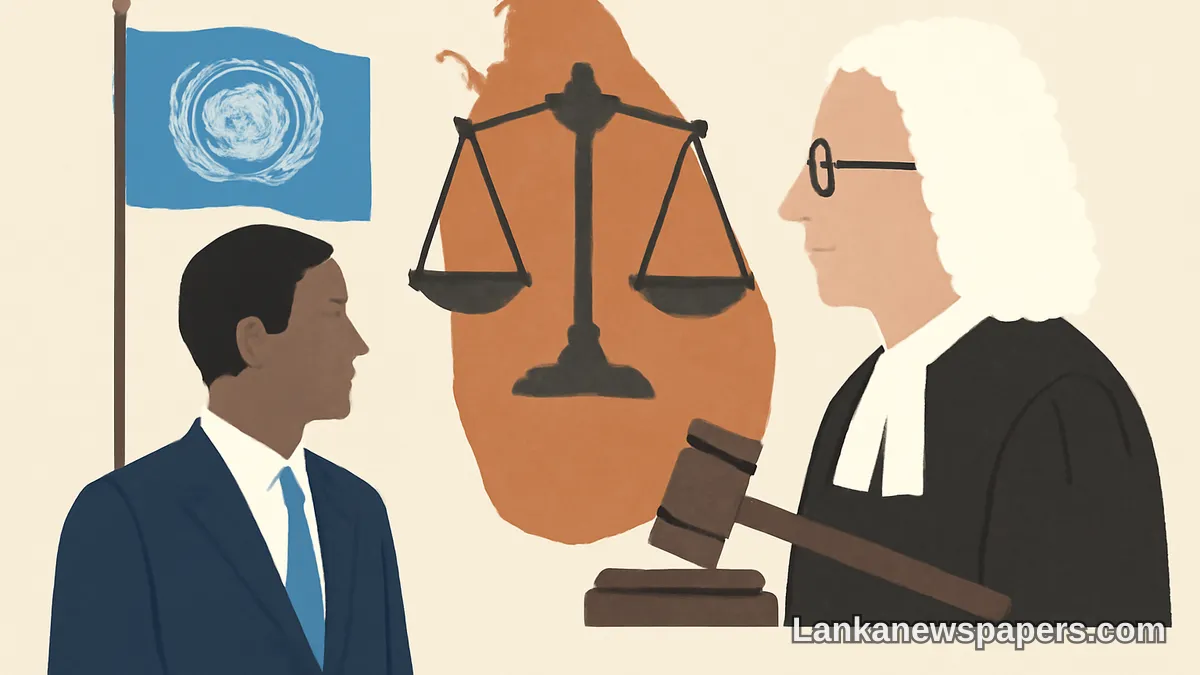
A United Nations Special Rapporteur has raised serious concerns regarding Sri Lanka's proposed move to extend the mandatory retirement age of judges, warning that such a measure could have significant implications for judicial independence in the country.
International Scrutiny on Judicial Reform
The UN Special Rapporteur on the independence of judges and lawyers has formally flagged the proposal, questioning whether extending the retirement age of sitting judges could be used as a tool to influence the composition of the judiciary in ways that may undermine its impartiality and autonomy.
The intervention by the UN rights expert brings fresh international attention to Sri Lanka's ongoing efforts to reform its judicial framework, at a time when the country is already navigating a complex political and economic recovery process.
Concerns Over Judicial Independence
Central to the Special Rapporteur's concerns is the potential for such a policy shift to compromise the separation of powers — a cornerstone of democratic governance. Critics argue that extending the tenure of judges, particularly if done selectively or without a transparent legal framework, could allow the executive branch to exert undue influence over the courts.
International human rights standards consistently emphasise that any changes to judicial tenure must be handled with the utmost care to preserve the independence and integrity of the judiciary.
The Special Rapporteur's concerns reflect broader international principles that stress the importance of insulating the judiciary from political interference, especially during periods of legislative reform.
Sri Lanka's Proposed Changes
The Sri Lankan government has been considering amendments that would raise the mandatory retirement age for judges, a move that supporters argue would allow experienced members of the bench to continue serving the justice system. However, opponents and international observers caution that without adequate safeguards, such changes risk setting a troubling precedent.
The development is expected to draw further scrutiny from the international community, which has been closely monitoring Sri Lanka's human rights commitments and institutional reforms in recent years.
- The UN Special Rapporteur formally communicated concerns to Sri Lankan authorities regarding the proposed judicial retirement age extension.
- The move is seen as potentially affecting the independence of the country's judiciary.
- International standards require that changes to judicial tenure not compromise impartiality or the separation of powers.
- Sri Lanka has been under heightened international observation concerning its democratic institutions and rule of law.
It remains to be seen how Sri Lankan authorities will respond to the UN's concerns, and whether the proposed legislation will be revised or reconsidered in light of this international pressure.



💬 Join the Discussion 3
See what readers are saying — and add your view.
UN always poking nose in our internal matters no
these judges already past retirement, why extend more? smells fishy
exactly, who benefits from this? not the public for sure