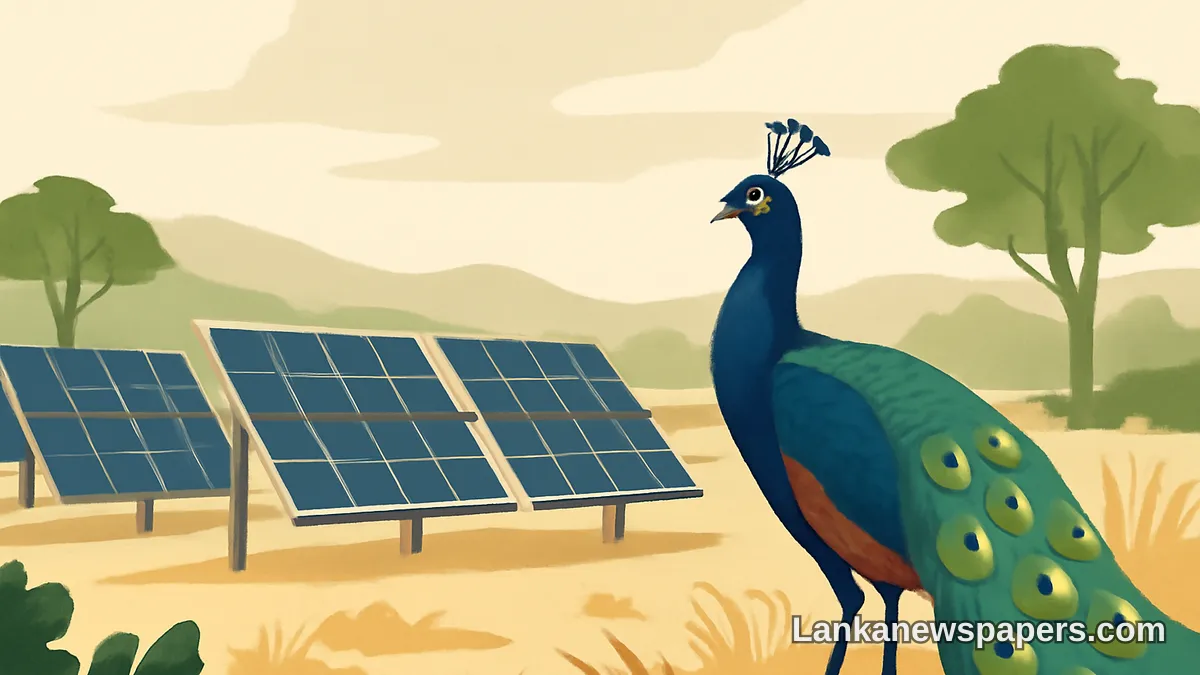
Sri Lanka has drawn up plans to develop 17 solar energy projects in the Hambantota district, a move that promises to accelerate the country's renewable energy ambitions but has simultaneously sparked growing concern among conservationists and wildlife experts over the fate of the region's native scrubland ecosystems.
Renewable Energy Targets Drive Solar Expansion
The planned installations form part of Sri Lanka's broader push to transition away from fossil fuels and dramatically increase the share of renewable energy in its national power grid. Hambantota, with its wide stretches of open land and high levels of solar irradiance, has been identified as a prime location for large-scale photovoltaic development.
Authorities have positioned the initiative as a critical step toward energy independence and long-term economic resilience, particularly as the country continues to recover from the severe financial crisis that gripped the island in recent years.
Scrubland Clearance Threatens Peacock Populations
However, the very landscapes earmarked for solar infrastructure are home to significant populations of the Indian peafowl — Sri Lanka's iconic and widely revered bird. The dry scrubland of Hambantota provides essential foraging, nesting, and shelter habitat for these birds, and large-scale clearance to make way for solar panels could meaningfully reduce the territory available to them.
Wildlife advocates warn that the cumulative effect of 17 separate projects concentrated in the same region could fragment and degrade habitat at a scale that individual project assessments may fail to adequately capture.
Balancing Development and Conservation
The situation highlights a tension that is becoming increasingly common across South Asia — the urgent need to expand clean energy infrastructure on one hand, and the responsibility to protect biodiversity on the other.
Conservationists are calling on the government to conduct thorough and transparent environmental impact assessments for each proposed site, and to explore alternative configurations that might minimise the footprint on sensitive scrubland areas. Suggestions include prioritising already-degraded or previously developed land, as well as rooftop and floating solar installations.
As Sri Lanka works to build a greener economy, observers stress that the country's environmental commitments must extend beyond carbon reduction to encompass the full spectrum of its extraordinary natural heritage — including the open plains and dry forests that make Hambantota one of the island's most distinctive ecological zones.



💬 Join the Discussion 4
See what readers are saying — and add your view.
how many peacocks even live there, anyone knows the actual number?
solar is needed but why always Hambantota, other areas also have land
peacocks are our national bird no? cant just destroy their habitat like this
exactly, goverment always talking about environment but doing opposite