Families of Tamil Political Prisoners Gain Access Amid Escalating Violence in Sri Lanka's Prisons
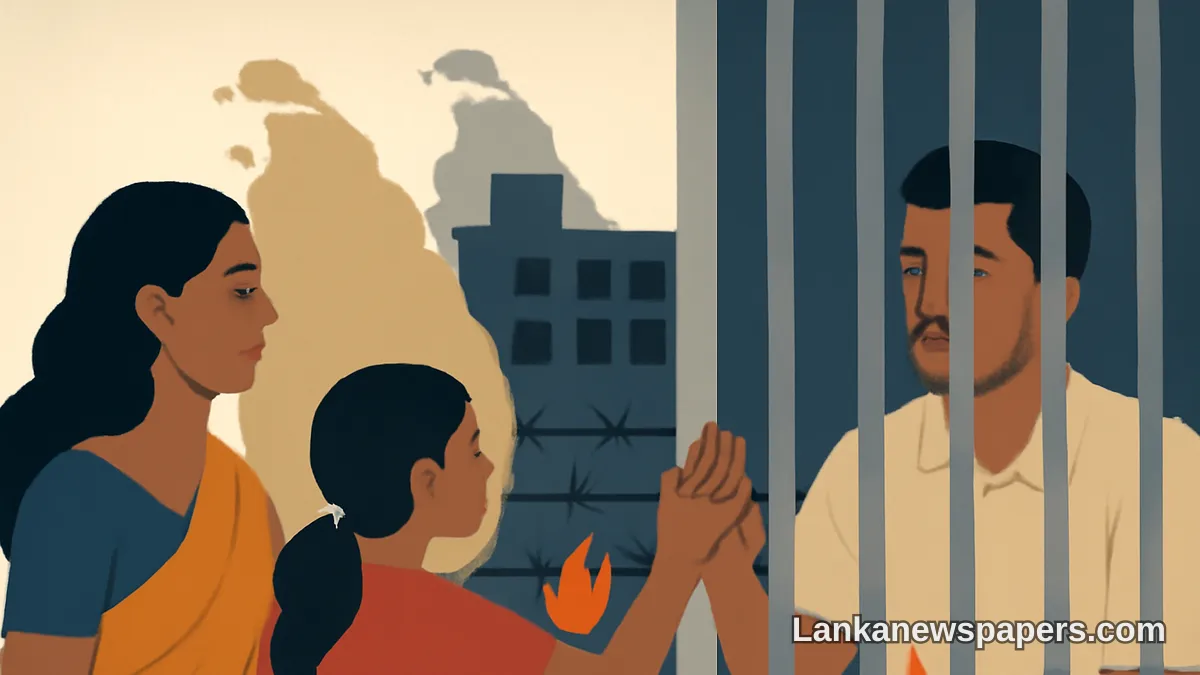
Parents and relatives of Tamil political prisoners have been permitted to visit their detained family members as a wave of violence continues to grip Sri Lanka's prison system, raising fresh concerns about the safety and welfare of inmates held on politically sensitive charges.
Family Visits Amid Growing Unrest
The visits, which provided some relief to anxious families who have long campaigned for greater access to their loved ones, came against a troubling backdrop of widespread unrest spreading across multiple correctional facilities in the country. For many Tamil families, the opportunity to see detained relatives marked a rare moment of reassurance during an increasingly volatile period for Sri Lanka's prison network.
Tamil political prisoners have historically been held under the Prevention of Terrorism Act (PTA), a piece of legislation that has drawn sustained criticism from local and international human rights organisations for enabling prolonged detention without trial. Many of those currently imprisoned have spent years behind bars without their cases being fully heard before the courts.
Violence Spreading Across Prison System
Reports indicate that violent incidents have been occurring across several of Sri Lanka's jails, prompting serious questions about the ability of prison authorities to maintain order and protect vulnerable detainees. The spreading unrest has heightened fears among Tamil families and civil society groups that political prisoners — already in a precarious position — could be placed at even greater risk.
Human rights advocates have urged prison authorities and the government to take immediate steps to safeguard all inmates, with particular attention given to those held on politically motivated charges who may lack adequate legal representation or consular support.
Calls for Accountability and Reform
Tamil community groups and activists have renewed their calls for a thorough review of the cases of political prisoners, many of whom are alleged to have connections to the Liberation Tigers of Tamil Eelam (LTTE) from the era of Sri Lanka's civil war, which ended in 2009. Critics argue that continuing to detain individuals under the PTA without fair and timely judicial proceedings is incompatible with Sri Lanka's human rights obligations.
- Numerous Tamil detainees have been held for extended periods without formal convictions.
- The PTA has been repeatedly flagged by the United Nations and international rights bodies as requiring urgent reform.
- Prison violence across Sri Lanka has intensified scrutiny on the conditions faced by all inmates.
The government has faced mounting domestic and international pressure to accelerate legal reforms, release long-held detainees where evidence is insufficient, and ensure transparent oversight of prison conditions throughout the island.
Families and rights groups continue to demand that Tamil political prisoners be afforded the full protections guaranteed under Sri Lankan law and international human rights standards.
As the situation in the country's prisons remains fluid, advocacy organisations have indicated they will continue to monitor developments closely and press authorities for accountability on behalf of those who remain behind bars.


💬 Join the Discussion 4
See what readers are saying — and add your view.
dont use this to make political issue. all prisoners suffering now
violence in ALL prisons or only where tamils are kept? genuine question
finally families can see them. how long these ppl been waiting
some over 10 years no. goverment took so long