Sajith Invokes Supreme Court Ruling to Challenge Bid to Alter Judges' Retirement Age Without Referendum
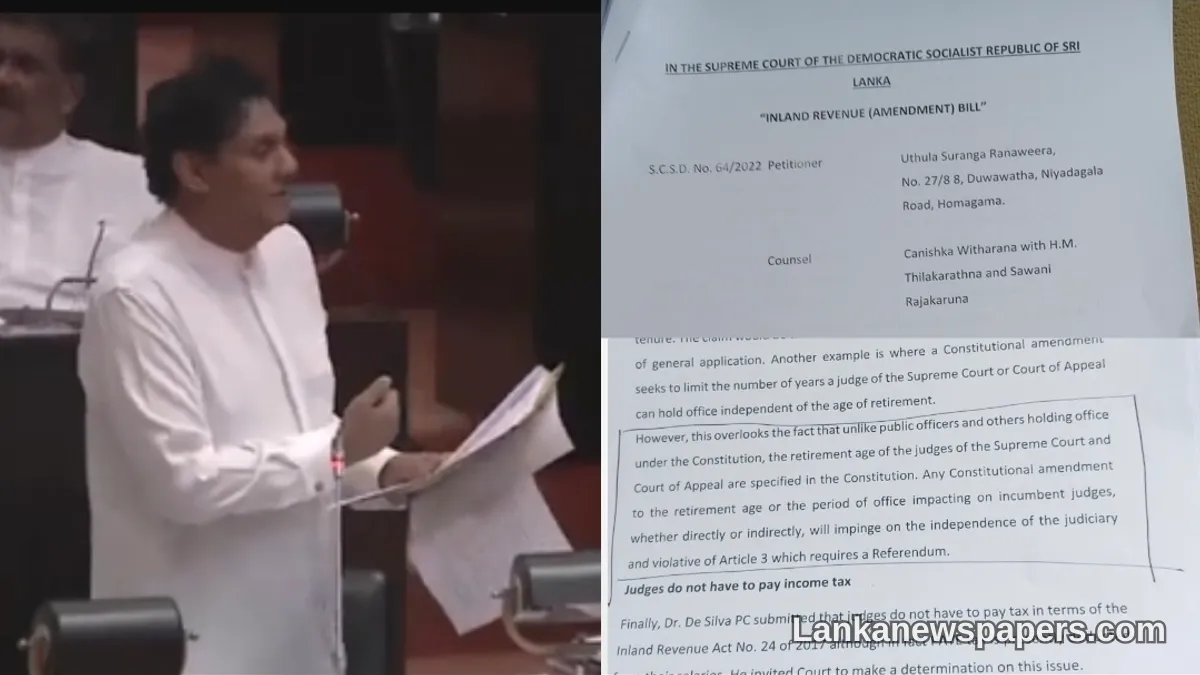
Opposition Leader Sajith Premadasa took to the floor of Parliament on Tuesday to remind lawmakers of a landmark Supreme Court determination made in 2022, asserting that any constitutional amendment seeking to change the retirement age of judges cannot be passed without first going to the people through a referendum.
Premadasa's remarks came as debate continues in the legislature over proposed constitutional changes, with the Opposition Leader drawing on the earlier ruling to caution the government against attempting to push through such amendments by a simple parliamentary majority alone.
A Binding Precedent
The Supreme Court's 2022 determination, which Premadasa referenced during his address, established that alterations to the retirement age of judges constitute a fundamental change to the constitutional framework of the country. As such, the court ruled at the time that any move in that direction would require approval not only from a two-thirds majority in Parliament but also from the public via a national referendum.
By citing this precedent, the Opposition Leader signalled his intention to hold the government accountable to constitutional boundaries, warning that any attempt to sidestep the referendum requirement would be legally untenable and politically reckless.
Opposition Stands Firm
Premadasa's intervention underscored the Opposition's broader position that the independence of the judiciary must be safeguarded from executive or legislative interference. Changing the terms under which judges serve — including their age of retirement — is considered by legal experts to be among the most sensitive areas of constitutional reform, directly bearing on judicial independence.
The Supreme Court has already spoken on this matter. Any amendment touching the retirement age of judges requires a referendum — that is the law of this land, and no one is above it.
Sri Lanka's constitution provides specific protections for provisions deemed to affect the sovereignty of the people or the fundamental structure of the state, requiring that such changes receive popular endorsement before they can take effect.
Broader Constitutional Implications
Legal analysts note that the 2022 Supreme Court determination carries significant weight as a guiding precedent for Parliament when crafting or debating constitutional amendments. The ruling drew a clear line between reforms that can be enacted through legislative supermajority and those that demand a far higher democratic threshold.
Tuesday's exchange in Parliament highlighted the continuing tension between the ruling administration and the Opposition over the pace and scope of constitutional reform in Sri Lanka, with Premadasa firmly positioning his party as a defender of due constitutional process.
The debate is expected to continue in the coming parliamentary sessions as the government navigates its legislative agenda amid scrutiny from Opposition benches and civil society groups alike.


💬 Join the Discussion 0
Be the first to share your view on this story.