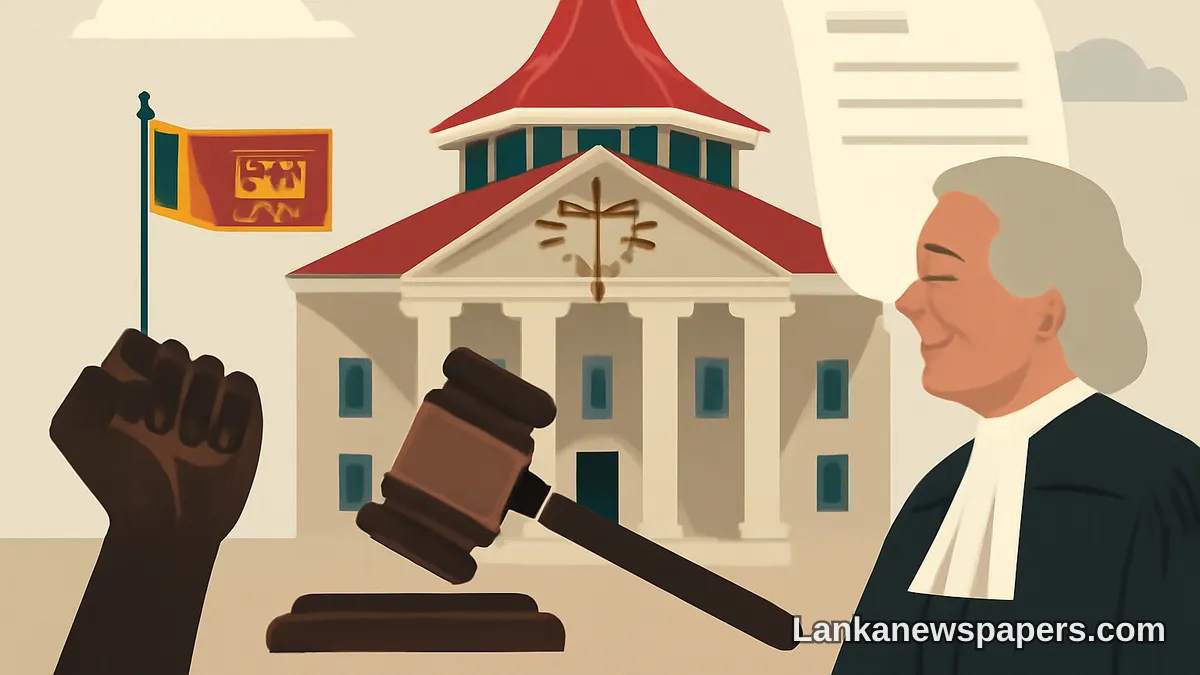
The ruling JVP-led National People's Power government appears to be walking headlong into a political and constitutional crisis of its own making, as it presses ahead with plans to raise the retirement age of superior court judges through a constitutional amendment — a move that has drawn sharp opposition from across Sri Lanka's legal and civil landscape.
Broad Coalition of Opposition
The proposed amendment has triggered an unusually unified wave of resistance from a wide range of respected institutions and organisations. Lawyers' associations, sitting and retired judges, civil society groups, and religious bodies have all raised their voices against the government's push, signalling that the discontent extends well beyond partisan political circles.
Critics argue that the manner in which the government is pursuing this change raises serious questions about its intentions regarding judicial independence — a cornerstone of Sri Lanka's democratic framework.
Questions of Motive and Timing
Observers have noted that the timing and urgency with which the administration is advancing this constitutional amendment has fuelled suspicion among legal professionals and watchdog groups. Many fear the move could be an attempt to reshape the composition or loyalties of the country's highest courts in ways that serve the government's broader political agenda.
The strength of a democracy is measured not merely by the laws it passes, but by the independence it guarantees to those who must interpret them.
A Self-Inflicted Political Headache
For a government that came to power on a strong anti-establishment mandate and promises of systemic reform, the controversy represents a significant self-inflicted wound. The NPP rode a wave of public goodwill built on pledges of transparency and good governance — values that critics now say are being tested by this very proposal.
By pressing forward against such prominent and credible opposition, the administration risks not only alienating key pillars of civil society but also undermining public confidence in its commitment to upholding institutional integrity.
What Comes Next
Constitutional amendments in Sri Lanka require a two-thirds majority in Parliament, meaning the government would need to secure support beyond its own ranks to push the change through. Whether the NPP can muster that level of backing — or whether the mounting opposition will force a rethink — remains to be seen.
For now, the government finds itself in an increasingly uncomfortable position, caught between its legislative ambitions and a growing chorus of disapproval from some of the country's most respected voices.


💬 Join the Discussion 2
See what readers are saying — and add your view.
why is NPP touching judiciary now? smells fishy to me
exactly, goverment should focus on economy not this nonsense