Shadow Networks: How Chinese Triad Crime Syndicates Have Embedded Themselves in Sri Lanka
A Growing Criminal Presence
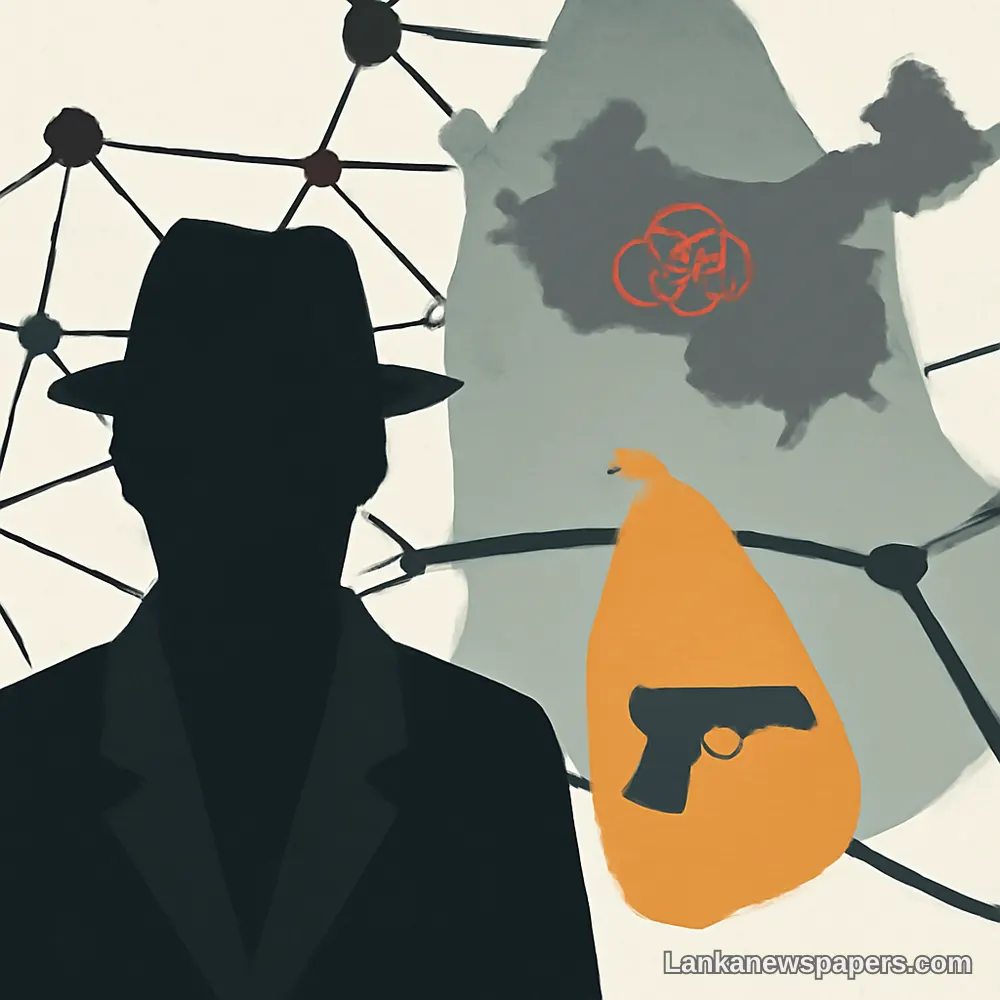
Sri Lanka, long positioned as a strategic maritime hub in the Indian Ocean, has increasingly found itself drawn into the web of Chinese organised crime, with triad-linked networks quietly expanding their footprint across the island nation in recent years.
What Are the Triads?
Triads are among the world's oldest and most sophisticated criminal organisations, originating in China and operating through tightly knit hierarchical structures. These syndicates have historically been linked to drug trafficking, money laundering, human trafficking, illegal gambling, and cyber fraud. Over the past two decades, their operational reach has extended far beyond East and Southeast Asia, penetrating vulnerable economies across the globe.
Sri Lanka as a Strategic Target
Analysts and security researchers have noted that Sri Lanka's combination of geographic positioning, relatively porous financial oversight mechanisms, and economic vulnerability following the 2022 financial crisis has made it an attractive operating environment for triad-affiliated criminal enterprises.
The island's ports, particularly Colombo — one of the busiest transshipment hubs in Asia — have raised concerns among law enforcement circles regarding their potential exploitation as conduits for illicit goods movement across the region.
Documented Criminal Activities
Several categories of criminal activity have been linked to Chinese syndicate operations within Sri Lanka, including:
- Large-scale online scam operations, often staffed by trafficked individuals forced to conduct cyber fraud
- Underground money exchange networks used to move funds outside formal banking channels
- Illegal casino and gambling establishments catering predominantly to Chinese nationals
- Narcotics transit operations leveraging Sri Lanka's Indian Ocean positioning
- Real estate and hospitality sector investments suspected of serving as money laundering vehicles
The Cyber Scam Dimension
Of particular concern to authorities has been the emergence of cyber scam compounds, a phenomenon that has devastated communities across Southeast Asia. Investigations have pointed to the presence of similar operations with Chinese organisational links functioning within Sri Lanka, where individuals — some trafficked under false employment promises — are coerced into conducting telephone and online fraud targeting victims internationally.
Governance and Oversight Gaps
Observers have pointed to several structural weaknesses that have allowed these networks to take root. Corruption within certain institutions, inadequate anti-money laundering enforcement, and limited inter-agency coordination on transnational crime have collectively created conditions that organised criminal groups have been able to exploit with relative ease.
Sri Lanka's strategic value to criminal networks lies not merely in what the country produces, but in where it sits — astride some of the world's most critical sea lanes, connecting East Africa, the Middle East, and South and Southeast Asia.
Regional and International Implications
The entrenchment of triad-connected operations in Sri Lanka carries implications that extend well beyond the island's borders. Regional security analysts have warned that without decisive countermeasures, Sri Lanka risks becoming a permanent node in transnational criminal supply chains, complicating its relationships with partner nations and international financial institutions already scrutinising the country's governance record.
The Path Forward
Security experts have called on Sri Lankan authorities to strengthen financial intelligence units, enhance cooperation with international law enforcement bodies such as Interpol, and enact more rigorous screening of foreign investment — particularly in sectors such as hospitality, real estate, and digital services — that have historically served as preferred vehicles for criminal money laundering.
As Sri Lanka continues its economic recovery, the challenge of confronting sophisticated transnational criminal networks while maintaining an open investment climate represents one of the more complex governance dilemmas facing policymakers in Colombo today.


💬 Join the Discussion 3
See what readers are saying — and add your view.
anyone surprised? they came with the projects and stayed with the crime
goverment knows this and doing nothing as usual
exactly, they too busy taking the bribes no