Protecting the Bench: Why Sri Lanka's Judicial Independence Must Remain Beyond Political Reach
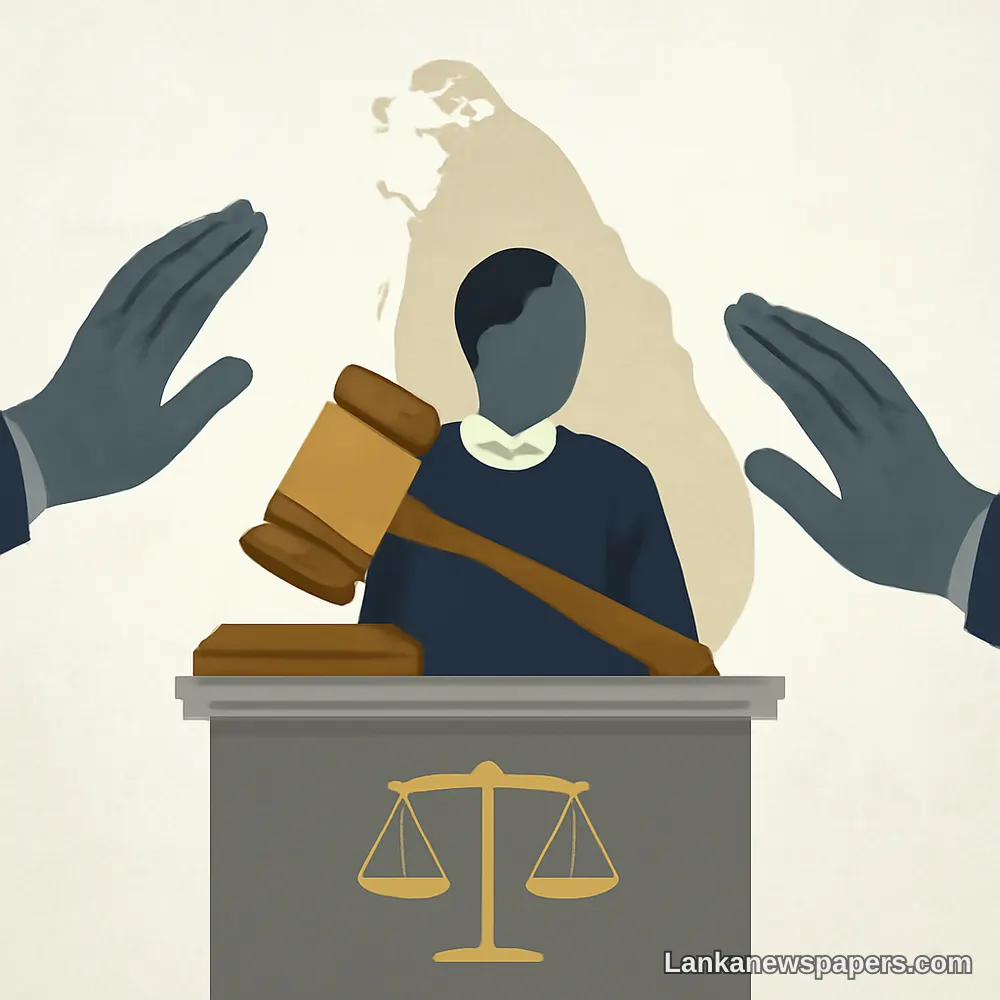
The Cornerstone of Democratic Governance
In any functioning democracy, the independence of the judiciary stands as one of the most critical pillars upholding the rule of law. For Sri Lanka, a nation that has navigated decades of political turbulence, ethnic conflict, and economic hardship, the integrity of its courts and the impartiality of its judges carry profound significance for every citizen.
A Constitutional Guarantee Under Pressure
Sri Lanka's Constitution enshrines judicial independence as a fundamental safeguard, designed to ensure that the courts remain free from interference by the executive and legislative branches of government. Yet, in practice, this principle has frequently been tested — sometimes to breaking point — by political forces seeking to bend the justice system to their will.
History offers sobering lessons. Attempts to influence judicial appointments, the controversial impeachment of Chief Justice Shirani Bandaranayake in 2013, and recurring debates over the composition of constitutional councils have all cast shadows over the credibility of Sri Lanka's judicial institutions in the eyes of both local and international observers.
Why It Matters to Ordinary Sri Lankans
The stakes of judicial independence extend far beyond legal theory or academic debate. When courts are perceived as instruments of political power rather than neutral arbiters of justice, public trust erodes — and with it, the social contract that binds citizens to the state.
- Citizens facing land disputes, labour grievances, or criminal proceedings depend on impartial courts to deliver fair outcomes.
- Businesses and foreign investors require a credible legal system to protect contracts and property rights.
- Minority communities rely on an independent judiciary as a bulwark against majoritarian political pressure.
- Journalists and civil society actors look to the courts as a last line of defence for fundamental rights.
The Appointment Process: A Persistent Vulnerability
One of the most contentious areas remains the process by which senior judges are appointed. Critics have long argued that executive influence over judicial appointments creates the conditions for loyalty rather than competence to become the deciding factor. Constitutional reforms introduced in recent years sought to address this through independent commissions, but questions persist about whether these bodies operate with genuine autonomy or merely provide a procedural veneer over decisions already made in political corridors.
An independent judiciary is not a privilege extended to judges — it is a right belonging to the people, guaranteeing that justice will not be traded for political convenience.
Reform and the Road Ahead
Constitutional scholars and legal practitioners across Sri Lanka have repeatedly called for stronger structural protections for judicial independence. These include transparent, merit-based appointment processes, security of tenure for judges free from arbitrary removal, adequate resourcing of the courts to reduce dependence on government funding decisions, and robust mechanisms for judicial accountability that do not weaponise oversight for political ends.
The current political climate, marked by ongoing debates about constitutional reform and governance restructuring, presents both a challenge and an opportunity. As Sri Lanka continues its recovery from one of the most severe economic crises in its modern history, rebuilding public trust in state institutions — including the judiciary — is not a luxury but a necessity.
A Responsibility Shared by All
Ultimately, safeguarding judicial independence is not solely the responsibility of judges themselves. It demands commitment from the executive, restraint from legislators, vigilance from the media, and active engagement from civil society. A judiciary that stands apart from political influence does not weaken democratic governance — it strengthens it, providing every Sri Lankan with the assurance that the law, and not the powerful, will have the final word.


💬 Join the Discussion 3
See what readers are saying — and add your view.
Judicial independence means nothing if judges are appointed by politicians lah.
Easy to write articles, but who is actually enforcing this on the ground?
Exactly, all talk no action as usual in this country.