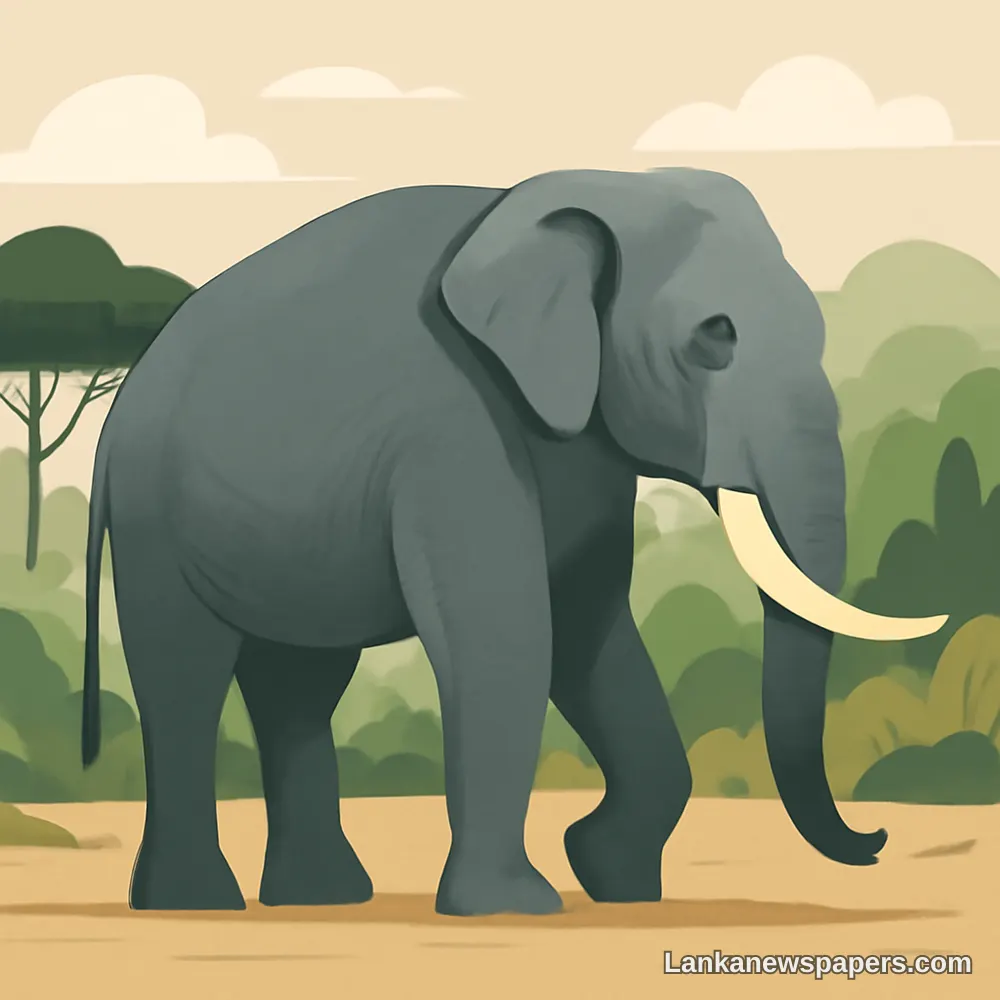
A Rebel of the Wild
In the rich tapestry of Sri Lanka's wildlife heritage, few creatures have captured the public imagination quite like Chandi — a one-tusked wild elephant whose fierce resistance to human captivity turned him into an enduring symbol of the island's untamed natural spirit.
A Tusker Unlike Any Other
Chandi, distinguished by the possession of only a single tusk, was no ordinary elephant. In a country where tuskers are revered, celebrated in religious pageants and regarded as living treasures, Chandi stood apart — not for his adornments or his role in ceremony, but for the very opposite reason. He refused, resolutely and repeatedly, to be tamed.
His defiance was not merely the restlessness of a wild animal confronting an unfamiliar world. It was something that observers, wildlife officials and ordinary Sri Lankans came to regard as a statement — a powerful, wordless declaration that some creatures belong only to the forest.
Captivity Attempted, Freedom Reclaimed
Efforts to bring Chandi under human control were met with fierce and sustained resistance. Unlike many wild elephants that, over time, yield to the process of domestication, Chandi consistently pushed back. His story became one of a wild spirit that could not be broken, circulating widely among wildlife enthusiasts and conservationists who saw in him a rare and admirable stubbornness.
For those who work in Sri Lanka's wildlife sector, such animals serve as a sobering reminder that the country's elephants are not simply resources to be harnessed for human purposes — whether for temple processions, tourism or labour — but living beings with their own instincts, needs and dignity.
A Mirror Held Up to Human Behaviour
Chandi's legend also drew attention to the broader and deeply troubling conflict between humans and elephants in Sri Lanka. The island is home to one of the largest concentrations of Asian elephants in the world, yet that population faces relentless pressure from habitat loss, the fragmentation of forest corridors and deadly confrontations with farming communities.
Every year, dozens of elephants and humans alike lose their lives in this ongoing conflict — a crisis that wildlife authorities, conservationists and successive governments have struggled to resolve. Against this backdrop, Chandi came to represent not just individual animal defiance, but the desperate struggle of an entire species to survive on an island rapidly running out of room for its wild inhabitants.
The Making of a Symbol
What elevated Chandi from a remarkable animal to a genuine cultural symbol was the way his story resonated beyond wildlife circles. Sri Lankans from all walks of life — people with no particular connection to conservation — found themselves drawn to the narrative of a lone, physically distinctive elephant refusing to surrender his freedom.
In a society that holds the elephant sacred, celebrating these magnificent animals in art, religion and national identity while simultaneously driving them from their habitats, Chandi's story posed an uncomfortable but necessary question: what does it truly mean to respect the elephant?
A Legacy for Conservation
Wildlife conservationists hope that stories like Chandi's will strengthen the case for more meaningful protection of Sri Lanka's elephant population and the forest ecosystems they depend upon. The island's elephants need connected habitats, reduced conflict zones and a genuine political commitment to coexistence — not simply reverence in ritual while their wild spaces continue to shrink.
Chandi, the one-tusked rebel, may be gone from the headlines, but the questions he raised remain as urgent as ever. His life was a testament to the wild spirit that still pulses through Sri Lanka's forests — and a challenge to the humans who share this island to do far better by the creatures they claim to cherish.



💬 Join the Discussion 1
See what readers are saying — and add your view.
Chandi is a legend no doubt. hope the goverment actually protects him properly