Trump Claims US Should Take Control of Strait of Hormuz and Receive Payment for It
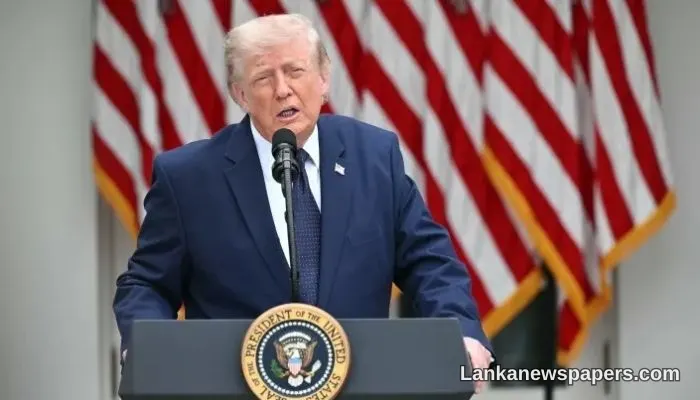
United States President Donald Trump declared on Monday that the United States would likely assume control of the Strait of Hormuz, one of the world's most strategically vital waterways, and suggested that countries benefiting from its security should pay for the privilege.
A Bold Assertion Over a Critical Waterway
The Strait of Hormuz, located between Iran and Oman, serves as the primary passage for a significant portion of the world's oil and liquefied natural gas exports. Its security is considered essential to global energy markets, and any disruption to shipping through the narrow channel has historically sent oil prices surging worldwide.
Trump's remarks signal an increasingly assertive posture by his administration regarding American dominance over international maritime corridors, echoing similar statements he has previously made about other strategically important locations.
Implications for the Region and Beyond
The declaration is likely to raise concerns among Gulf states, Iran, and major oil-importing nations across Asia and Europe. Countries such as China, Japan, South Korea, and India rely heavily on crude oil shipments passing through the strait, making Trump's comments a matter of serious international interest.
For Sri Lanka, which depends on imported petroleum products to meet its energy needs, any shift in control or access conditions along this critical shipping route could have downstream consequences for fuel costs and economic stability.
A Pattern of Transactional Foreign Policy
The suggestion that nations should pay the United States for securing the waterway is consistent with Trump's broader transactional approach to foreign policy, in which he has repeatedly argued that America's allies and trading partners should contribute more toward their own security arrangements.
- The Strait of Hormuz handles an estimated 20 percent of the world's total oil trade.
- Iran has previously threatened to close the strait during periods of heightened tensions with Western powers.
- The US Navy's Fifth Fleet, headquartered in Bahrain, already maintains a significant presence in the surrounding waters.
International observers and foreign policy analysts are expected to scrutinise the statement closely, as any formal move toward US control of the strait would represent an unprecedented step with profound legal, diplomatic, and military consequences under international maritime law.
Trump's comments come at a time of renewed tensions between Washington and Tehran, adding a fresh layer of complexity to an already volatile geopolitical landscape in the Middle East.
No further official details have been provided by the White House regarding the practical steps, if any, envisioned to implement such control over the internationally recognised shipping lane.



💬 Join the Discussion 2
See what readers are saying — and add your view.
America wants to control everything no. typical Trump nonsense
exactly, next he will say he owns the Indian Ocean also