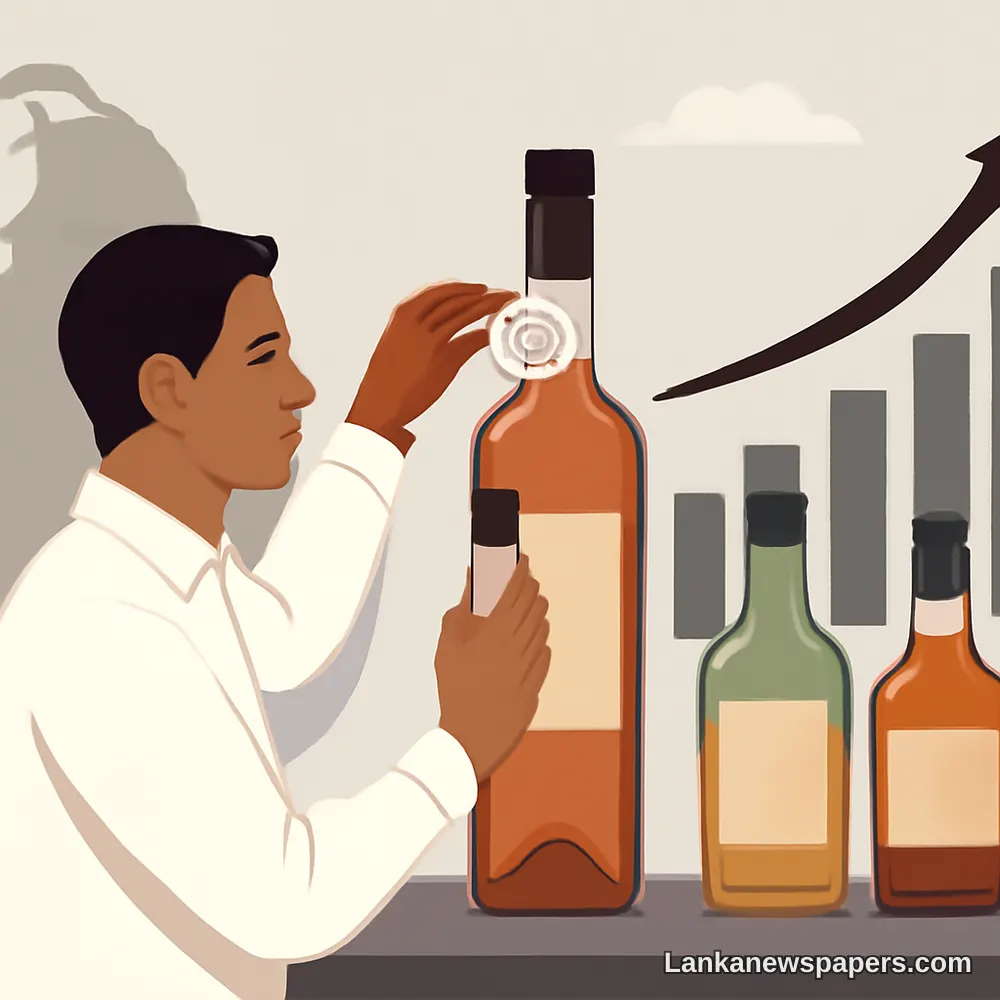
Sri Lanka's excise revenue has recorded a remarkable surge of more than 60 percent over the past three years, with authorities crediting the introduction of a revenue sticker system on liquor products as the driving force behind the dramatic turnaround.
A Simple Solution With Major Results
The revenue sticker scheme, which requires licensed liquor products to carry government-issued authentication labels, was implemented to tackle two deeply entrenched problems in the industry — widespread tax evasion and the circulation of counterfeit alcohol. Officials say the initiative has proven highly effective, delivering a substantial boost to state coffers without placing any additional financial burden on the government.
The system works by making it significantly harder for unlicensed or under-declared products to reach consumers, as retailers and enforcement officers can quickly verify whether the correct duties have been paid on any given bottle.
Closing the Loopholes
Prior to the sticker rollout, the excise sector was widely acknowledged to be vulnerable to manipulation, with illicit operators exploiting gaps in the monitoring process to avoid paying full duties. The scale of lost revenue was considered substantial, though the full extent had been difficult to quantify given the nature of black-market activity.
The introduction of the sticker mechanism effectively created a visible, traceable paper trail for dutiable liquor, making compliance easier to enforce across the supply chain — from production and importation through to point of sale.
Revenue Benefits Without Extra Cost
One of the most notable aspects of the programme, according to authorities, is that the revenue gains have been achieved at no direct cost to the state. The sticker system was structured in a manner that avoided placing a significant administrative or financial burden on government resources, making it an efficient policy instrument by any measure.
The 60 percent jump in excise collections over three years represents a meaningful contribution to Sri Lanka's broader fiscal recovery efforts, arriving at a time when the country has been working to stabilise its public finances following a severe economic crisis.
Implications for Tax Policy
The success of the liquor sticker model has drawn attention as a potential template for curbing tax fraud in other sectors. Policymakers and revenue officials are likely to examine whether similar authentication mechanisms could be extended to other excisable goods where evasion has historically been a challenge.
For Sri Lankan consumers, the scheme also carries a public health dimension — by reducing the volume of counterfeit and illicit alcohol in circulation, it lowers the risk of harm associated with unregulated spirits, which have in the past been linked to serious health incidents across the region.


💬 Join the Discussion 4
See what readers are saying — and add your view.
sticker on a bottle fixed tax fraud. why didnt they do this years ago honestly
so all this time ppl were selling fake arrack and paying zero tax? unbelievable
finally goverment doing something right. 60% is massive
yes but where is all that extra money going thats the real question