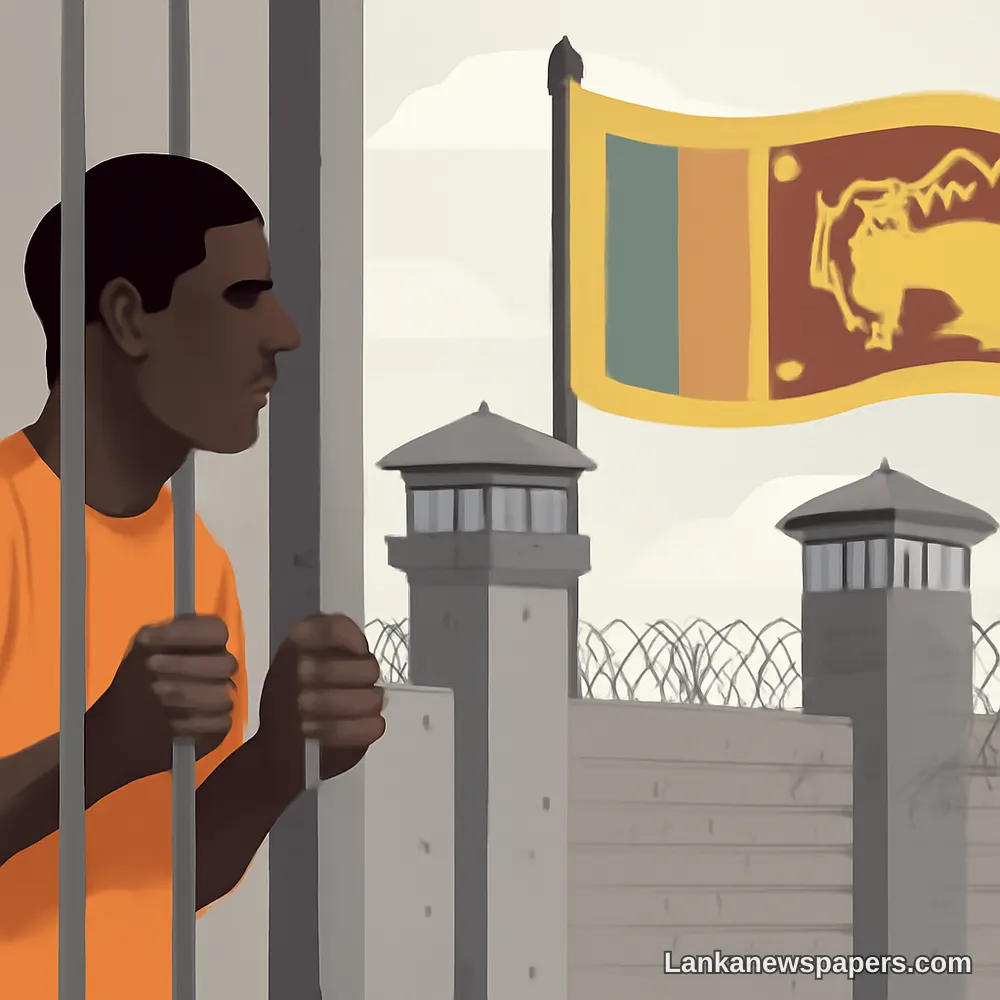
Sri Lanka's prison system has long existed in the shadows of public discourse — overcrowded, underfunded, and volatile. But a wave of recent unrest behind prison walls has thrust the issue into the national spotlight, presenting the ruling National People's Power government with one of its most pressing and consequential challenges since taking office.
A System Under Strain
Sri Lanka's correctional facilities have for decades struggled under the weight of severe overcrowding, inadequate resources, and deep-rooted institutional dysfunction. These conditions have repeatedly proven to be a tinderbox, with periodic outbreaks of violence serving as stark reminders that the status quo is no longer sustainable.
The most recent episodes of prison unrest have forced policymakers to confront uncomfortable truths about a system that has largely been left to deteriorate by successive administrations. For the NPP, which came to power on a bold platform of systemic change and anti-corruption reform, the deteriorating state of the country's prisons represents both a serious test and a defining moment.
Political Dimensions of a Prison Crisis
What makes this issue particularly complex is the manner in which prison politics intersects with broader governance challenges. Prisons in Sri Lanka have not merely been places of incarceration — they have at times functioned as extensions of political patronage networks, where influence, protection, and impunity have been traded across ideological lines.
For an administration that has staked its credibility on breaking precisely these kinds of entrenched arrangements, allowing prison dysfunction to persist would send a deeply contradictory message to the public. Conversely, a bold and transparent approach to prison reform could serve as a powerful demonstration that the NPP is serious about institutional transformation at every level of the state.
An Opportunity Disguised as a Crisis
Political analysts and civil society observers have noted that moments of institutional crisis, while difficult, frequently create the political conditions necessary for meaningful reform. The visibility and urgency generated by prison unrest may, in fact, give the government the public mandate it needs to push through changes that previous administrations either lacked the will or the political capital to attempt.
Key areas where reform is widely considered long overdue include:
- Reducing the chronic overcrowding that leaves inmates in inhumane conditions and staff overwhelmed
- Accelerating case disposal to address the disproportionate number of remand prisoners awaiting trial
- Investing in rehabilitation programmes that reduce reoffending and offer inmates a viable path forward
- Professionalising and adequately resourcing the Department of Prisons
- Eliminating the influence of organised crime networks that have historically operated with relative freedom within prison walls
The Stakes for the NPP
The NPP's broader reform agenda — encompassing anti-corruption measures, judicial accountability, and economic restructuring — will be judged not only by its high-profile achievements but by whether it demonstrates the capacity to address long-neglected corners of the state apparatus. Prisons, invisible to most voters yet central to questions of justice, safety, and human dignity, are one such corner.
Failure to act decisively risks allowing a festering crisis to escalate further, potentially resulting in loss of life, reputational damage to the government, and a missed generational opportunity to modernise Sri Lanka's approach to criminal justice.
A Moment That Demands Leadership
Sri Lanka stands at a juncture where the political will to reform its prison system appears more credible than it has in years. Whether the NPP seizes this moment with the urgency and seriousness it demands will say much about the true depth of its commitment to the transformational governance it has promised the Sri Lankan people.
The cells may be out of public sight, but the choices made about what happens inside them will resonate far beyond prison walls — shaping public trust, institutional integrity, and the country's broader democratic trajectory for years to come.


💬 Join the Discussion 1
See what readers are saying — and add your view.
prison reform sounds good on paper but lets see if NPP actually does something