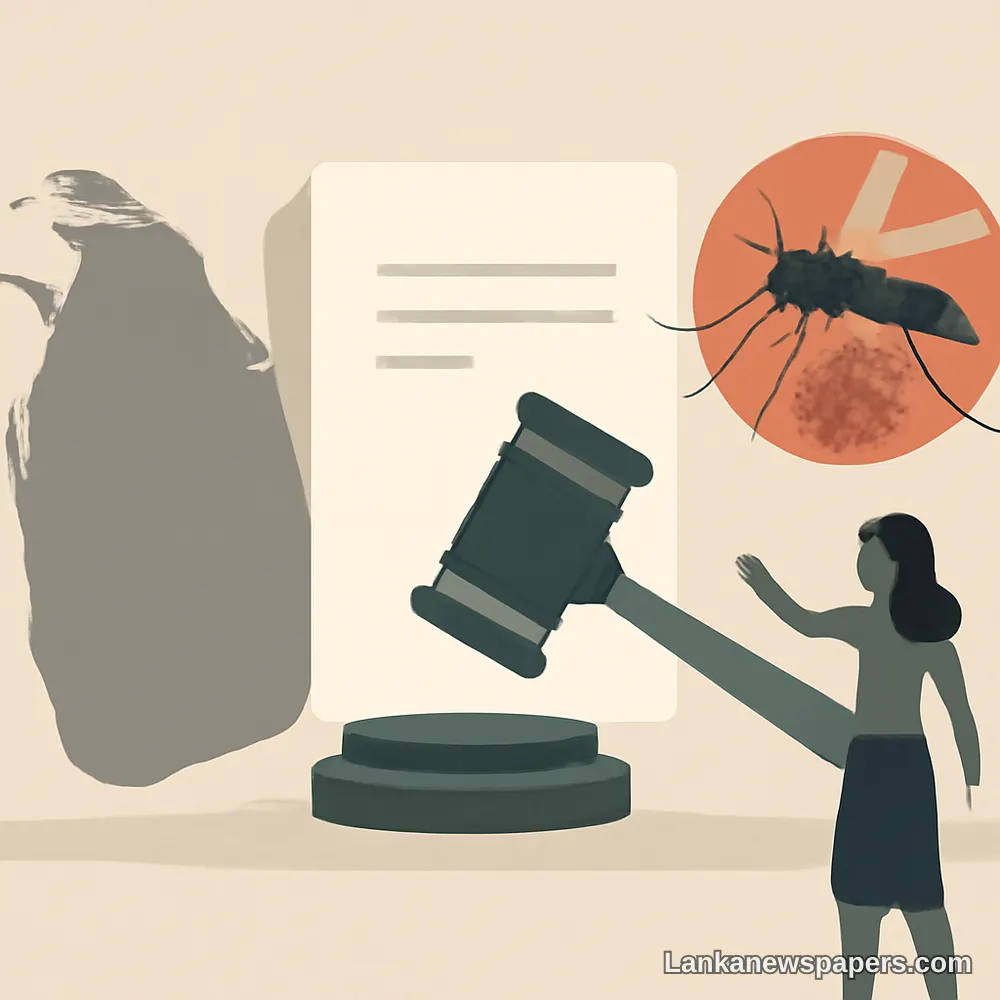
Government Plans Legal Reforms to Tackle Dengue Crisis
Sri Lanka is preparing to amend the Mosquito Breeding Prevention Act as the country grapples with a sharp surge in dengue fever cases, authorities have confirmed. The move signals a renewed urgency from the government to address one of the island's most persistent and deadly public health challenges.
Why the Law Needs Updating
The existing Mosquito Breeding Prevention Act has long been criticised as outdated and insufficient to deal with the scale of the dengue problem facing Sri Lanka today. Officials believe that stronger legal provisions, including tougher penalties for those who allow mosquito breeding on their properties, are essential to drive meaningful behavioural change among the public.
The proposed amendments are expected to give health and municipal authorities greater enforcement powers, enabling them to act more swiftly against negligent property owners and businesses that fail to maintain mosquito-free environments.
Dengue Cases Continue to Climb
The decision to revisit the legislation comes as dengue infection rates across the country have risen to concerning levels. Health officials have been monitoring a steady increase in reported cases, placing additional pressure on hospitals and community health workers already stretched thin.
Sri Lanka experiences seasonal dengue outbreaks, typically worsening during and after the monsoon periods when stagnant water — the primary breeding ground for the Aedes aegypti mosquito — becomes widespread in both urban and rural areas.
A Multi-Pronged Public Health Response
Beyond legal reform, health authorities are urging Sri Lankans to take immediate preventive action at the household level. Key measures recommended by officials include:
- Regularly emptying and cleaning water storage containers
- Disposing of items such as tyres, tins, and flower pots that collect rainwater
- Using mosquito nets and repellents, particularly for young children and the elderly
- Reporting suspected dengue symptoms to a medical professional without delay
Dengue remains a serious and preventable public health threat, and every household has a role to play in eliminating breeding sites before the situation worsens further.
Looking Ahead
The planned amendments to the Mosquito Breeding Prevention Act are anticipated to be tabled in Parliament in the coming months. Health experts and civil society groups have broadly welcomed the initiative, though many stress that legislative change alone will not be sufficient without sustained public awareness campaigns and strong community participation.
For a country that has battled recurring dengue outbreaks for decades, the proposed legal reforms represent a significant, if long-overdue, step toward building a more resilient public health framework.



💬 Join the Discussion 0
Be the first to share your view on this story.