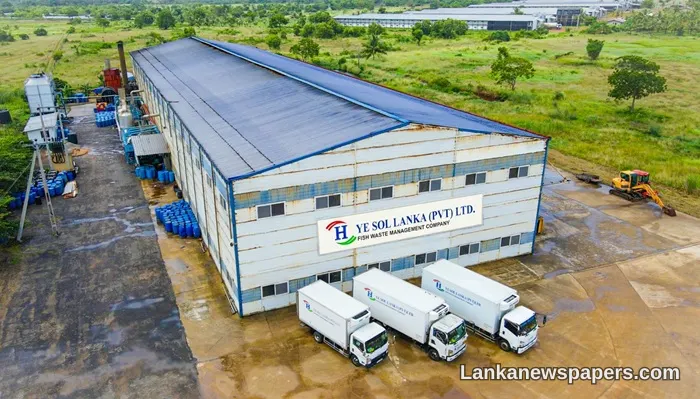
A Sri Lankan company based in the North Western Province has found a way to turn what was once considered worthless fish waste into a lucrative export commodity, generating millions of rupees in foreign exchange earnings for the country.
From Waste to Wealth
Yesol Lanka, a Board of Investment (BOI)-approved enterprise operating out of Madurankuliya in the Puttalam District, has successfully transformed discarded fish waste into a profitable export product, demonstrating that sustainable business models can deliver strong economic returns while also addressing environmental concerns.
The company's innovative approach involves processing fish byproducts that would otherwise be discarded by the fishing industry, converting them into commercially valuable materials that have found strong demand in international markets.
BOI Recognition and Strategic Location
Yesol Lanka's BOI-approved status reflects official recognition of the company's economic contribution and its potential to attract further investment into Sri Lanka's growing blue economy sector. The Puttalam District, home to a thriving fishing community and extensive coastal resources, provides the company with ready access to the raw materials central to its operations.
The enterprise's location in Madurankuliya places it at the heart of one of Sri Lanka's most active fishing regions, allowing it to source fish waste directly from local fishermen and processing facilities, creating an additional income stream for coastal communities that might otherwise see little value from such byproducts.
Broader Implications for Sri Lanka's Export Sector
Sri Lanka has long sought to diversify its export base beyond traditional commodities such as tea, garments and rubber. Initiatives like Yesol Lanka's fish waste processing venture represent the kind of value-added enterprise that economic planners have encouraged as a means of boosting foreign exchange reserves, which remain a critical concern following the country's recent economic crisis.
- The venture supports local fishing communities by monetising previously discarded waste
- BOI approval signals strong government backing and potential for expansion
- The model aligns with global trends toward circular economy practices in the seafood industry
- Export earnings contribute directly to Sri Lanka's foreign exchange reserves
A Model for Sustainable Industry
Industry observers have noted that Yesol Lanka's success could serve as a blueprint for other coastal communities across Sri Lanka, where significant quantities of fish waste are generated daily with little to no commercial utilisation. By demonstrating that such waste streams can be profitably processed and exported, the company has opened a conversation about the untapped potential lying within Sri Lanka's expansive fishing sector.
As Sri Lanka continues its economic recovery, enterprises that generate foreign exchange while simultaneously supporting rural livelihoods and reducing environmental waste are likely to receive increasing attention from policymakers and investors alike.


💬 Join the Discussion 0
Be the first to share your view on this story.