Behind Bars and Beyond Breaking Point: Why Sri Lanka's Prison Riots Keep Happening
A System Under Siege From Within
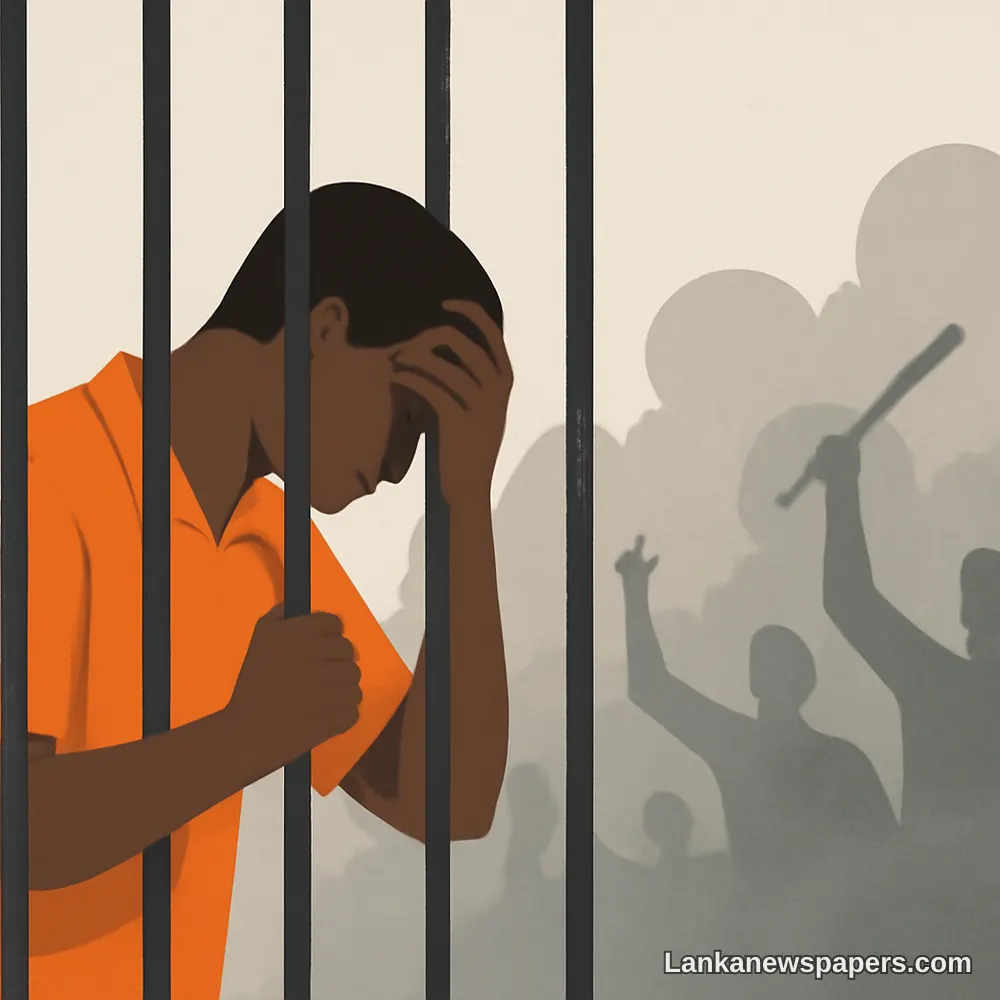
Sri Lanka's prisons have long been ticking time bombs, and when they explode — as they have repeatedly over the decades — the violence that follows is rarely a surprise to those who work within the system or study it closely. The latest eruption of unrest behind prison walls is not an isolated incident but rather the most recent chapter in a troubling story of institutional neglect, dangerous overcrowding, and systemic failure that successive governments have failed to meaningfully address.
Overcrowding at Crisis Levels
At the heart of Sri Lanka's prison crisis lies a stark and uncomfortable reality — the country's correctional facilities are holding far more inmates than they were ever designed to accommodate. Prisons built to house hundreds are routinely holding thousands, creating conditions that strip away basic human dignity and generate an atmosphere of constant tension. When people are compressed into spaces with inadequate food, poor sanitation, insufficient medical care, and little to no meaningful activity, the potential for violence becomes almost inevitable.
A significant contributor to this overcrowding is the high number of remand prisoners — individuals who have not yet been convicted of any crime but are awaiting trial within an overburdened and sluggish court system. These detainees can spend months or even years in custody before their cases are heard, clogging the prison population and placing enormous strain on already stretched resources.
The Role of Drugs and Organised Networks
Another dimension that cannot be ignored is the penetration of drug networks into Sri Lanka's prison system. Narcotics have become deeply embedded within certain facilities, with organised criminal elements continuing to operate behind bars. Disputes over drug trade territories, debts, and power among rival groups have repeatedly served as flashpoints for violence. The flow of contraband into prisons also points to serious questions about supervision, corruption, and the integrity of the institutions themselves.
Understaffed, Undertrained, Overwhelmed
Prison staff across Sri Lanka face working conditions that are themselves deeply problematic. Officers are frequently understaffed relative to the number of inmates they must supervise, leaving them poorly equipped to manage volatile situations before they escalate. Training and professional development within the corrections service have historically received inadequate attention, limiting officers' capacity to employ de-escalation techniques or identify warning signs of impending unrest.
This environment does not only endanger inmates — it places prison staff at serious physical risk as well, and contributes to a culture where force, rather than dialogue or rehabilitation, becomes the default response to disorder.
Reforms Promised, Rarely Delivered
Following each major prison riot or crisis, the pattern in Sri Lanka has been depressingly familiar. Officials announce investigations, commissions are appointed, recommendations are drafted, and promises of reform are made publicly. Yet meaningful, sustained change rarely follows. Budget allocations for the prison system remain insufficient, policy attention drifts elsewhere once the immediate crisis fades from headlines, and the underlying conditions that caused the violence are left largely intact — until the next explosion.
- Prison population figures consistently exceed official capacity by alarming margins
- A large proportion of inmates are remand prisoners awaiting trial rather than convicted offenders
- Drug-related violence and organised criminal activity within prisons remain persistent problems
- Prison staff numbers and training levels fall short of what effective management requires
- Rehabilitation programmes are limited in scope and reach within the current system
A Rehabilitation System in Name Only
Sri Lanka's prison framework is formally described as a system of rehabilitation and correction, but critics argue that in practice it functions primarily as a holding facility with little genuine investment in reforming those within it. Educational programmes, vocational training, mental health support, and drug rehabilitation services — tools that research internationally has shown to reduce reoffending and improve prisoner behaviour — remain inadequately resourced within the local context. Without these interventions, many inmates leave prison in no better condition than when they entered, and in some cases considerably worse.
What Needs to Change
Experts and human rights advocates who have studied Sri Lanka's correctional system argue that addressing the crisis requires action on multiple fronts simultaneously. Reducing the remand prisoner population through judicial reform and greater use of bail and non-custodial measures would provide immediate relief on overcrowding. Long-term investment in prison infrastructure, staffing, and genuine rehabilitation programming is equally essential. So too is tackling the corruption that enables contraband networks to flourish inside facilities that should be secure.
Without structural reform that goes beyond surface-level responses to individual incidents, Sri Lanka's prisons will continue to be places where tension builds quietly until it can no longer be contained.
A Mirror Held Up to Society
Ultimately, the condition of a nation's prisons reflects something important about the values and priorities of the society that maintains them. Sri Lanka's recurring prison violence is not merely a law enforcement problem — it is a governance failure, a judicial failure, and a human rights concern that demands the kind of serious, sustained political will that has so far proven elusive. Until that will is found, the next riot will only be a matter of time.



💬 Join the Discussion 4
See what readers are saying — and add your view.
dont act surprised, this happens every few years like clockwork
what were the prisoners rioting about this time actually?
overcrowding is the real issue, goverment knows but does nothing
exactly, they lock ppl up and forget about them