Opposition MP Highlights Glaring Inequities in Sri Lanka's Tax Structure
Opposition Member of Parliament Harsha de Silva has launched a sharp critique against the Government's tax policy, arguing that ordinary Sri Lankan consumers are bearing a far heavier tax burden than officials publicly acknowledge, while certain industries — including online gaming — escape taxation altogether.
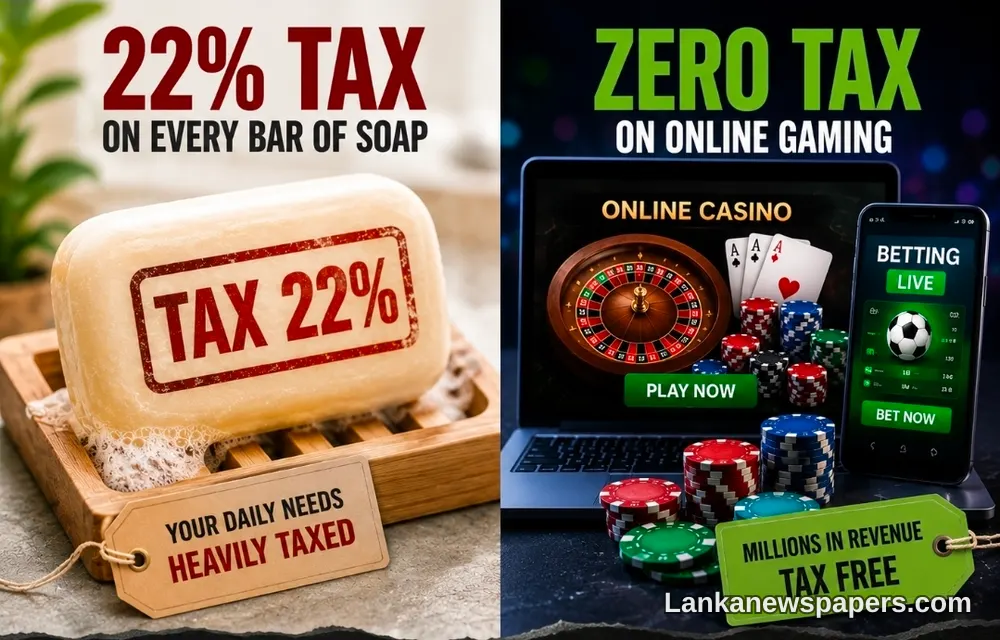
De Silva pointed out that although the Government repeatedly states that Value Added Tax (VAT) stands at 18%, the real tax burden on everyday goods is significantly higher. He cited the example of a common bar of soap, which he claims carries an effective tax rate of 22%, once all applicable levies are factored in.
Everyday Essentials Hit Hardest
The opposition MP's remarks drew attention to the cascading effect of multiple taxes and levies applied to basic consumer products. According to de Silva, when additional charges beyond VAT are accounted for, households across Sri Lanka are paying considerably more than the headline tax rate suggests — particularly on essential goods that ordinary families cannot do without.
While the Government tells the public that VAT is 18%, a simple bar of soap is taxed at 22%. Yet online gaming platforms carry no such burden at all.
Online Gaming Escapes the Tax Net
Compounding the issue, de Silva highlighted that the online gaming sector — a rapidly growing industry with significant revenue potential — remains entirely outside the tax net. He questioned why the Government has failed to introduce measures to capture revenue from this sector, even as it continues to squeeze consumers on basic necessities.
The MP's comments reflect a broader concern among opposition lawmakers that Sri Lanka's post-crisis tax reforms have disproportionately impacted lower and middle-income earners, while failing to widen the tax base to include emerging digital industries.
Calls for a Fairer Tax Framework
De Silva's remarks are expected to intensify the ongoing parliamentary debate over tax policy at a time when Sri Lanka continues to navigate economic recovery under its International Monetary Fund programme. Critics of the current structure argue that the Government must rationalise its approach — reducing the effective burden on essential consumer goods while bringing untaxed sectors such as online gaming into the revenue fold.
The opposition has been increasingly vocal about what it describes as an unbalanced and regressive tax system, and de Silva's latest intervention is likely to add fresh pressure on the Treasury to address these inconsistencies in upcoming fiscal policy discussions.


💬 Join the Discussion 1
See what readers are saying — and add your view.
soap is a basic need men, how can they tax it like this