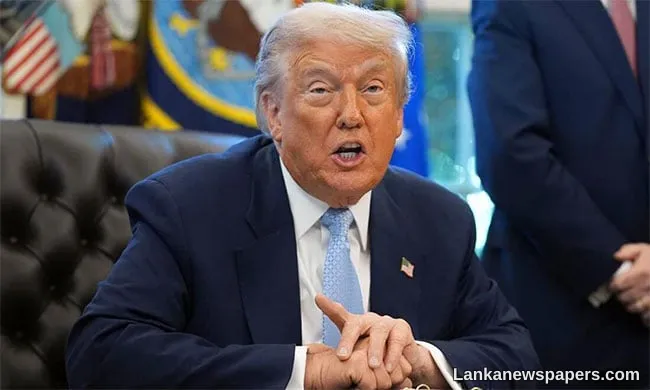
US President Donald Trump announced on Tuesday, April 21, that he would extend the ceasefire with Iran indefinitely, just hours before it was set to end. This move aims to give both countries more time to negotiate peace and resolve a conflict that has claimed thousands of lives and affected the global economy. Earlier that day, Trump had backed down from threats of renewed violence and stated he was responding to a request from Pakistan, which has been facilitating peace discussions during the seven-week-long war, until Iran's leaders can present a unified plan. Trump mentioned that the decision to prolong the ceasefire was partly due to the “seriously fractured” state of the Iranian government, a situation exacerbated by US-Israeli actions against some of its leaders, including the late Supreme Leader Ayatollah Ali Khamenei, succeeded by his son. Additionally, Trump indicated that the US Navy would maintain its blockade of Iran’s ports and coastline, which Iran has labeled as an act of war. It was unclear if Iran or Israel would agree to the ceasefire extension, which initially started two weeks ago. The announcement came after reports that Vice President JD Vance's planned trip to Pakistan for more peace talks with Iranian officials was postponed. Iranian state news agency Tasnim reported that Tehran had signaled to US negotiators through an intermediary in Pakistan that they would not attend further discussions. Tasnim stated, “Iran ultimately announced today that under these circumstances, attending the negotiations is a waste of time because the US prevents reaching any suitable agreement.” An advisor to Iran's parliament speaker, Mohammad Baqer Qalibaf, described Trump’s ceasefire extension as “a ploy to buy time” for a potential surprise attack, according to Reuters. The advisor also claimed in a post on X that the ongoing US Navy blockade of Iranian ports was “no different from bombardment and must be met with a military response,” as reported by Reuters.


💬 Join the Discussion 0
Be the first to share your view on this story.