Supreme Court's Rubber Stamp: Critical Questions Left Unanswered on the PSTA Bill
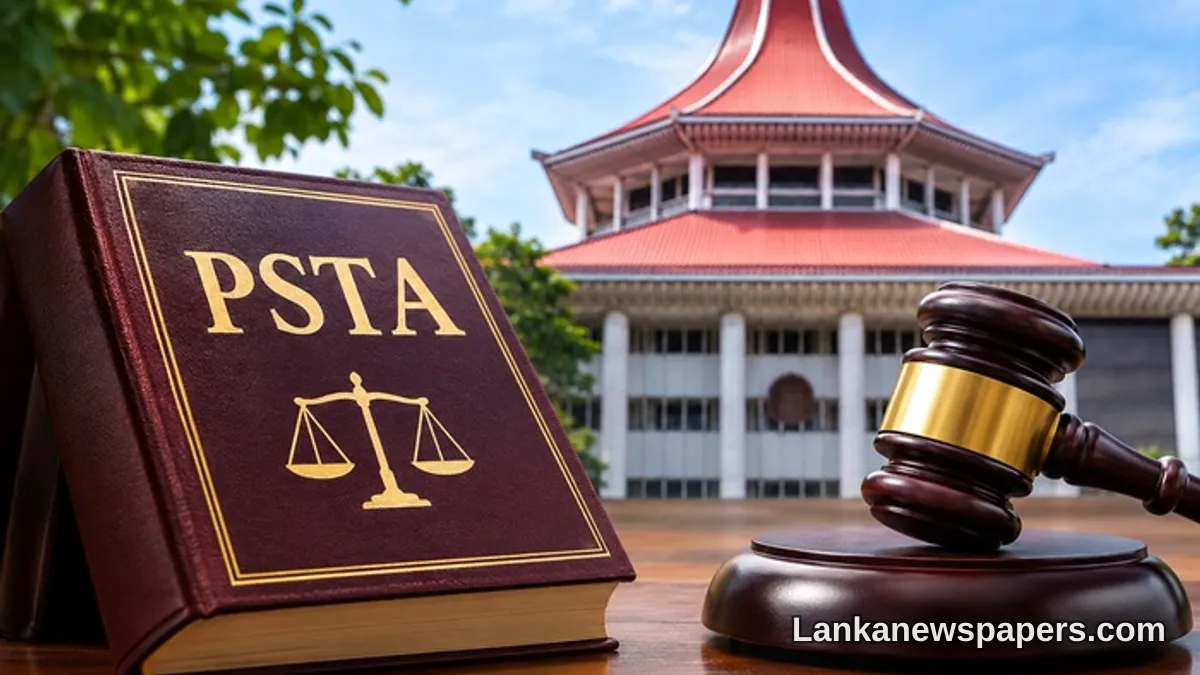
A Landmark Ruling That Raises More Questions Than It Answers
When the Supreme Court of Sri Lanka gave its approval to the Public Security and Telecommunications Act (PSTA) Bill, many legal observers and civil society voices expected the court to rigorously examine the legislation's far-reaching implications. Instead, critics argue, the apex court granted its endorsement without the depth of scrutiny such a consequential law demands.
A Warning That Went Unheeded
Dr Sanjana Hattotuwa, a Senior Researcher with a long record of studying digital rights and democratic governance in South Asia, raised the alarm well in advance. On 28 September 2026, he wrote to the Daily FT flagging what he described as an unprecedented set of concerns surrounding the PSTA Bill — concerns that, according to him, the Supreme Court ultimately chose to sidestep rather than address.
His central argument is stark: the court granted what amounts to an imprimatur — an official seal of approval — without conducting the level of inquiry that the bill's scope and potential consequences warranted.
What Is the PSTA Bill?
The Public Security and Telecommunications Act Bill is a sweeping piece of proposed legislation that critics say consolidates significant state power over digital communications, public broadcasting, and online expression in Sri Lanka. Supporters of the bill argue it is a necessary modernisation of outdated legal frameworks governing national security and telecommunications infrastructure.
Opponents, however, warn that the bill contains provisions that could be weaponised to suppress dissent, monitor citizens without adequate judicial oversight, and curtail press freedom — concerns particularly relevant in a country with a complex history of media suppression and civil liberties challenges.
The Court's Silence on Key Issues
At the heart of Dr Hattotuwa's critique is the question of what the Supreme Court chose not to examine. Among the issues he contends were overlooked:
- The compatibility of the bill's surveillance-enabling provisions with fundamental rights guaranteed under the Constitution
- The absence of independent oversight mechanisms to prevent abuse of the powers granted under the legislation
- The potential chilling effect on free expression and journalistic activity in Sri Lanka
- The lack of meaningful public consultation prior to the bill's progression through the legislative process
A Pattern of Concern
For many observers of Sri Lankan democratic institutions, the court's handling of the PSTA Bill is not an isolated incident but part of a broader pattern in which the judiciary has at times deferred to the executive on matters of national security legislation, even when civil liberties hang in the balance.
The Supreme Court's role is not merely to confirm that a bill does not violate the Constitution in letter — it must also assess whether the spirit of fundamental rights is being preserved. Approval without inquiry is not judicial review; it is judicial endorsement.
This sentiment, echoed by multiple legal scholars and rights advocates, underscores the gravity of the criticism being directed at the court's determination on the PSTA Bill.
Implications for Press Freedom and Digital Rights
Sri Lanka's media landscape has experienced significant turbulence over recent decades, with journalists facing harassment, surveillance, and in some cases physical danger for their reporting. Digital rights advocates warn that legislation like the PSTA Bill, if enacted without robust safeguards, could provide authorities with powerful new tools to monitor and intimidate members of the press and the public alike.
Civil society organisations have called on Parliament to revisit the bill and introduce stringent amendments before any final vote, arguing that the Supreme Court's approval should not be treated as the end of democratic scrutiny but rather as the beginning of a more urgent legislative debate.
What Comes Next?
With the PSTA Bill having cleared the Supreme Court's constitutional review, the path to enactment now runs through Parliament. Whether elected representatives will subject the legislation to the rigorous examination that critics argue the court failed to provide remains to be seen.
For Dr Hattotuwa and others who have raised their voices against what they see as a dangerously under-scrutinised piece of legislation, the fight is far from over. The coming weeks in Parliament are expected to be closely watched by rights groups, media organisations, and citizens who believe that the balance between national security and individual freedoms must never be surrendered without a thorough and transparent public reckoning.



💬 Join the Discussion 2
See what readers are saying — and add your view.
Supreme Court also becoming a rubber stamp now? What happened to this country.
Aiyo they been like this for years men, only now ppl noticing.