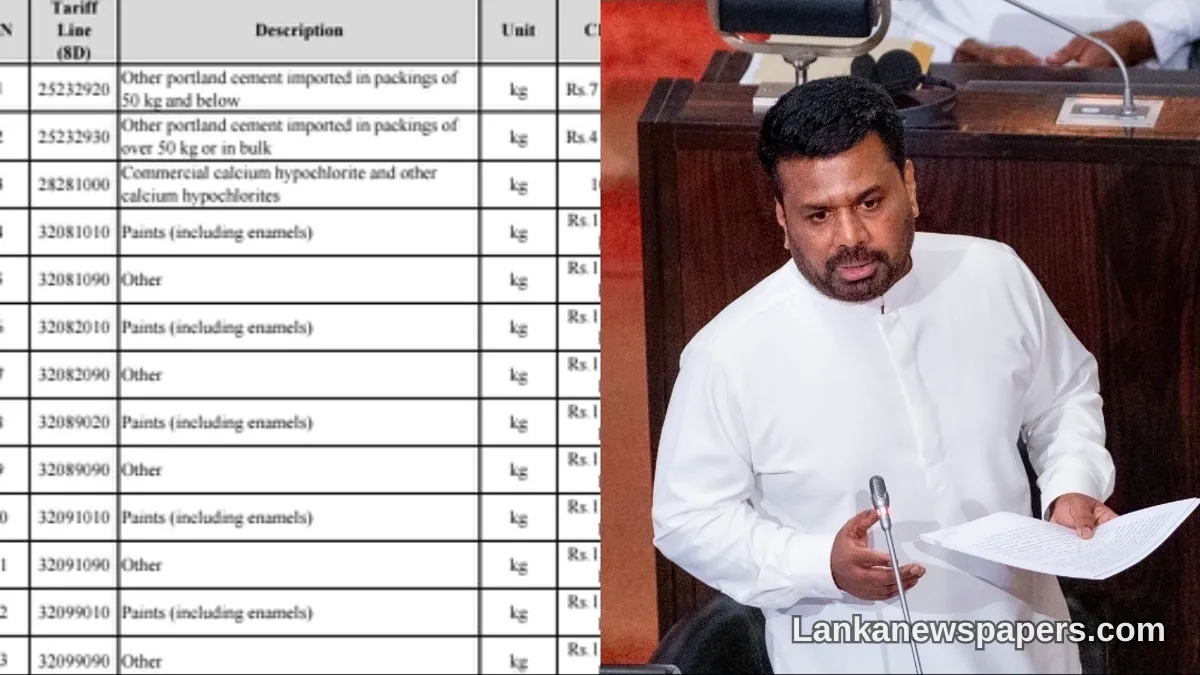
The Sri Lankan government has announced reductions in the Customs CESS levy applicable to a wide range of imported goods, with the new rates set to take effect from April 1, according to official proposals.
What Is the CESS Levy?
The CESS is a surcharge applied on top of standard customs duties on imported goods entering Sri Lanka. It has long been used as a mechanism to protect domestic industries while also generating government revenue. Adjustments to the levy can have significant implications for importers, retailers, and ultimately consumers across the country.
Broad Range of Categories Affected
The proposed reductions span several categories of imported products, signalling a broader move by the government to ease the cost burden on businesses that rely on imported inputs. The changes are expected to benefit industries ranging from manufacturing and agriculture to consumer goods and retail.
- The reductions cover hundreds of product lines currently subject to the CESS levy.
- The revised rates are proposed to come into force on April 1.
- The move is part of a wider government effort to rationalise the country's import tax structure.
Implications for Importers and Consumers
Industry stakeholders have welcomed early indications of the policy shift, noting that high CESS rates have added considerable pressure to supply chains, particularly in the post-economic crisis period. Lower levies on imported goods could translate into reduced costs for businesses and, in some cases, lower prices on shelves for Sri Lankan consumers.
Rationalising import taxes is a critical step in restoring business confidence and ensuring that Sri Lanka remains an attractive destination for trade and investment.
The government is expected to release a full list of affected product categories and their corresponding revised CESS rates through official gazette notifications ahead of the April 1 implementation date. Importers and businesses are advised to review the updated schedule carefully to understand how the changes may affect their operations and cost structures.
Broader Economic Context
The announcement comes as Sri Lanka continues its economic recovery programme, with authorities under pressure to streamline trade policies in line with commitments made to international lenders. Reducing unnecessary tariff burdens on goods not competing directly with local industries is seen as one avenue through which the government can support growth without compromising domestic producers.
Further details on the full scope of the CESS reductions are anticipated in the coming weeks as the April deadline approaches.


💬 Join the Discussion 3
See what readers are saying — and add your view.
which goods exactly? article doesnt say properly
finally some relief, prices were getting too crazy
relief? shops wont pass it on to us trust me