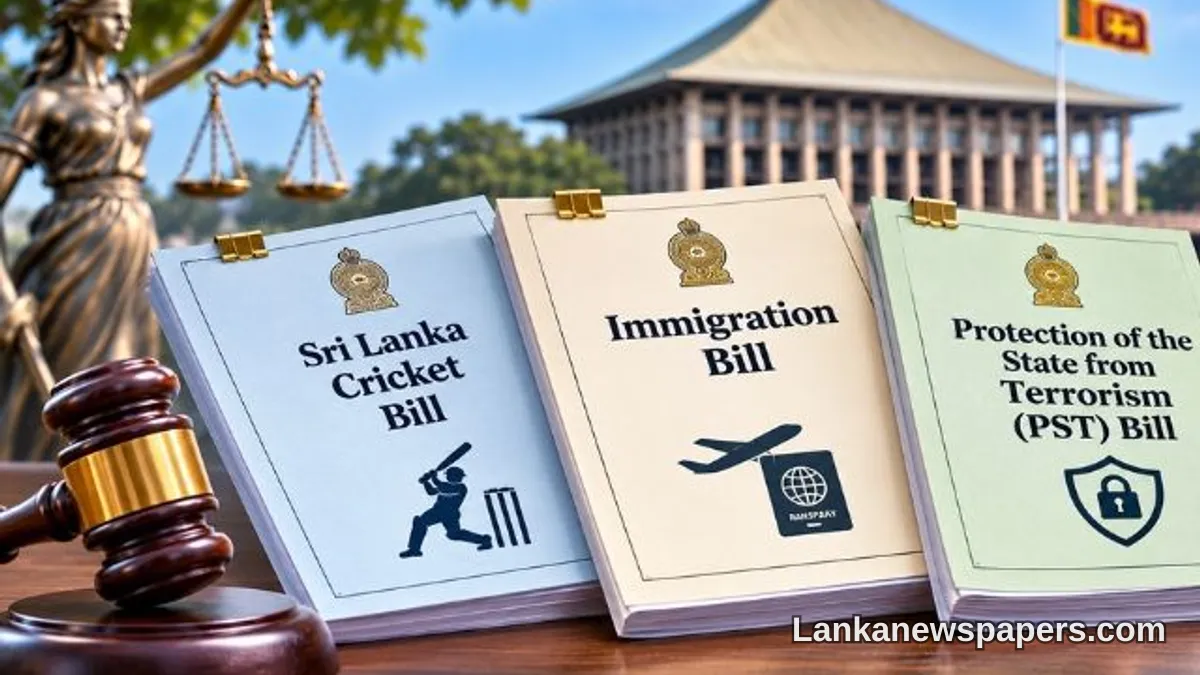
Three landmark Supreme Court determinations concerning the Sri Lanka Cricket Bill, the Immigration Bill, and the Protection of the State Authority (PSTA) Bill have been formally presented before Parliament, marking a significant moment in the country's legislative process.
Bills Under Constitutional Scrutiny
The Supreme Court's determinations on all three pieces of proposed legislation were laid before the House, a mandatory procedural step that follows the apex court's constitutional review of bills referred to it prior to their second reading in Parliament.
Such determinations carry considerable weight, as they signal whether proposed laws require a simple majority, a two-thirds majority, or even a public referendum to be passed into law, depending on the degree to which their provisions are found to be consistent or inconsistent with the Constitution of Sri Lanka.
Sri Lanka Cricket Bill
The Sri Lanka Cricket Bill, which seeks to reform the governance and administrative framework of cricket in the island nation, was among the legislation subjected to the court's constitutional scrutiny. Cricket remains one of Sri Lanka's most followed sports, and any legislative changes to its governing body are expected to draw considerable public interest.
Immigration Bill
The Immigration Bill, another of the three measures reviewed, is anticipated to introduce significant changes to the existing laws governing the entry, stay, and departure of individuals in Sri Lanka. The Supreme Court's determination on this bill will now guide Parliament on the procedural threshold required for its passage.
Protection of the State Authority Bill
The Protection of the State Authority Bill, widely referred to as the PSTA Bill, has been among the more closely watched pieces of proposed legislation, given its implications for national security and the limits of state power. The tabling of the Supreme Court's findings on this bill is expected to shape the nature of parliamentary debate that follows.
Next Steps in Parliament
With the determinations now formally before Parliament, legislators will be required to take into account the court's findings as they proceed with debate and voting on each of the three bills. The presentation of these determinations represents a critical checkpoint in Sri Lanka's constitutional process, ensuring that legislation conforms to the supreme law of the land before it is enacted.
Political observers and legal experts are expected to closely monitor how Parliament responds to the court's guidance on each of the three measures in the sessions ahead.


💬 Join the Discussion 3
See what readers are saying — and add your view.
what happened with the cricket bill specifically? article doesnt say much
finally SC doing its job, goverment cant just pass any bill they want
exactly, but watch them find some backdoor way around it anyway