
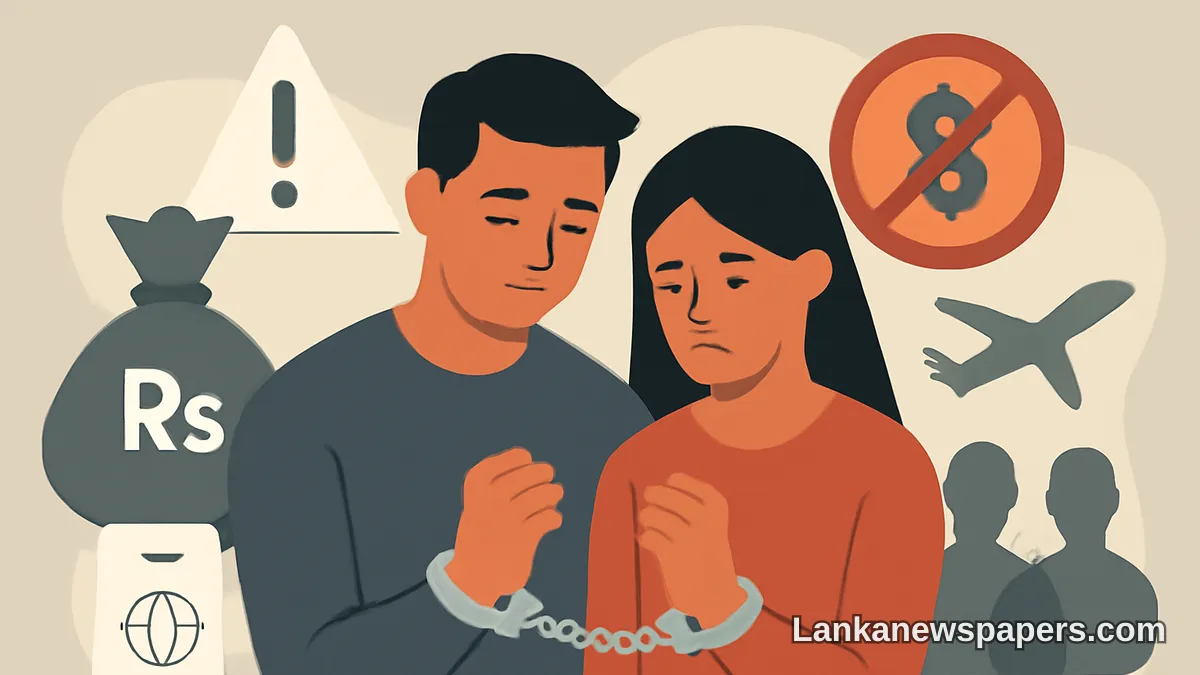
A proposed security legislation designed to satisfy European Union concerns may ironically place Sri Lanka's most valuable trade arrangement in jeopardy, raising fresh questions about Colombo's ability to balance domestic security priorities with international obligations.
Four Decades of a Controversial Law
Sri Lanka has spent more than forty years grappling with the Prevention of Terrorism Act, known widely as the PTA — a piece of legislation so broadly applied that even the parliamentarians who drafted it back in 1979 described it as a temporary measure. Decades later, the law remains firmly on the books, having been used against a wide range of individuals far beyond its original stated intent.
Pressure to repeal or substantially reform the PTA has mounted in recent years, particularly from the European Union, which has linked Sri Lanka's trade privileges under the Generalised Scheme of Preferences Plus — commonly referred to as GSP+ — to meaningful human rights and rule of law improvements. The GSP+ arrangement provides Sri Lankan exporters, particularly in the garment sector, with significantly reduced tariffs on goods entering European markets, making it a lifeline for the island's export economy.
A Replacement That May Raise New Concerns
In response to longstanding criticism, Sri Lankan authorities moved to replace the PTA with new legislation — the Protection of the State from Terrorism Act, or similar proposed framework. However, legal analysts and human rights advocates warn that the replacement bill may carry provisions that Brussels finds equally troubling, if not more so.
The concern is that Colombo, in crafting legislation intended to demonstrate reform to its European partners, may have produced a bill that retains or introduces clauses fundamentally incompatible with the human rights standards the EU expects GSP+ beneficiaries to uphold.
A security bill meant to please Brussels may end up angering it.
Economic Stakes Are Enormous
The stakes for Sri Lanka could hardly be higher. The GSP+ concession has been instrumental in sustaining the country's apparel and textile exports to Europe, a sector that employs hundreds of thousands of workers — many of them women from rural communities. Any suspension or withdrawal of GSP+ privileges would deal a severe blow to an economy still recovering from the devastating financial crisis of 2022.
Sri Lanka was previously stripped of its GSP+ status in 2010 over human rights concerns before having it restored in 2017, demonstrating that Brussels is willing to act when it believes recipient countries fall short of agreed benchmarks.
A Delicate Balancing Act for Colombo
The government now faces a complex diplomatic and legislative challenge. Security hawks within the establishment argue that robust counter-terrorism powers are essential given Sri Lanka's history, including the devastating Easter Sunday attacks of 2019. Civil society groups and opposition politicians, meanwhile, insist that any new law must include strong safeguards against arbitrary detention and abuse.
How Colombo navigates this tension — between placating domestic security interests, satisfying European human rights benchmarks, and protecting a trade arrangement worth billions of rupees annually — will be closely watched both at home and in Brussels in the months ahead.
- Sri Lanka's GSP+ status grants preferential tariff access to European Union markets
- The garment and textile sector is among the biggest beneficiaries of the trade arrangement
- The PTA has faced decades of criticism for enabling prolonged detention without trial
- Sri Lanka previously lost GSP+ status in 2010 and had it reinstated in 2017
For now, the fate of the proposed legislation — and the trade privileges tied to Sri Lanka's human rights record — remains uncertain, with the country once again at a crossroads between security imperatives and international accountability.


💬 Join the Discussion 2
See what readers are saying — and add your view.
goverment trying to please EU but making things worse as usual
exactly, 40 years and still cant get rid of PTA properly