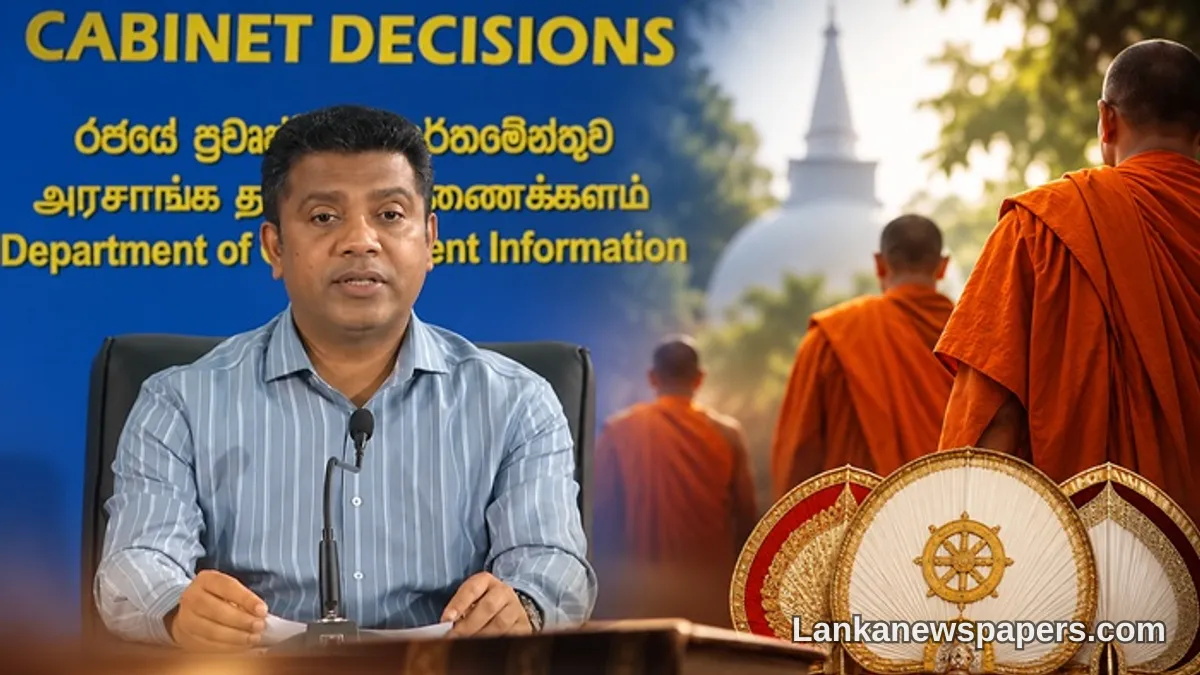
Cabinet Spokesman Defers to Religious Authorities on Sensitive Issue
Cabinet Spokesman and Minister Nalinda Jayatissa has stated that the question of whether Buddhist monks imprisoned for various offences should be permitted to continue wearing their robes while in custody is a matter that falls under the authority of the respective Nikayas, the traditional orders that govern the conduct of the Buddhist clergy in Sri Lanka.
A Question of Religious Jurisdiction
Speaking on the matter, Minister Jayatissa made clear that the government does not view this as a decision within the purview of state authorities. Rather, he emphasised that such determinations must appropriately rest with the established Buddhist ecclesiastical bodies, which hold jurisdiction over matters of monastic discipline and decorum.
The question of whether a monk convicted or remanded on criminal charges should retain his robes touches on deeply held religious sensitivities in Sri Lanka, where Buddhism holds a central place in national identity and constitutional standing.
Nikayas Hold Authority Over Monastic Conduct
Sri Lanka's main Nikayas — the Siam, Amarapura, and Ramanna orders — each maintain their own ecclesiastical councils responsible for upholding the Vinaya, the code of conduct governing Buddhist monks. These bodies have historically exercised authority over the disrobing or disciplining of clergy found to have violated religious or ethical norms.
Minister Jayatissa's position signals that the government intends to respect the boundary between state and religious authority on this sensitive issue, leaving it to the clergy's own institutional structures to make any ruling on the matter.
Broader Context
The issue has drawn renewed public attention amid cases involving members of the Buddhist clergy who have faced criminal proceedings in recent years. Civil society groups and legal commentators have at times called for clearer guidelines on how monks in conflict with the law should be treated within the prison system, particularly regarding the wearing of robes, which carries significant symbolic and spiritual weight in Theravada Buddhist tradition.
For now, the government's position remains that any resolution must come from within the religious establishment itself, rather than through legislative or administrative intervention by the state.

💬 Join the Discussion 2
See what readers are saying — and add your view.
Nikaya orders should have done this long ago, why wait for minister to say?
True, they always dodge responsibility until goverment forces them