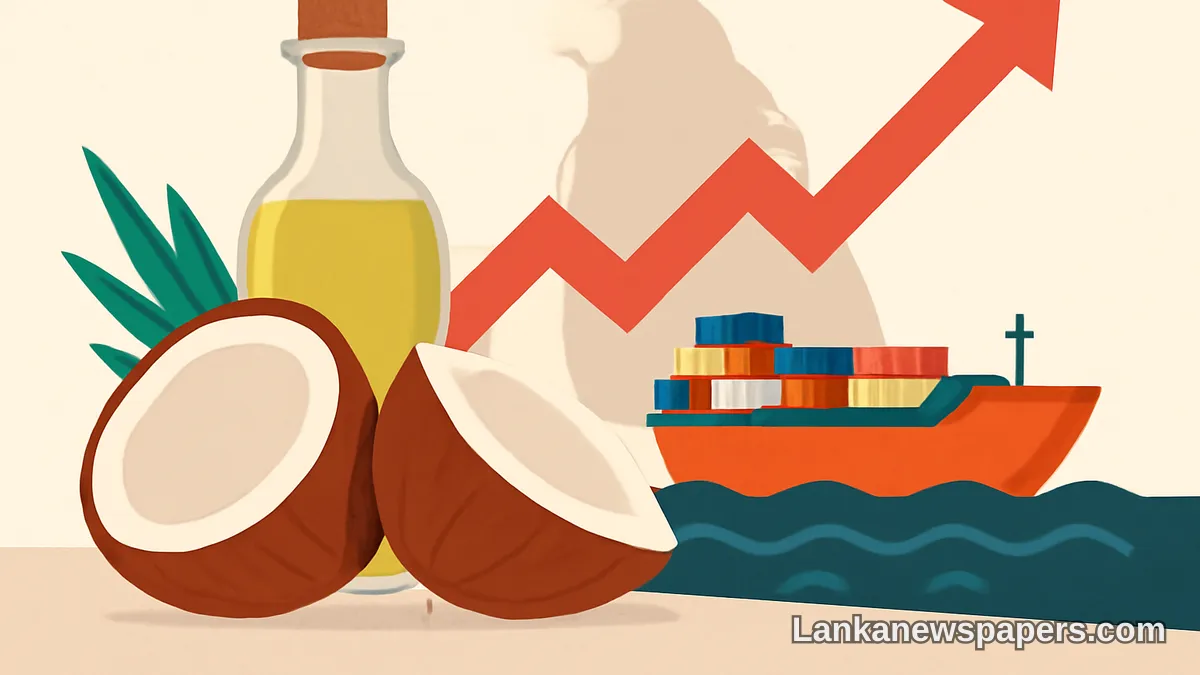
Sri Lankan coconut oil exporters are facing a severe financial squeeze as international freight costs have surged fivefold, dealing a significant blow to one of the island nation's key agricultural export sectors, according to findings by UkrAgroConsult, a leading agricultural market research firm.
A Crippling Rise in Shipping Expenses
The dramatic escalation in freight rates has placed enormous pressure on Sri Lankan exporters who rely on competitive pricing to maintain their foothold in global coconut oil markets. A fivefold increase in shipping costs fundamentally alters the economics of trade, eroding profit margins and threatening the viability of export contracts that were negotiated under vastly different logistical conditions.
Sri Lanka has long been regarded as one of Asia's prominent producers and exporters of coconut-based products, with coconut oil commanding considerable demand in markets across Europe, the Middle East, and Asia. The current freight crisis now puts that competitive advantage at serious risk.
Broader Global Shipping Disruptions Take Their Toll
The spike in freight costs is largely attributed to ongoing disruptions in global shipping lanes, including congestion at major ports, reduced vessel availability, and geopolitical tensions affecting key maritime routes. These factors have collectively driven up container shipping rates worldwide, but smaller export-dependent economies like Sri Lanka tend to absorb the impact far more acutely.
For local coconut oil producers — many of whom operate as small to medium-scale enterprises — such cost increases are extremely difficult to absorb or pass on to buyers without losing contracts to competitors from other producing nations.
Implications for Sri Lanka's Export Economy
The coconut industry remains a cornerstone of Sri Lanka's agricultural export economy, supporting thousands of livelihoods across the country's coconut triangle — the districts of Kurunegala, Puttalam, and Gampaha. Any sustained deterioration in export competitiveness could have ripple effects on farming communities, processing facilities, and related industries.
- Coconut oil is among Sri Lanka's most valued value-added agricultural exports.
- Exporters face difficulty renegotiating existing supply contracts to reflect soaring logistics costs.
- Competing exporters from countries with closer proximity to key markets may benefit at Sri Lanka's expense.
Industry Calls for Urgent Support
Trade analysts and industry stakeholders are urging the government and relevant export promotion bodies to step in with targeted relief measures, including freight subsidy schemes or diplomatic engagement to secure more favourable shipping arrangements for Sri Lankan cargo.
Without timely intervention, the fivefold surge in freight costs could permanently damage Sri Lanka's standing as a reliable and competitive coconut oil supplier in the international market.
As global shipping conditions remain uncertain, the coming months will be critical in determining whether Sri Lankan coconut oil exporters can weather this storm or are forced to scale back operations significantly.



💬 Join the Discussion 2
See what readers are saying — and add your view.
Five times? How are small exporters supposed to survive this?
Exactly, goverment wont care until the industry fully collapses.