Sri Lanka's Shadow Economy: How Corruption and Black Markets Are Undermining the Nation's Recovery
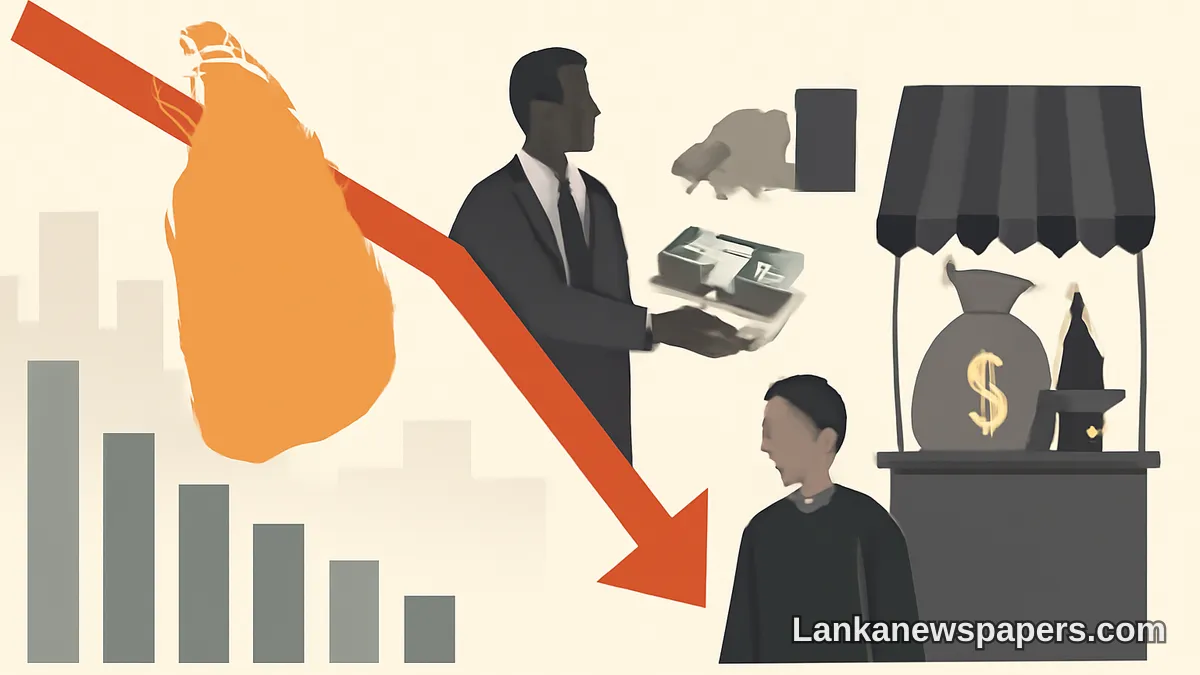
A Growing Threat Beneath the Surface
As Sri Lanka continues its fragile economic recovery following one of the worst financial crises in its modern history, a parallel and deeply troubling phenomenon is quietly expanding — the black economy. Experts and observers are increasingly raising the alarm over the growing scale of informal, unregulated economic activity and the corruption that fuels it, warning that these twin forces could derail the country's hard-won stabilisation efforts.
What Is the Black Economy?
The black economy, sometimes referred to as the shadow or underground economy, encompasses all economic transactions that take place outside the formal, regulated financial system. This includes tax evasion, smuggling, illegal trade, undeclared income, and bribery-driven dealings between the private sector and public officials. In Sri Lanka's context, these activities are believed to have grown significantly during and after the 2022 economic crisis, as citizens and businesses alike sought ways to survive amid collapsing public services and soaring costs of living.
Corruption as a Catalyst
At the heart of the black economy's expansion lies institutional corruption. When public officials abuse their positions for personal gain, they create spaces where informal and illegal economic activity can thrive unchecked. Bribes paid to bypass regulatory requirements, kickbacks embedded in government procurement, and politically shielded tax avoidance all contribute to a system where those with connections operate by different rules than ordinary citizens.
Sri Lanka's chronic failure to hold corrupt actors accountable has long been identified as one of the key structural weaknesses undermining the country's economic governance.
The Cost to Ordinary Sri Lankans
The consequences of a bloated shadow economy are felt most acutely by everyday Sri Lankans. When income goes undeclared and businesses operate off the books, the government collects less tax revenue — revenue that would otherwise fund public hospitals, schools, roads, and social safety nets. This burden is then shifted disproportionately onto the formal workforce and compliant businesses, creating an uneven and unfair economic playing field.
- Reduced government tax revenue limits investment in essential public services
- Honest businesses struggle to compete against those operating outside the law
- Consumer protections are weakened when goods and services bypass regulatory oversight
- Foreign investors are discouraged by perceptions of systemic corruption and opacity
IMF Programme and the Reform Imperative
Sri Lanka is currently navigating a multi-billion dollar bailout programme with the International Monetary Fund, which places significant emphasis on revenue mobilisation, fiscal discipline, and governance reform. Anti-corruption measures are not merely a moral concern in this context — they are a condition of the country's economic survival. Failure to broaden the tax base and curb illicit financial flows risks undermining the very benchmarks the country must meet to maintain IMF support and restore creditor confidence.
Calls for Systemic Action
Reform advocates argue that tackling the black economy requires more than occasional prosecutions or public statements of intent. What is needed, they say, is a comprehensive overhaul of institutional accountability — including strengthening independent oversight bodies, digitising government transactions to reduce opportunities for graft, protecting whistleblowers, and enforcing tax compliance consistently across all income levels and sectors.
As Sri Lanka looks ahead to economic renewal, the challenge is clear: a genuinely productive and equitable recovery cannot be built on a foundation riddled with shadow dealings and unchecked corruption. The choices made now, in terms of governance and accountability, will shape the country's economic character for decades to come.
💬 Join the Discussion 3
See what readers are saying — and add your view.
who is even suprised, goverment and black market ppl are the same set
nothing new no, this been happening for decades already
true but now its worse, cost of living through roof and these jokers still stealing