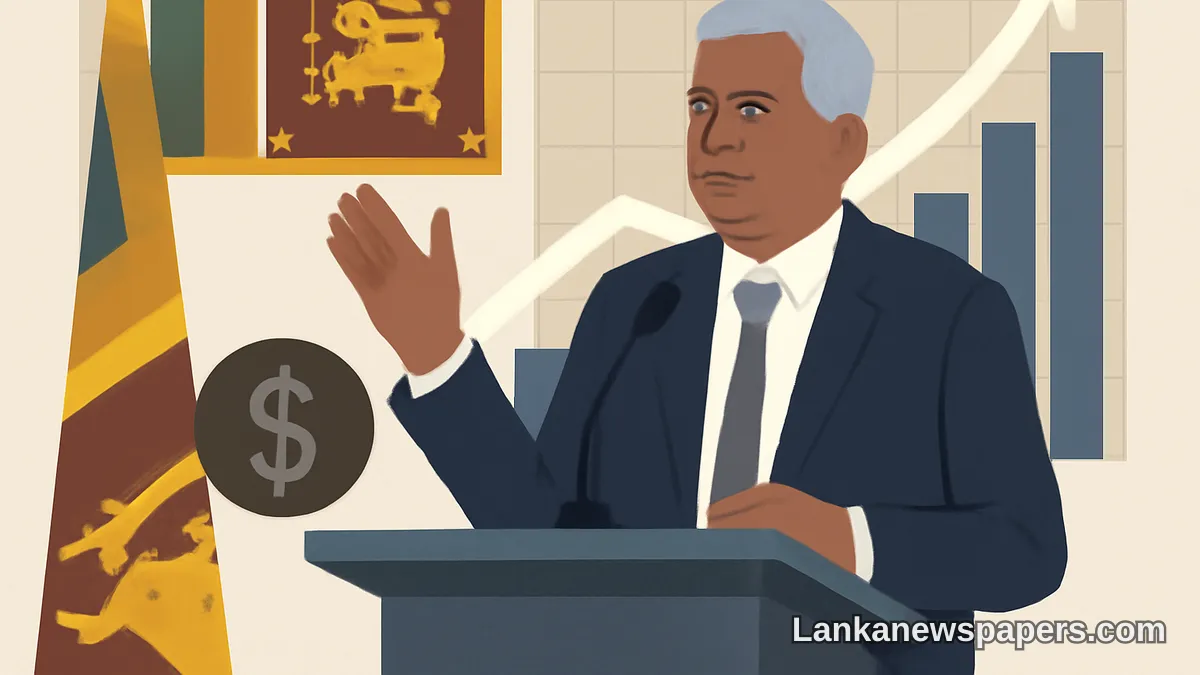
Sri Lanka has recorded a significant leap in financial literacy among its population, with the national rate climbing from 35% to 58%, Prime Minister announced, signalling a major shift in the country's economic awareness and capability.
A Landmark Achievement in Financial Education
The substantial rise of 23 percentage points reflects growing efforts to educate Sri Lankans about personal finance, banking, savings, and investment. The improvement is being viewed as a positive indicator for the country's broader economic recovery and long-term financial stability.
Financial literacy plays a critical role in empowering citizens to make informed decisions about managing money, understanding credit, and planning for the future — all of which are essential as Sri Lanka continues its path toward economic rehabilitation following recent years of hardship.
Government's Role in Driving the Change
The Prime Minister's announcement highlights the impact of targeted government-led initiatives and programmes aimed at broadening financial knowledge across different segments of society, including rural communities and low-income households who have historically had limited access to formal financial services.
The rise in financial literacy from 35% to 58% represents a meaningful step forward in building a more financially resilient nation.
What This Means for Sri Lanka
Experts have long argued that improved financial literacy is closely linked to stronger economic participation, reduced household debt vulnerability, and greater confidence in engaging with the formal banking sector. The latest figures suggest Sri Lanka is making measurable progress on all these fronts.
- Financial literacy has increased by 23 percentage points overall
- The rate now stands at 58%, up from a previous benchmark of 35%
- The announcement was made by the Prime Minister
- The improvement is seen as key to supporting Sri Lanka's ongoing economic recovery
As the government continues to prioritise financial inclusion and education, stakeholders in the banking and private sectors are expected to play an increasingly active role in sustaining this upward trend and ensuring that financial knowledge reaches every corner of the island.

💬 Join the Discussion 3
See what readers are saying — and add your view.
better than 35% i guess, progress is progress
ok but 58% still means almost half the country dont understand basic finance no?
exactly, they announcing like its a big victory lah